
Travel Guide
Plan your visit around Parque Central, Calle del Arco / Arco de Santa Catalina, and more of Antigua, Guatemala.
Things to do in Antigua Guatemala center on a compact UNESCO‑listed historic core of 16th. 18th century streets, Baroque churches, convent ruins and plazas set beneath three volcanoes.
The city’s preserved colonial grid makes it ideal for slow, walkable exploration, photography and short guided walks.
Conservation and risk‑management efforts shape how sites are presented, so verify access rules for museums and monuments before you go.

Why Visit Antigua
Visit Antigua to experience one of Latin America’s best‑preserved colonial urban ensembles: a compact, walkable centre of carved facades, cloistered convents, ruined churches and lively plazas framed by volcanoes.
The city pairs accessible cultural institutions and artisan workshops with vivid public rituals and gastronomy shaped by Maya and Spanish traditions, making it ideal for short heritage stays, guided walks, photography and nearby day excursions.
Top Things to Do in Antigua, Guatemala
Antigua’s UNESCO‑protected core concentrates its main sights within easy walking distance: plazas, church façades, convent ruins, viewpoints and small museums make for compact, slow sightseeing.
Parque Central (Central Park)
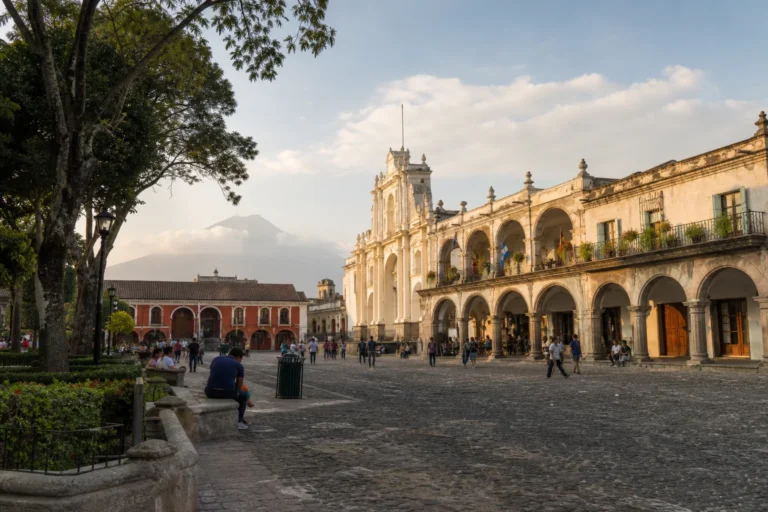
Parque Central (Plaza Mayor) is Antigua’s historic heart and primary public square. Tree‑lined benches and surrounding colonial buildings — including the Cathedral façade, the Palacio de los Capitanes Generales and the Municipalidad — create a concentrated introduction to the city’s Baroque layout.
The plaza functions as a living civic space and is commonly the start or end point for walking tours; verify local announcements if special events or works might temporarily restrict access.
Calle del Arco / Arco de Santa Catalina
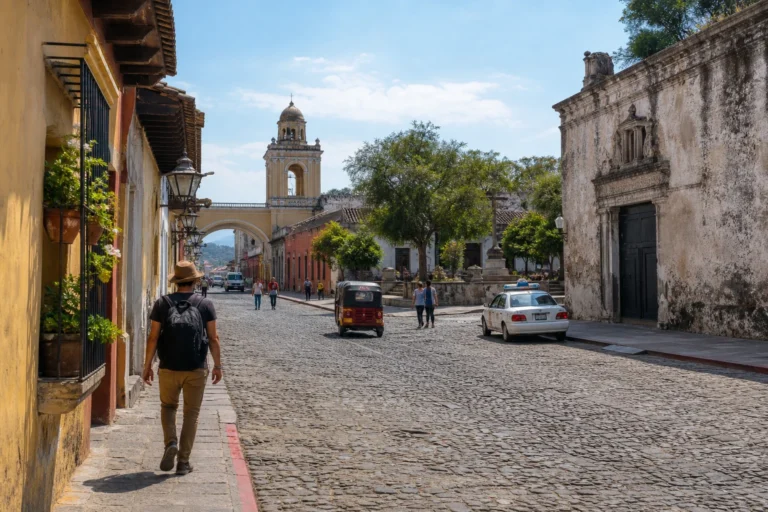
The Arco de Santa Catalina spans Calle del Arco and frames a famous view of Volcán de Agua. Historically built to link convent buildings, the painted arch now anchors a photogenic cobblestone street lined with cafés, bakeries and shops.
It’s a short, pedestrian‑oriented stroll from other central sights; confirm local guidance if conservation work or events affect access for photography or group visits.
La Merced Church (Iglesia de La Merced)
La Merced is a prominent Baroque parish church known for its bright yellow façade, ornate stucco and raised plaza that frames Volcán de Agua. Visitors come to photograph the façade, enter the active church to see altarpieces and devotional art, and view the adjacent former convent courtyard with colonial‑era fountain and partial cloister ruins.
Because it remains an active parish and protected monument, interior or cloister access may be managed or restricted for conservation or events.
Convent of Las Capuchinas (Convento de las Capuchinas)
The Convento de las Capuchinas is an early‑colonial convent ruin prized for its compact oval cloister, chapel ruins and a sequence of small rooms and arches illustrating female monastic life.
The site offers sheltered courtyards, archaeological remains and distinctive masonry; it is managed as a national monument and typically accessed through a managed entrance with possible visitor limits, guided visits, or temporary closures for conservation.
Official Convent of Las Capuchinas (Convento de las Capuchinas) website →
Santa Catalina Arch viewpoint and historic streets
The Santa Catalina Arch viewpoint and surrounding streets form Antigua’s signature streetscape: a painted arch framing Agua Volcano and a compact stretch of cobblestone lined with cafés and shops. It’s an orientation point for walking routes that continue to Parque Central and La Merced, offering prime photographic composition and immediate access to Antigua’s colonial fabric.
Municipal events or conservation works can alter access, so check local notices if you need guaranteed uninterrupted access.
Official Santa Catalina Arch viewpoint and historic streets website →
Museum Casa Santo Domingo / Museo de Arte Colonial
Casa Santo Domingo’s on‑site museums occupy a restored convent complex with colonial religious art, archaeological objects and curated displays set amid cloisters and gardens; the hotel‑museum is a reliable visitor option.
The national Museo de Arte Colonial has undergone administrative changes and temporary removals of objects in 2025–2026, so its exhibition availability is uncertain—confirm current status with the Ministry of Culture and with Casa Santo Domingo before planning indoor visits.
Official Museum Casa Santo Domingo / Museo de Arte Colonial website →
Cerro de la Cruz (viewpoint)
Cerro de la Cruz is a short uphill viewpoint marked by a stone cross that frames panoramic views of Antigua’s tiled roofs with Volcán de Agua (and often Fuego/Acatenango) behind. A 15–30 minute walk from Parque Central takes you to a paved mirador with interpretive panels and seating—popular at sunrise and golden hour.
Expect sun and wind on the hilltop and a short steep approach; verify municipal notices for maintenance or access changes.
Iglesia y Convento de San Francisco
Iglesia y Convento de San Francisco is a major colonial complex noted for its scale and devotional significance; the church houses important altarpieces and the tomb of Hermano Pedro, making it a key pilgrimage site. The adjoining convent contains archaeological remains and museum‑type displays managed separately from the active parish.
Parts of the complex may be subject to managed access, admissions, or event closures, so confirm visitor rules with the parish or site managers.
Best Time to Visit Antigua
The clearest visiting window is the dry season (roughly November through April) when lower rainfall and clearer volcano views make walking and outdoor sightseeing easier. Expect peak crowds during Holy Week (Semana Santa).
Shoulder months such as late October and May have milder crowds while still offering fair weather. Antigua sits at about 1,530 m altitude, so pack light layers and plan outdoor activities with flexibility.
Getting Around Antigua
Antigua’s compact UNESCO core is highly walkable; most principal sites lie a short walk apart on cobbled streets, so comfortable footwear is recommended. Short trips beyond the centre use licensed taxis, shared shuttles, or small local vehicles; some neighbourhoods offer motorbike taxis or tuk‑tuks.
Arrange airport transfers by shuttle or private transfer and confirm operators’ licensing and safety measures before booking.
Location
Map of Antigua, Guatemala
The interactive map loads only when you choose to view it.
Plan Your Visit to Antigua
Budget two to three hours to see the main highlights on foot; allow a half‑ or full‑day for museums, guided tours, or nearby finca visits. Check municipal and museum sites before booking indoor visits—some heritage buildings require advance reservations, have restricted access, or close temporarily for conservation.
Use official INGUAT or municipal tourist maps for parking, marked walking routes, and permitted vehicle zones.
Local Tips for Antigua
Explore the historic core on foot and wear sturdy shoes for uneven cobbles. Walk early morning or late afternoon to avoid peak crowds and to get softer light for photos around Parque Central, Calle del Arco and Cerro de la Cruz.
Use INGUAT‑marked public parking if driving—the protected core has restricted or pedestrianised streets. Carry small cash for markets and tip modestly for porters and guides.
Prefer licensed guides listed by municipal or national tourism offices for organized visits.
Live conditions
Current Weather

Updated 2026-09-21 11:45
- Feels like
- 27°C / 81°F
- Today’s high / low
- 27°C / 80°F · 17°C / 62°F
- Humidity
- 58%
- Wind
- ↗ 7 km/h
- Precipitation
- 0.09 mm
- Chance of rain
- 88%
- Local time
- 2026-09-21 11:53
Safety
Antigua is a busy tourist hub; follow ordinary urban precautions—use hotel safes, keep valuables out of sight, and avoid dim side streets at night. Municipal tourist‑police patrols operate in high‑traffic areas and provide guidance during processions or events.
For volcano hikes or rural trips, confirm transporter credentials and that operators follow safety guidance. Check official municipal or national announcements for temporary closures or travel notices before arrival.