
Travel Guide
Plan your visit around Parroquia de San Miguel Arcángel, El Jardín / Jardín Principal, and more of San Miguel de Allende, Mexico.
Discover the best things to do in San Miguel de Allende, Mexico, from signature sights to memorable local experiences.
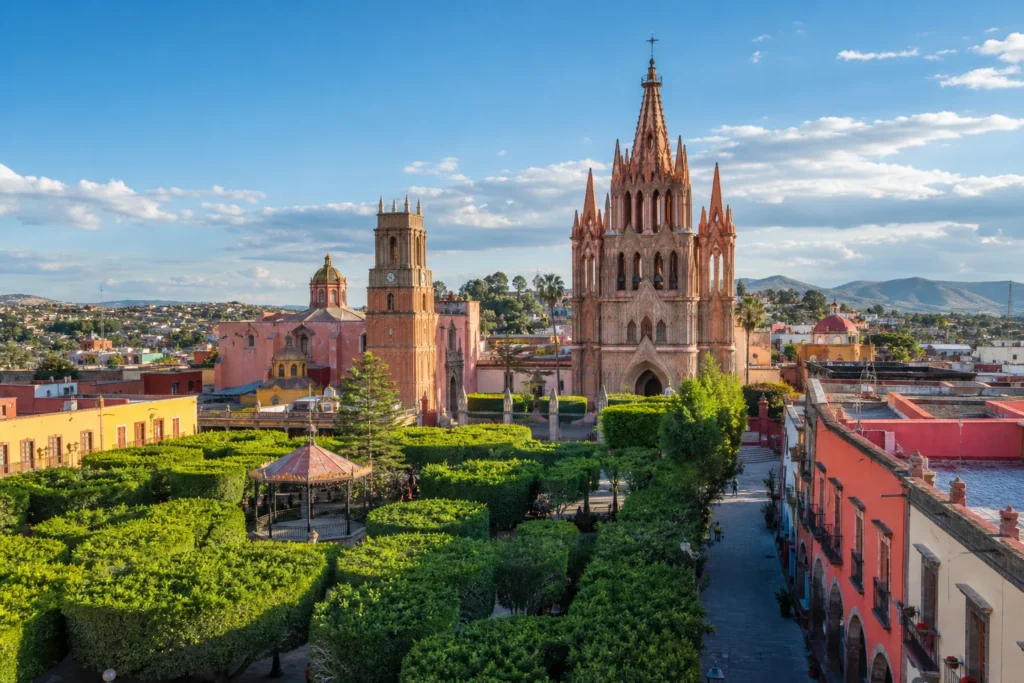
This compact, high‑relief colonial city rewards walking exploration: admire the neo‑Gothic Parroquia from El Jardín, browse galleries and studios at Fábrica La Aurora and Instituto Allende, and step into nature at El Charco del Ingenio.
The UNESCO‑inscribed ensemble that pairs the historic core with the Sanctuary of Jesús Nazareno de Atotonilco frames the town’s mix of architecture, religion and living arts culture.
Why Visit San Miguel de Allende
San Miguel pairs well‑preserved colonial streets and civic plazas with an active contemporary arts scene. The Parroquia’s iconic towers and the leafy Jardín anchor a walkable historic center of restored mansions, museums and artisan markets.
Fábrica La Aurora and Instituto Allende sustain galleries, workshops and classes that draw painters, sculptors and designers, while nearby El Charco del Ingenio offers botanical collections and walking trails. Short excursions to the Sanctuary of Atotonilco extend the visit into a richly painted devotional complex that complements the town’s urban fabric.
Top Things to Do in San Miguel de Allende, Mexico
From the Parroquia and El Jardín to artisan markets and a botanical reserve, the city’s primary attractions cluster within a compact, walkable center with a dense circuit of galleries and cultural sites.
Parroquia de San Miguel Arcángel (main neo‑Gothic church)
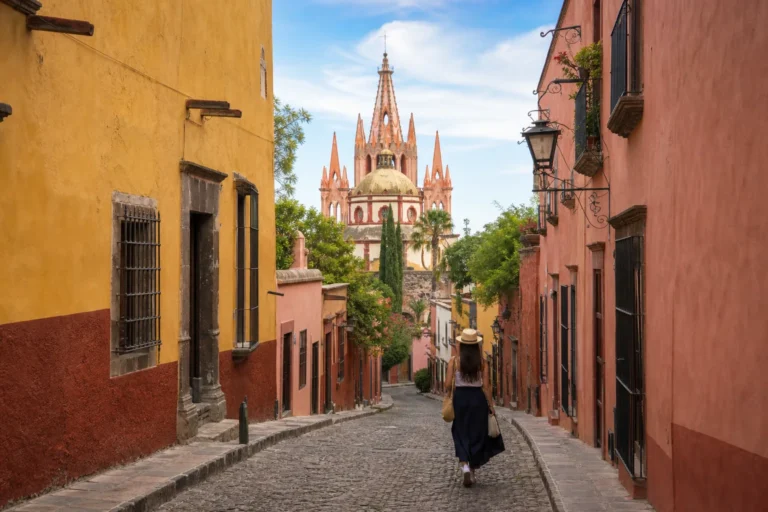
The Parroquia de San Miguel Arcángel is the city’s signature landmark, immediately recognizable for its tall pink, neo‑Gothic towers.
The dramatic façade dates to the late 19th century when local mason Zeferino Gutiérrez remodeled the earlier colonial church using prints of European cathedrals rather than formal plans, producing a distinctive local interpretation of Gothic forms atop an older baroque and neoclassical core.
Approach the church from El Jardín to appreciate its vertical pinnacles, large rose‑like window and the way the silhouette frames walking routes. Inside, chapels and altars preserve earlier elements: the building’s layered styles are central to its visual drama.
Official Parroquia de San Miguel Arcángel (main neo‑Gothic church) website →
El Jardín / Jardín Principal (central plaza)
El Jardín, also called Jardín Principal or Plaza Allende, is San Miguel’s social heart: a rectangular green space planted with mature laurel trees, edged by arcades and framed by civic and religious buildings.
A cast‑iron quiosco and benches make the square a focal point for music, people‑watching and informal commerce, with mariachi and trio performances commonly heard from the bandstand.
The plaza’s layout reflects centuries of municipal life and is a convenient orientation point for walking tours. Arcades, cafes and narrow streets funnel processions and festivals into El Jardín, so it often serves as the stage for civic ritual and public gatherings.
Check local notices for markets or municipal events if you prefer a quieter visit.
Official El Jardín / Jardín Principal (central plaza) website →
Fábrica La Aurora (art galleries and design center)
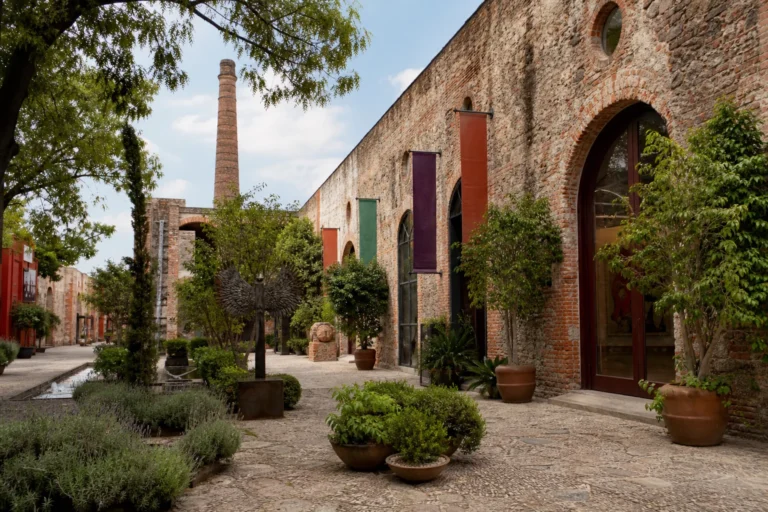
Fábrica La Aurora repurposes an early‑20th‑century textile mill into a compact creative neighborhood where brick halls, courtyards and repurposed industrial rooms house roughly forty galleries, artist studios, design shops, antique dealers and small cafés.
The industrial scale suits large canvases, sculpture and furniture, and many spaces are run by working artists who rotate shows alongside established dealers of craft and vintage furnishings.
Visiting feels like a half‑day cultural outing: gallery‑hopping, studio visits and occasional classes or artist talks. Courtyards and cafés provide places to pause and compare work.
Because exhibitions and resident galleries change, verify special shows or workshops through the venue before you go.
Official Fábrica La Aurora (art galleries and design center) website →
El Charco del Ingenio (botanical garden and nature reserve)
El Charco del Ingenio is a botanical garden and protected nature reserve on the slopes just outside town that preserves native dry‑land and semi‑arid plant communities, with an emphasis on cacti and succulents endemic to central Mexico.
Trails follow a ravine that reveals an amphitheater‑like canyon, seasonal streams and rock outcrops, creating varied microhabitats for plants and wildlife.
The site mixes curated collections and interpretive displays with wild sections of reserve, and occasional guided walks explain ethnobotanical uses and conservation work. Trails range from easy family loops to longer paths with elevation and wide views of San Miguel; birding and seasonal wildflower displays are common draws.
Check official sources for current trail and guided‑walk information.
Official El Charco del Ingenio (botanical garden and nature reserve) website →
Instituto Allende (historic art school and cultural center)
Instituto Allende occupies a cluster of colonial‑era buildings near the historic center adapted into a focused school of visual arts and cultural exchange.
Founded in the mid‑20th century and affiliated with the University of Guanajuato, the Instituto revived local craft and painting traditions while attracting international students and continues to function as a living cultural hub with studios, classrooms and exhibition space.
Visiting typically combines viewing student work and temporary exhibitions, touring courtyards and possibly observing workshops. The school runs short workshops and semester programs, so travelers can often find day classes, talks or open‑studio events; confirm schedules and availability with the Instituto before planning specific activities.
Official Instituto Allende (historic art school and cultural center) website →
Museo Histórico Casa de Allende (Allende House Historical Museum)
Museo Histórico Casa de Allende occupies a late‑18th‑century house associated with the family of independence leader Ignacio Allende, located just off El Jardín. The building itself—interior rooms, a central courtyard and period architectural details—serves as an object of study and frames exhibits that trace San Miguel’s development from a colonial town to a nineteenth‑century city.
Displays use archival documents, period furnishings and reconstructed scenes—such as a pulpería and a historical pharmacy—to situate daily life alongside larger political events. The museum emphasizes local context and material culture; check official museum information for current displays and opening details before visiting.
Official Museo Histórico Casa de Allende (Allende House Historical Museum) website →
Villa Protectora de San Miguel el Grande and Sanctuary of Jesús Nazareno de Atotonilco (UNESCO World Heritage site)
The UNESCO inscription links San Miguel’s compact colonial townscape with the Sanctuary of Jesús Nazareno de Atotonilco, recognizing their combined cultural ensemble.
Atotonilco lies about 12–14 kilometres from San Miguel and is typically visited as a paired pilgrimage and art‑history stop: the sanctuary’s chapels and exercise house contain dense mural cycles painted in a vivid vernacular Baroque style by regional hands.
Visitors can compare the town’s urban grid, mansions and parish churches with Atotonilco’s intimate, heavily painted devotional spaces. The sanctuary was historically a place for penitential retreats and remains an active site of devotion; allow time to read the mural cycles slowly and respect liturgical activity when you visit.
Mercado de Artesanías and Andador Lucas Balderas (artisan market and craft corridor)
The Mercado de Artesanías and the pedestrian Andador Lucas Balderas form San Miguel’s principal craft corridor, concentrating textiles, reworked metalware (hojalata and repoussé brass), papel maché, pottery and small furnishings inspired by local techniques.
The market occupies a covered passage and adjacent stalls that link the Jardín area with northern neighborhoods, creating a linear, pedestrianized shopping route.
Walking the corridor lets visitors compare styles and prices along a predictable route; many stalls are family enterprises and vendors rotate seasonally. Ask about provenance for strictly local pieces, carry small bills, and be prepared to haggle modestly.
Verify market locations and special market days with official municipal or tourism sources before you go.
Best Time to Visit San Miguel de Allende
The most pleasant months run from late autumn through spring during the dry season, when cool mornings and warm afternoons favor walking, outdoor dining and plaza visits. Shoulder seasons—late October–November and February–April—offer comfortable temperatures and many cultural programs without the busiest winter holiday crowds.
Summer brings brief rainy afternoons and greener scenery; plan around specific festivals or workshops you want to attend.
SPECIAL EVENTS IN San Miguel de Allende
San Miguel Writers’ Conference & Literary Festival
The San Miguel Writers’ Conference & Literary Festival is a bilingual, international literary gathering that combines craft workshops, keynote talks, agent pitch sessions, and community readings. Writers and readers converge for intensive classes, cultural programming, and a marketplace of local books and artisan goods, making it appealing to creative travelers and literary tourists. It’s a strong opportunity to meet industry professionals, discover Mexican and featured-country voices, and experience San Miguel de Allende’s historic streets and festival atmosphere alongside organized events and free public programs.
- Dates
- February 10, 2027 - February 14, 2027
- Venue
- Hotel Real de Minas (HRM Gardens, HRM Bullring, conference tents and ballrooms)
Getting Around San Miguel de Allende
San Miguel’s compact historic core is best explored on foot: narrow cobbled streets, elevation changes and pedestrian plazas make walking the primary mode. Short local taxis and app‑based ride services link downtown to dispersed sites such as El Charco del Ingenio and Fábrica La Aurora.
Independent operators run shuttles to the Sanctuary of Atotonilco. For trips beyond the municipality, regional buses and private transfers connect to nearby cities and airports.
Prefer centrally located lodging to minimize vehicle use.
Location
Map of San Miguel de Allende, Guanajuato, Mexico
The interactive map loads only when you choose to view it.
Plan Your Visit to San Miguel de Allende
Most key sites. Parroquia, El Jardín, Instituto Allende and Museo Casa de Allende.
Sit within a short stroll of each other. Fábrica La Aurora and El Charco del Ingenio are a short taxi or rideshare away.
Expect cobblestones and short, steep blocks, so comfortable walking shoes are essential.
Public transit is limited; rely on taxis and app rides for outlying attractions. Allow extra time for browsing galleries and workshops and for crowds during high season.
Local Tips for San Miguel de Allende
Start mornings at El Jardín to see the Parroquia and plaza before larger crowds arrive. Take a relaxed, exploratory approach at Fábrica La Aurora—galleries, studios and shops cluster around courtyards and cafés.
For El Charco del Ingenio, bring water, sun protection and a hat and follow marked trails. Visit Museo Histórico Casa de Allende for context on the town’s colonial and independence-era history.
Carry small bills for markets and stalls along Andador Lucas Balderas and the Mercado de Artesanías, where many vendors prefer cash.
Live conditions
Current Weather

Updated 2026-09-21 16:45
- Feels like
- 19°C / 66°F
- Today’s high / low
- 27°C / 80°F · 13°C / 55°F
- Humidity
- 28%
- Wind
- ↗ 28 km/h
- Precipitation
- 0 mm
- Chance of rain
- 10%
- Local time
- 2026-09-21 16:45
Safety
San Miguel is a popular tourist town with a generally visible police presence in Centro, but petty theft like pickpocketing and bag snatches can occur in crowded areas. Keep valuables secured, use hotel safes for passports and extra cards, and avoid displaying expensive jewelry.
Use licensed taxis, app‑based rides or hotel‑arranged transfers for late‑night trips. On trails at El Charco del Ingenio, stay on designated paths and heed posted advice about heat exposure and wildlife.