
Travel Guide
Plan your visit around Castillo San Felipe de Barajas, Historic Walled City (Ciudad Amurallada), and more of Cartagena, Colombia.
Discover the best things to do in Cartagena, Colombia, from signature sights to memorable local experiences.
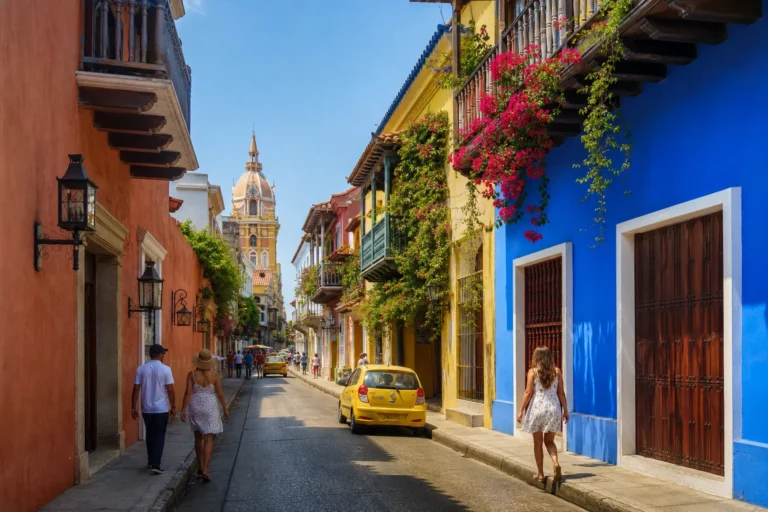
Start in the compact, walkable Historic City where narrow cobbled streets, plazas and restored mansions sit beneath the Torre del Reloj.
Combine a visit to a hilltop fortress, a bohemian arts quarter, and day trips to coral‑fringed islands for a short itinerary that mixes colonial history, Afro‑Caribbean culture, and beach time.

Why Visit Cartagena
Cartagena packs colonial architecture, coastal scenery and Afro‑Caribbean culture into a small, highly walkable city. The UNESCO‑listed walled city offers shaded streets, plazas and museums.
Castillo San Felipe and Convento de la Popa give layered historical perspectives and sweeping views.
Nearby Getsemaní provides murals, nightlife and cafés, while the Rosario Islands and the Corales del Rosario protected area offer snorkeling, mangroves and island beaches. Museums such as the Museo del Oro Zenú and San Pedro Claver link the present to pre‑Columbian and colonial histories.

Top Things to Do in Cartagena, Colombia
Cartagena’s highlights cluster around the walled city, Castillo San Felipe, Getsemaní’s street art, and nearby island trips. Each spot gives a different angle on the city’s history, art and coastal environment.
Castillo San Felipe de Barajas
Castillo San Felipe de Barajas is Cartagena’s dominant hilltop fortress and a landmark of Spanish colonial military engineering. The site presents a layered network of ramparts, bastions and earthen glacis built to resist artillery and amphibious attack.
From the terraces and parapets you get broad views across Cartagena Bay and the historic centre.
The visit emphasizes moving through space: broad ramps lead to cannon platforms while narrow vaulted tunnels run beneath the fort. Interpretive panels and occasional guided tours explain construction methods, strategic purpose and the fortress’s role in coastal defense.
Practical visiting requires uphill walking, sun protection and time to explore galleries and parapets.
Historic Walled City (Ciudad Amurallada) — Torre del Reloj & Plaza de los Coches
The Historic Walled City centers on the Torre del Reloj gateway and Plaza de los Coches, where arcaded portals, cobbled plazas and painted colonial houses form Cartagena’s atmospheric core. Passing beneath the clock tower introduces narrow streets, flowered balconies and the Portal de los Dulces, where traditional Caribbean sweets and vendors continue long urban traditions.
The district contains major churches, restored mansions and museums that illustrate colonial trade, slavery and republican transformations. Walking is a sequence of broad squares and intimate courtyards; early mornings or late afternoons are best to avoid midday heat.
Guided walks and interpretive signage help unpack the area’s layered histories.
Getsemaní neighborhood (street art, plazas, nightlife)
Getsemaní is Cartagena’s bohemian quarter immediately outside the walled city, defined by low colonial houses painted in bright colors and lively cobbled lanes. Plazas such as Plaza de la Trinidad act as social living rooms where musicians, vendors and neighbors gather; street art transforms facades into murals that record cultural memory and local creativity.
Short guided graffiti walks point out notable works while stressing respectful photography and the murals’ community roots. By night, small bars and live‑music venues create a convivial atmosphere that coexists with long‑term residents and municipal efforts to manage change.
Expect narrow streets and uneven paving—combine daytime mural walks with an evening for food and music.
Convento de la Popa (Cerro de La Popa)
Perched on Cartagena’s highest hill, the Convento de la Popa crowns Cerro de La Popa and centers on the Chapel of Nuestra Señora de la Candelaria. From the summit visitors can read the city’s layout: the walled centre, the harbor channels and the surrounding coastal plain.
The compact convent preserves colonial elements such as a cloistered courtyard and a stone chapel. A visit combines religious history and landscape appreciation; the route up the hill passes vegetation and urban fringe.
Expect sun exposure and uneven paths, and confirm visitor information with local tourism or church sources before you go.
Islas del Rosario (Rosario Islands)
The Rosario Islands form an offshore archipelago within Parque Nacional Natural Corales del Rosario y de San Bernardo and are known for shallow coral reefs, clear Caribbean waters and abundant reef fish. Most visitors travel from Cartagena by public boat or private launch for day trips that focus on Isla Grande and nearby isles.
Common activities include snorkeling over bright reefs, beach time and short naturalist commentary; scuba diving operators run trips to deeper reef sectors. Because this is a protected area, use licensed operators, bring reef‑safe sunscreen and a reusable water bottle, and check park rangers or muelle offices for current visitor rules and permitted landing sites.
Museo del Oro Zenú (Gold Museum – Cartagena)
Operated by Banco de la República and housed in a restored colonial house facing Plaza de Bolívar, the Museo del Oro Zenú presents material culture from Zenú‑speaking communities of the Caribbean lowlands.
Displays focus on gold and tumbaga work, ceramics, shell and bone artifacts that reveal metallurgy, iconography and connections to river plains and coastal wetlands.
Exhibits pair objects with explanatory graphics and short audiovisual elements to orient non‑specialist visitors. The museum is compact and well‑signposted, suited to a focused stop in the historic centre—check Banco de la República channels for current exhibitions, workshops and accessibility details before you go.
Museo de Arte Moderno de Cartagena
The Museo de Arte Moderno de Cartagena occupies two restored colonial houses in the historic center and focuses on modern and contemporary visual arts linked to the Caribbean coast. Collections and rotating exhibitions include paintings, works on paper, sculpture and mixed media that highlight regional artistic voices.
Programming emphasizes public participation with talks, workshops and school activities. Expect an intimate, gallery‑scale visit that pairs well with nearby historic landmarks—verify current exhibitions and visiting hours on the museum’s official channels before you go.
Santuario / Museo San Pedro Claver
The Santuario and Museo San Pedro Claver occupy the Jesuit cloister next to the baroque church in Plaza de San Pedro Claver. The sanctuary honors Saint Pedro Claver and remains an active religious site, while the museum presents colonial religious objects, archaeological material and donations tied to Afro‑Caribbean culture.
Exhibits explore the city’s history of slavery, resistance and devotional practice. Visitors move through church spaces, cloistered galleries and the saint’s cell; institutional programs foreground memory work and community voices.
Check the sanctuary’s official communications for visitor guidance and any special devotional activities.
Best Time to Visit Cartagena
Cartagena is hot and humid year‑round. The driest and most comfortable months are December through April, but those months draw the most visitors and festival activity—book ahead.
May to November brings short heavy rains, higher humidity and fewer crowds. Sea conditions affect boat trips to the Rosario Islands, so plan island days with flexibility in case operators advise alternatives.
Getting Around Cartagena
The Ciudad Amurallada, Getsemaní and nearby plazas are best explored on foot. For longer trips, licensed taxis and app‑based rides are common—agree a fare or use the official app when possible.
Buses and colectivos reach broader neighborhoods but run irregularly. Use licensed boat operators and authorized piers for trips to the Rosario Islands, and allow extra time for traffic when traveling to airports or distant beaches.
Location
Map of Cartagena, Colombia
The interactive map loads only when you choose to view it.
Plan Your Visit to Cartagena
Base yourself in the Walled City/Getsemaní for walkable sightseeing or choose Bocagrande/El Laguito for beachfront hotels. Book island excursions that confirm Parque Nacional Natural rules for the Corales del Rosario y de San Bernardo.
Carry a photocopy of your passport for museums or official checks, wear comfortable shoes for cobbles and short climbs, and confirm visitor services and accessibility details with official tourism sources before you go.
Local Tips for Cartagena
Respect protected heritage zones: the Walled City and Castillo San Felipe follow formal management plans—check the Secretaría de Turismo for permitted tours. For island trips, choose operators who depart from recognized embarcaderos and follow Parque Nacional Natural guidance.
In Getsemaní, look for daytime mural walks and sample street food from busy, licensed vendors. When using local transport, ask for official Transcaribe route information or a licensed taxi rather than informal motos or unregistered colectivos.
Live conditions
Current Weather

Updated 2026-09-20 11:00
- Feels like
- 34°C / 93°F
- Today’s high / low
- 29°C / 84°F · 27°C / 81°F
- Humidity
- 76%
- Wind
- ↙ 14 km/h
- Precipitation
- 0 mm
- Chance of rain
- 76%
- Local time
- 2026-09-20 11:14
Safety in Cartagena
Cartagena is popular with visitors and generally safe, but petty theft and opportunistic crime occur in crowded areas and nightlife districts—keep valuables discreet and use hotel safes. For sea excursions, use boats that operate from authorized piers and carry lifejackets; Parque Nacional Natural guidance highlights permitted embarkation points to protect visitors and reefs.
Avoid isolated beaches or walking alone late at night, and prefer well‑lit, busy streets between plazas. For official concerns about protected sites, consult the Alcaldía or Secretaría de Turismo.