
Travel Guide
Plan your visit around Plaza de Mayo, La Boca, and more of Buenos Aires, Argentina.
Discover the best things to do in Buenos Aires, Argentina, from signature sights to memorable local experiences.
Start with the city's compact barrios where 19th‑century European architecture, broad boulevards and lively neighborhood culture meet.
Core highlights. Plaza de Mayo and the Casa Rosada, Teatro Colón, Museo Nacional de Bellas Artes, La Boca’s Caminito, San Telmo’s fair, Recoleta Cemetery and the parks of Palermo.
Are walkable on short visits and well served by official visitor resources.
Why Visit Buenos Aires
Buenos Aires blends world‑class cultural institutions with neighborhood-scale experiences. See Teatro Colón’s celebrated auditorium, explore national and international works at the Museo Nacional de Bellas Artes, and visit Plaza de Mayo to understand Argentina’s political history.
Stroll La Boca’s Caminito for colorful street life, browse San Telmo’s antique market, and discover Recoleta’s monumental funerary art. Puerto Madero shows recent waterfront redevelopment, while official tourism programs and visitor centers provide practical routes and guided options.
Top Things to Do in Buenos Aires, Argentina
From historic plazas to waterfront promenades and leafy parks, Buenos Aires’s top sights are concentrated in distinct barrios—perfect for guided walks or short, self‑planned itineraries.
Plaza de Mayo
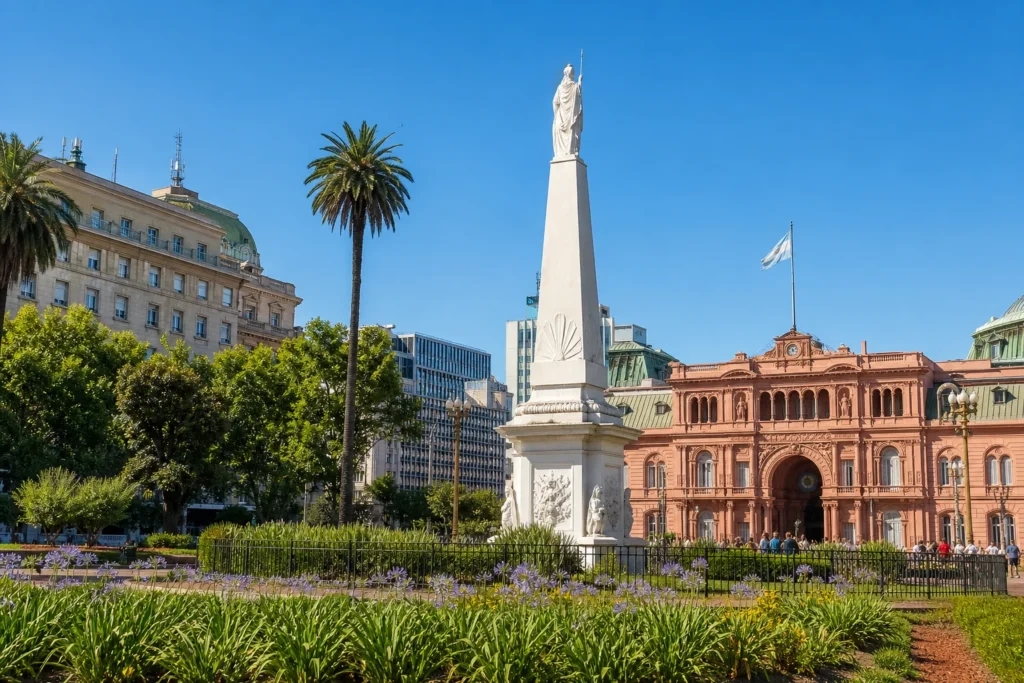
Plaza de Mayo is Buenos Aires’s historical and political center, occupying the original main square founded in 1580. The open rectangular plaza is framed by landmark civic buildings including the pink Casa Rosada, the colonial Cabildo and the Metropolitan Cathedral, and the Pirámide de Mayo monument marks the 1810 May Revolution.
The square has long hosted public rituals—from independence celebrations to mass demonstrations—and guided walks help explain its layered role in Argentina’s political memory. Because Plaza de Mayo remains an active civic stage, temporary events can change access; consult official sources if you plan to enter government buildings or attend ceremonies.
La Boca (Caminito)
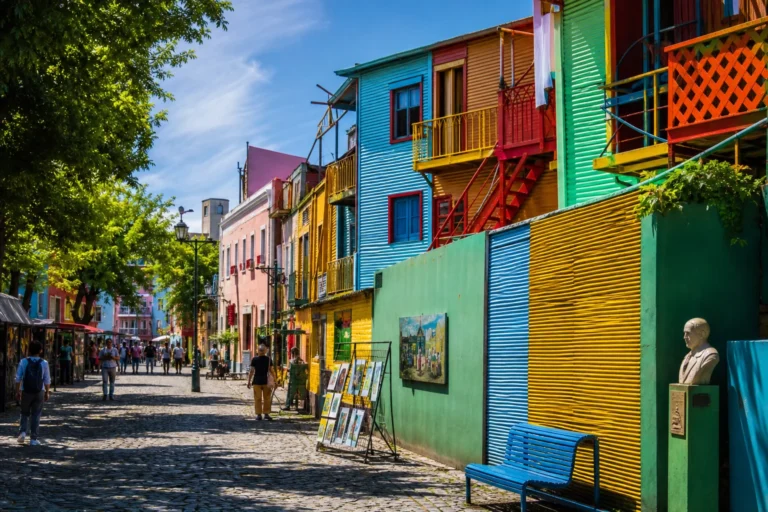
La Boca’s Caminito is a compact pedestrian lane famed for vividly painted houses, street art and visible immigrant and portside roots. The lane became a cultural showcase through mid‑20th‑century restoration efforts led by local artists such as Benito Quinquela Martín, and today it mixes outdoor gallery‑style displays with tango performers, artisan stalls and cafés.
Caminito reflects the neighborhood’s working‑class and football heritage—nearby Boca Juniors—and rewards slow exploration beyond the main tourist strip, where side streets and small museums reveal richer local history. Because it is both residential and touristic, visitors should travel with normal urban caution and verify museum hours and events before visiting.
Teatro Colón
Teatro Colón is Argentina’s premier opera house and a world‑renowned lyric theater dating from the turn of the 20th century. The monumental exterior leads into an opulent interior of grand staircases and sculptural decoration; the horseshoe‑shaped auditorium and carefully proportioned room are frequently praised for exceptional acoustic clarity.
The theater operates as a living institution with resident ensembles, a full season of opera, ballet and concerts, and guided tours that reveal backstage spaces, historical anecdotes and restoration work. Performance schedules and backstage access vary by season, so check official channels for current tours and ticket information.
Recoleta Cemetery (Cementerio de la Recoleta)
Recoleta Cemetery is a dense 19th‑century necropolis known for its concentration of monumental mausoleums and sculptural tombs. Laid out in narrow stone alleys, the cemetery reads like a compact sculpture garden where Neoclassical temples, Gothic spires and Art Nouveau ornament mark family vaults of Argentina’s political, military and cultural elites.
Visitors are encouraged to walk slowly to study sculptural details and inscriptions; the cemetery sits beside a historic basilica and a leafy square, making the area a compact cultural node within Recoleta. Conservation work or special tours can affect access, so consult official cultural resources before visiting.
Museo Nacional de Bellas Artes
The Museo Nacional de Bellas Artes (MNBA) is Argentina’s principal public art museum and one of Latin America’s most important collections. Founded in 1896 and installed in its current neoclassical building in 1933, the MNBA displays European masterworks and a deep, historically broad collection of Argentine art spanning the 19th and 20th centuries.
Highlights include Impressionist and post‑Impressionist works alongside major Argentine figures such as Xul Solar, Antonio Berni and Marta Minujín. The museum also houses sculptures, prints, a research library and rotating exhibitions; check the museum’s official channels for current shows, guided tours and visitor services.
Puerto Madero & Puente de la Mujer
Puerto Madero is a late‑20th‑century waterfront renewal that transformed old docks into promenades, restaurants and modern developments, juxtaposing restored brick warehouses with contemporary towers.
The district’s signature landmark, the Puente de la Mujer by Santiago Calatrava, is a rotating single‑leaf pedestrian bridge whose angled pylon and cable geometry allude to tango and permits small‑boat passage when opened.
A visit centers on a waterfront walk among piers, plazas and dockside paths with views of historic vessels, silos and maritime remnants. The promenade is photogenic at dawn and dusk; check official district pages for any planned maintenance or temporary closures before visiting.
San Telmo (Feria de San Telmo and Mercado de San Telmo)
San Telmo is one of the city’s oldest neighborhoods, anchored by the Feria de San Telmo and the historic Mercado de San Telmo. The Sunday Feria spreads from Plaza Dorrego along Defensa and nearby streets as an open‑air market of antiques, artisans and street performers, with tango buskers and varied vendor stalls.
Early arrivals see sellers setting up, while later hours bring larger crowds and more performances.
Mercado de San Telmo, founded in 1897, is a covered iron‑and‑glass market hall where food stalls and specialty vendors operate beneath original cast‑iron structures. Guided walks often combine the fair, Plaza Dorrego and the market to trace the neighborhood’s immigrant and cultural history.
Bosques de Palermo and Jardín Japonés
The Bosques de Palermo are an expansive parkland complex of lakes, rose gardens, tree‑lined promenades and recreational lawns. The park offers jogging paths, boating lakes and shaded plazas that form a popular urban oasis reflecting Buenos Aires’s European‑style landscaping traditions.
Within the Bosques, the Jardín Japonés is a carefully composed Japanese garden with koi ponds, stone lanterns, a teahouse and bonsai displays. Built in the late 1960s, it is one of the largest Japanese gardens outside Japan and often hosts cultural programming and seasonal exhibitions.
Both sites are best enjoyed on foot; check official garden channels for current events.
Best Time to Visit Buenos Aires
Buenos Aires welcomes visitors year‑round, but shoulder seasons are most comfortable. March–May and September–November bring mild temperatures and fewer peak visitors, ideal for long walks in Bosques de Palermo or visits to outdoor markets.
Summer (December–February) is hot and draws domestic tourists; winter (June–August) is cooler and quieter but still good for museums and performances. Check official tourism sites for seasonal programming when planning dates.
Getting Around Buenos Aires
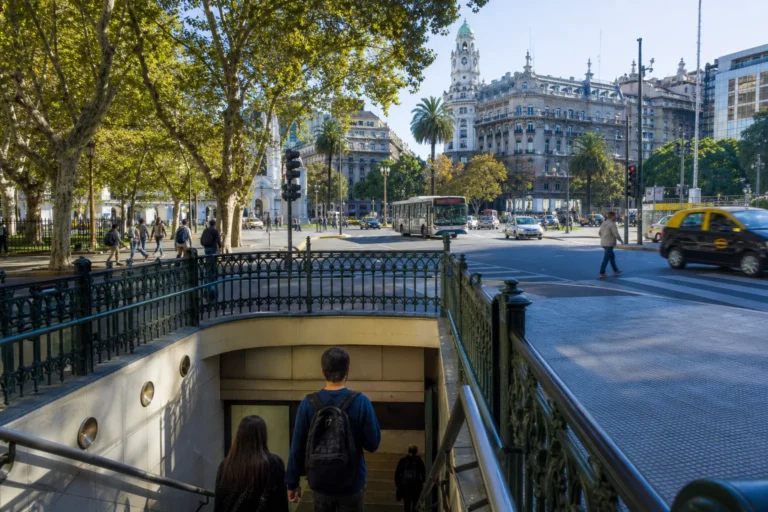
The city’s layered transit network includes the Subte (metro) for central neighborhoods, an extensive colectivo (bus) system, widespread taxis and app ride services, and an expanding network of bike lanes. Many attractions are linked by short Subte or bus rides, and official tourism maps and apps list recommended walking and cycling routes.
For airport transfers and fare details, consult official airport and city transport pages and consider the local SUBE card for convenience.
Location
Map of Buenos Aires, Argentina
The interactive map loads only when you choose to view it.
Plan Your Visit to Buenos Aires
Buenos Aires is divided into distinct barrios—Microcentro/Plaza de Mayo, San Telmo, La Boca, Recoleta, Palermo and Puerto Madero—each with its own character. Use a SUBE card for buses, trains and the Subte; buy and top up at stations, Correo offices or kiosks.
Taxis and the official BA Taxi app supplement public transit; prefer registered taxis or apps for night trips. Allow extra travel time for traffic, carry a photocopy of your passport, and keep some Argentine pesos for markets and small shops.
Local Tips for Buenos Aires
Visit major sites early—Plaza de Mayo and Teatro Colón are calmer before crowds. San Telmo’s antique fair and La Boca’s Caminito suit morning visits.
Dine late (dinners often start after 9–10pm) and sample casual meals at Mercado de San Telmo. Keep valuables discreet and use hotel safes for passports.
Learn basic Spanish phrases and download local transit apps such as Cómo Llego or the BA public‑transport apps. For museums and cemetery tours, check timed‑entry rules or buy tickets online to avoid lines.
Live conditions
Current Weather

Updated 2026-09-21 12:00
- Feels like
- 7°C / 44°F
- Today’s high / low
- 16°C / 60°F · 9°C / 49°F
- Humidity
- 38%
- Wind
- ← 34 km/h
- Precipitation
- 0 mm
- Chance of rain
- 17%
- Local time
- 2026-09-21 12:15
Safety
Buenos Aires is generally safe for tourists, but petty theft and pickpocketing occur in crowded places and on public transit. Use Tourist Police or official Tourist Assistance centers if you need help; emergency number is 911.
Exchange money at banks or official casas de cambio, not with street exchangers. Keep bags closed and worn front‑facing in busy areas, leave valuables in hotel safes, and use registered taxis or the official BA Taxi app at night.
Carry travel insurance that covers theft and medical care.