
Travel Guide
Plan your visit around Schönbrunn Palace, Hofburg Palace, and more of Vienna, Austria.
Things to do in Vienna cluster in a compact, walkable center where Habsburg palaces, world-class museums, and a strong café tradition shape daily life. The Ringstrasse frames imperial landmarks such as the Hofburg, State Opera, and St. Stephen’s Cathedral, while Schönbrunn and the Belvedere provide large palace complexes and gardens reachable by frequent transit.
Vienna’s mix of Baroque streetscapes, Secessionist touches, parks and reliable public transport makes it easy to cover major sights over a short visit without losing the relaxed rhythm of cafés and promenades.
Why Visit Vienna
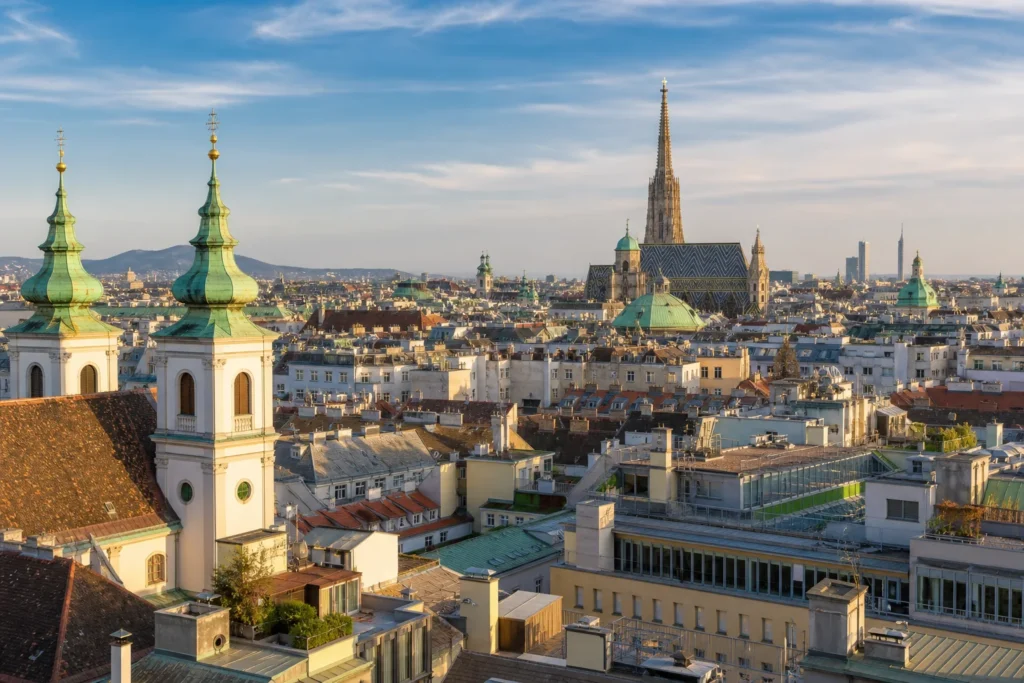
Visit Vienna for its concentration of cultural essentials: imperial palaces (Schönbrunn, Hofburg), landmark churches (St. Stephen’s Cathedral), premier art museums (Kunsthistorisches, Belvedere) and performance institutions like the Vienna State Opera.
The city pairs high-caliber museums and concerts with accessible public spaces. The Prater’s historic fairground and Wiener Riesenrad, the MuseumsQuartier’s cultural campus, and extensive palace gardens.
While cafés and food markets let you pause between sights and soak up local life.
Top Things to Do in Vienna, Austria
Start with Vienna’s imperial palaces and core museums, then add a cathedral visit, a ride on the Wiener Riesenrad, and time in the MuseumsQuartier for a balanced introduction to the city’s architecture, art and public life.
Schönbrunn Palace
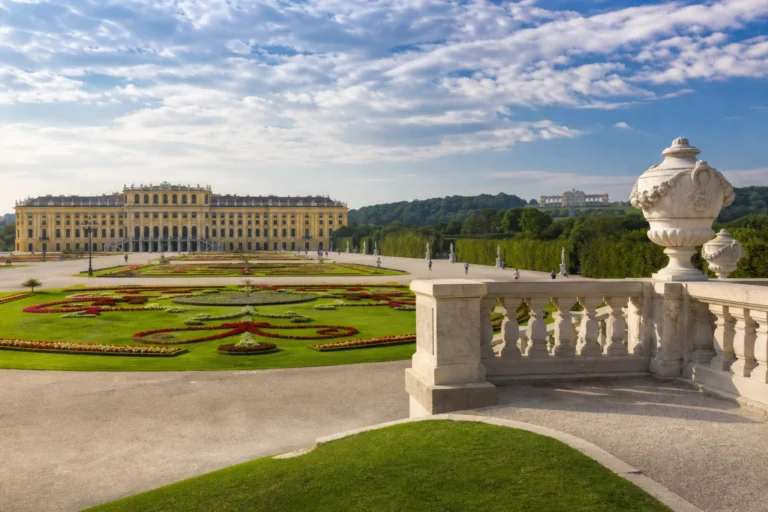
Schönbrunn Palace is Vienna’s great Baroque summer residence and a UNESCO World Heritage ensemble where richly furnished palace rooms sit within an extensive designed landscape. Inside, state rooms and private apartments are restored to reflect imperial life under Maria Theresa and her successors, giving visitors tangible context for Habsburg court rituals and domestic routines.
The gardens are integral: formal parterres, tree-lined promenades, the Great Parterre and the Gloriette viewpoint frame long axial perspectives. On the grounds are the Palm House, the historic Menagerie (Tiergarten Schönbrunn) and former carriage stables, so combine an interior tour with a garden walk and optional zoo or Palm House visit.
Hofburg Palace (Imperial Palace)
The Hofburg is Vienna’s sprawling imperial complex assembled across centuries, its fabric layering medieval, Renaissance, Baroque and 19th‑century Historicist additions around plazas such as Josefsplatz and Heldenplatz.
For visitors the Hofburg contains several distinct experiences: the Imperial Apartments and Sisi Museum contrast formal state rooms with intimate personal objects, while the Imperial Treasury preserves regalia that embody monarchical symbolism.
The Austrian National Library’s Prunksaal (State Hall) is a lavish highlight, and the Spanish Riding School continues to perform classical haute école dressage from the Winter Riding School. Because the Hofburg remains partly in active official use, check museum and institution sites for tickets and access.
St. Stephen's Cathedral (Stephansdom)
St. Stephen’s Cathedral stands at Vienna’s geographic and spiritual heart, an architectural palimpsest that developed from a 12th‑century parish church into the city’s principal Gothic landmark. Its patterned tiled roof and soaring south tower define the skyline; inside, vaulted space, stained glass and carved altarpieces reflect centuries of devotion and local patronage.
Visits can include close viewing of sculptures and side chapels, a tower climb or lift for panoramic viewpoints, and guided tours of medieval catacombs and crypts. The cathedral also houses a museum of liturgical objects and remains an active place of worship, so check the official site for tower climbs and special tours.
Belvedere Palace
The Belvedere is a staged Baroque palace ensemble created for Prince Eugene of Savoy, composed of Upper and Lower Belvedere linked by terraced formal gardens. The architecture and axial garden design present deliberate shifts in scale and ornament, so ascending from the Lower to the Upper palace reveals changing perspectives.
Museum displays split between palaces and sweep through Austrian art history—from medieval and Baroque works to Vienna Modernism and contemporary acquisitions—while interiors such as the Marble Hall add historical atmosphere. The gardens are integral to the visit, offering sculptural perspectives, fountains and terraces; check the museum’s site for current exhibitions and visitor information.
Prater and the Wiener Riesenrad (Giant Ferris Wheel)
The Prater is a broad public park and historic fairground in Leopoldstadt whose best-known landmark is the Wiener Riesenrad at Riesenradplatz. Built in 1897 and rebuilt after wartime damage, the Riesenrad’s enclosed historic cabins frame extended views across the Danube and central Vienna, with on-site interpretive material explaining its history and reconstructed cabins.
The wider Prater mixes open parkland, the tree-lined Hauptallee popular with joggers and cyclists, and the Wurstelprater fairground with rides and seasonal markets. For memorable panoramas aim for early evening or clear daylight; practical details such as ticketing and accessibility can change, so check official Riesenrad or Prater information before visiting.
Official Prater and the Wiener Riesenrad (Giant Ferris Wheel) website →
MuseumsQuartier (MQ)
The MuseumsQuartier (MQ) is one of Europe’s largest cultural quarters, repurposing Vienna’s former imperial stables into an architectural pairing of 18th‑century baroque fabric and contemporary infill.
A large central courtyard functions as an open urban stage while outer rings host major institutions such as the Leopold Museum, mumok and the Kunsthalle alongside smaller studios, performance spaces and design shops. Rooftop terraces and flexible outdoor programming give the MQ both museum‑quality exhibitions and everyday social life.
For visits, combine a courtyard stroll with one or two indoor venues and consult the MQ’s visitor pages for current exhibitions, combined tickets and accessibility options.
Kunsthistorisches Museum Vienna
The Kunsthistorisches Museum occupies a monumental Ringstraße palace built to display the Habsburgs’ imperial collections, its grand dome and decorated galleries framing encyclopedic holdings. The Picture Gallery concentrates four centuries of European painting with exceptional Flemish and Dutch works, including Pieter Bruegel the Elder pieces and Johannes Vermeer’s The Art of Painting.
Beyond paintings, the Kunstkammer, classical antiquities and Egyptian‑Near Eastern collections offer contrasts of scale and material—goldsmithing, automata and ancient objects that illuminate early collectors’ aims. Plan a route balancing large picture rooms and small‑object displays, and check the official site for guided tours and current exhibitions.
Vienna State Opera
The Vienna State Opera (Wiener Staatsoper) is a neo‑Renaissance opera house on the Ringstraße that opened in 1869 and was restored after wartime damage, reopening in 1955 with a revived repertoire company.
Its façade, main vestibule and principal staircases remain central to the drama of arrival, while richly decorated intermission rooms and the Schwind‑Foyer reflect nineteenth‑century civic taste.
The Staatsoper sustains a resident ensemble and orchestra with regular opera and ballet seasons; visitors can choose a guided tour for behind‑the‑scenes insights or attend a performance for the full musical experience. Confirm tour options and accessibility on the opera’s official visitor pages.
Best Time to Visit Vienna
Late spring through early autumn (May–September) brings the warmest weather, long daylight, and the fullest outdoor programming at palace gardens, the Prater and open‑air concerts. Shoulder seasons (April, October) offer cooler temperatures, fewer crowds and better museum access.
Winter (November–March) is quieter around central sights and is ideal for classical concerts and café culture; expect shorter daylight and colder conditions.
SPECIAL EVENTS IN Vienna
Viennale (Vienna International Film Festival)
The Viennale is Vienna’s annual international film festival showcasing contemporary world cinema, restored classics, retrospectives, and special events across the city. It draws filmmakers, critics, and cinephiles with curated program strands, guest appearances, and screenings in historic and independent cinemas. Travelers may value its cultural immersion, evening premieres, and the chance to see rare films and meet international artists while exploring Vienna’s neighborhoods, cafés, and cultural institutions. The festival’s citywide cinema program makes it a noteworthy cultural highlight for visitors seeking film-focused experiences.
- Dates
- October 22, 2026 - November 3, 2026
Wiener Christkindlmarkt am Rathausplatz
The Wiener Christkindlmarkt am Rathausplatz is Vienna’s principal Christmas market held beneath the illuminated City Hall. Visitors find hundreds of wooden stalls offering handcrafted gifts, seasonal foods and hot drinks, live Advent performances, and a family-friendly program including a nearby ice rink. Its dramatic Rathaus backdrop, accessible central location, and long-standing local traditions make it a major draw for holiday travelers seeking atmosphere, seasonal shopping, and cultural events in Vienna’s historic center. Practical services and transport links are readily available.
- Dates
- November 13, 2026 - December 26, 2026
- Venue
- Rathausplatz
Neujahrskonzert der Wiener Philharmoniker (Vienna New Year’s Concert)
The Vienna New Year’s Concert is the Vienna Philharmonic’s flagship, internationally broadcast matinee that celebrates the light, dance and orchestral traditions of the Strauss family and their contemporaries. It is a culturally iconic occasion that draws visitors and music lovers worldwide; tickets are distributed chiefly via the orchestra’s official lottery because demand far exceeds supply. Travelers may plan around this event for a unique, ceremonial Viennese experience of music, pageantry and television spectacle, or enjoy public broadcasts and city cultural programming if tickets are unavailable.
- Dates
- January 1, 2027
- Venue
- Musikverein (Golden Hall)
Wiener Opernball (Vienna Opera Ball)
The Vienna Opera Ball is the season’s most glamorous society event, attracting an international audience, televised coverage, and a program of formal rituals including debutante presentations and an elaborate opening. Around 5,000 guests attend each year, creating a high-demand ticket environment and a once-a-year cultural spectacle for visitors who appreciate music, dance, and traditional Viennese ball etiquette. Travelers may plan far in advance for tickets, formal dress, and related city events that cluster around the ball season.
- Dates
- February 4, 2027
- Venue
- Wiener Staatsoper
Vienna City Marathon
The Vienna City Marathon is Austria’s flagship road-race weekend, drawing elite and recreational runners to a scenic urban course past Vienna’s major cultural landmarks. Travelers value the event for its lively spectator atmosphere, accessible public-transport connections, race expo and multiple distance options (marathon, half, relay, 5K). It’s a convenient way to combine sightseeing with a major sporting event during spring, with ample local hospitality, training-friendly routes nearby, and official support services for international participants and visitors.
- Dates
- April 18, 2027
- Venue
- Start: Reichsbrücke; Finish: Ringstraße (between Burgtheater and Rathausplatz)
Donauinselfest
Donauinselfest is Vienna’s large free open‑air music festival on the Donauinsel (Danube Island), offering many stages, hundreds of performance hours, and diverse programming that ranges from international headliners to local acts and family activities. Travelers should care because it’s a major, cost‑free cultural event that showcases Austrian and international music scenes, provides easy public‑transport access, and creates a lively festival atmosphere ideal for socializing, day trips, and sampling Vienna’s summer culture alongside parks and riverfront attractions.
- Dates
- June 25, 2027 - June 27, 2027
- Venue
- Donauinsel (Danube Island)
Getting Around Vienna
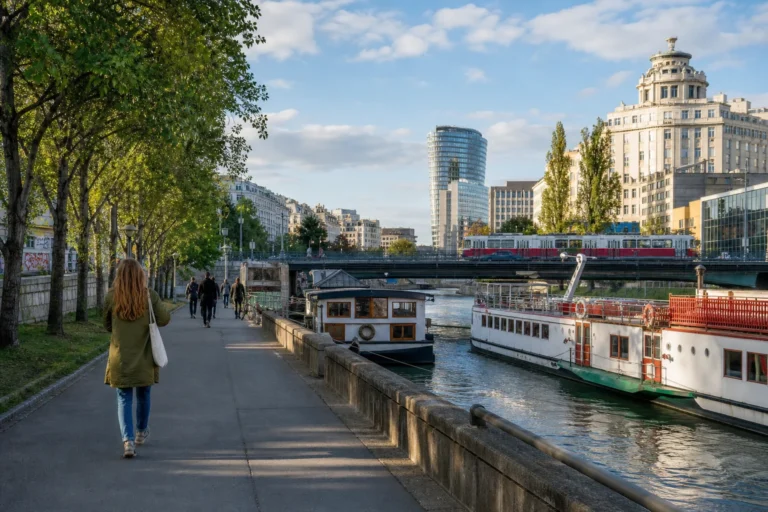
Vienna has an extensive, punctual public-transport network (Wiener Linien U‑bahn, trams, buses) plus regional S‑Bahn for outer sights. The compact inner districts are highly walkable and many attractions lie along the Ringstrasse and Old Town.
Frequent trams provide scenic cross‑city links while the U‑bahn is fastest for longer hops such as MuseumsQuartier to Schönbrunn. Integrated ticketing and visitor cards offer unlimited short‑term travel; cycling and taxis fill remaining gaps.
Location
Map of Vienna, Austria
The interactive map loads only when you choose to view it.
Plan Your Visit to Vienna
Plan neighbourhood-based days—Innere Stadt (Stephansplatz, Hofburg), MuseumsQuartier/Kunsthistorisches, Schönbrunn/Belvedere, and Prater/Danube areas—to minimize transit time. Buy a multi‑day Vienna City Card or WIEN ticket for unlimited short‑term travel and discounts.
Book popular attractions (Schönbrunn, State Opera tours, Belvedere) and classical concerts in advance during high season. Allow extra time for security checks at major palaces and museums and factor in café breaks as part of the experience.
Local Tips for Vienna
Use official Vienna visitor resources and the WienMobil apps for route planning and real‑time transit. Tram lines 1 and 2 and U1/U3/U4 reach many central sights quickly.
Dress in layers: historic interiors can be noticeably cooler. Some traditional cafés close in the late afternoon, so plan meals or coffee accordingly.
Central cafés and dining around Graben, Kärntner Straße and the Naschmarkt remain lively later.
For quieter visits, go early at Schönbrunn or late afternoon at the Belvedere gardens. Basic German greetings are appreciated though English is widely spoken.
Live conditions
Current Weather

Updated 2026-09-20 21:00
- Feels like
- 18°C / 64°F
- Today’s high / low
- 25°C / 77°F · 16°C / 60°F
- Humidity
- 53%
- Wind
- ← 14 km/h
- Precipitation
- 0 mm
- Chance of rain
- 9%
- Local time
- 2026-09-20 21:12
Safety
Vienna is broadly safe and well‑policed, but apply standard urban precautions. Watch for pickpocketing in crowded tourist zones, transport hubs and on trams—keep valuables secured and use zipped bags.
Nighttime safety is generally good in central areas; for late travel prefer illuminated streets, taxis or ride apps. When cycling, use marked bike lanes and be alert at tram tracks.
In emergencies call 112 or the local police at 133 and consult official city or embassy resources for health or consular assistance.