
Travel Guide
Plan your visit around Hohensalzburg Fortress, Historic Centre (Altstadt) — UNESCO World, and more of Salzburg, Austria.
Discover the best things to do in Salzburg, Austria, from signature sights to memorable local experiences.
Hill‑framed Baroque city where major monuments, palace gardens and Mozart’s musical history sit within easy walking distance.
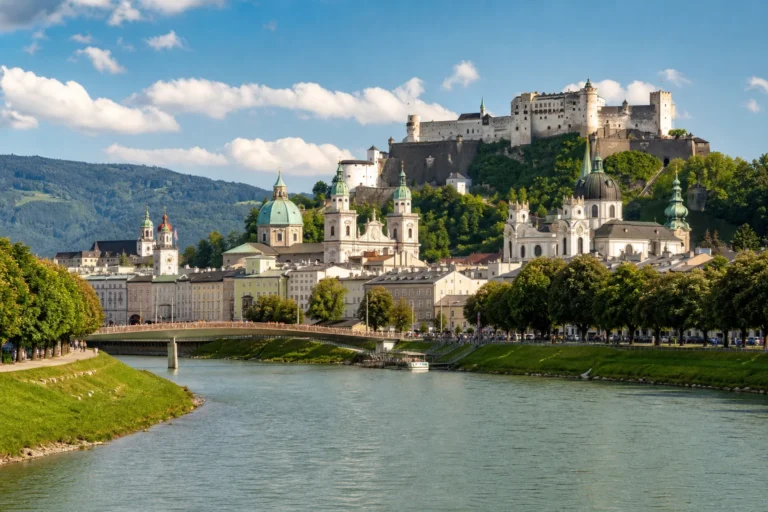
The UNESCO‑listed Historic Centre concentrates the Cathedral and Residenzplatz beneath Hohensalzburg Fortress, while Mirabell and Hellbrunn extend the city’s baroque character and invite short riverside or hill walks.

Why Visit Salzburg
Visitors come for Salzburg’s concentrated collection of high‑quality cultural landmarks: a preserved Baroque core that reflects the power of the prince‑archbishops, an imposing hilltop fortress with city and Alpine panoramas, and several palace gardens.
The city is also a living music capital. Home of Mozart and a year‑round programme of concerts and festivals.
And offers family‑friendly attractions such as Hellbrunn’s trick fountains and hands‑on museum exhibits. Its compact scale makes it efficient for short stays and a convenient gateway to nearby lakes and alpine scenery.
Top Things to Do in Salzburg, Austria
Salzburg’s highlights cluster close together, so you can combine fortress viewpoints, palace gardens, Mozart museums and cathedral visits into a single walking day with short public‑transport hops for outlying sites.
Hohensalzburg Fortress
Hohensalzburg Fortress dominates Salzburg’s skyline from the steep Festungsberg hill, immediately notable for its sheer scale and defensive silhouette above the old town. Construction began in the medieval period and continued through Gothic and early modern campaigns, making the complex a layered record of the prince‑archbishops’ power.
Inside the fortress visitors encounter a mix of defensive architecture and museum displays: the castle courtyard, medieval living quarters, a large armoury and specialist exhibits including a Marionette Museum.
A historic funicular carries most visitors up from the foot of the hill, and the fortress’ terraces and bastions provide wide panoramas over the Salzach and Altstadt.
Historic Centre (Altstadt) — UNESCO World Heritage site
Salzburg’s Historic Centre is a compact, richly layered urban ensemble inscribed by UNESCO for its exceptional Baroque townscape and intact historic fabric.
The centre grew under the prince‑archbishops and unites ceremonial buildings — the Cathedral, the Residence and St. Peter’s Abbey — with narrow medieval lanes, merchant houses and historic markets that illustrate the city’s continuity and architectural coherence.
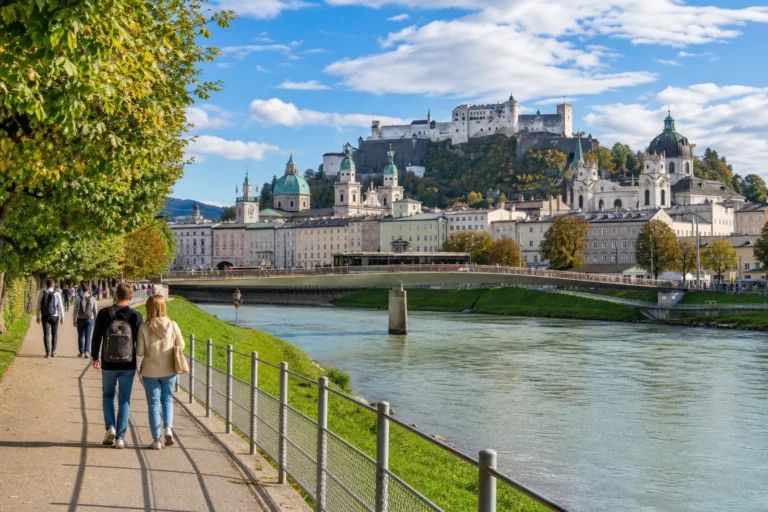
Walking the Altstadt reveals spires, domes and courtly facades set beneath Hohensalzburg Fortress and threaded with Mozart associations. The Salzach river and several historic bridges frame the centre and divide it from Neustadt; cobblestones and close‑built streets reward slow exploration.
For museum visits, themed walks and conservation details, check official cultural and tourism sources before you go.
Official Historic Centre (Altstadt) — UNESCO World Heritage site website →
Mirabell Palace and Gardens
Mirabell Palace and its formal gardens sit on the Salzach’s right bank and frame broad sightlines across the Altstadt up to Hohensalzburg Fortress. The palace, now housing municipal offices, dates to a princely summer house later remodelled in Baroque style; the gardens remain a planted public stage known for terraces, axial parterres and sculptural accents.
Highlights include the Marble Hall and its ceremonial stair, the Pegasus Fountain, terraced rose beds and the Zwerglgarten of carved figures. The gardens are primarily outdoors and free to stroll, while some palace rooms open for events or guided visits.
For special events and access to the Marmorsaal, verify current visitor rules on official city information pages.
Mozart's Birthplace (Mozart Geburtshaus)
Mozart’s Birthplace occupies the bright‑yellow Hagenauer House at Getreidegasse 9 in Salzburg’s UNESCO‑listed Old Town, where Wolfgang Amadé Mozart was born in 1756. The compact museum spreads over three storeys and combines domestic rooms, documents and musical objects that trace his childhood, family life and early instruments.
Exhibits include original letters, portraits and early instruments that highlight how Leopold Mozart organised his son’s education and travels. The museum is operated by the International Mozarteum Foundation and forms part of a wider network of Mozarteum sites.
The house can feel crowded in peak season and some rooms have stairs or restricted access; allow roughly an hour to see the principal rooms and consult official visitor pages for ticketing and accessibility updates.
Salzburg Cathedral (Dom zu Salzburg)
Salzburg Cathedral stands at the ceremonial heart of the Altstadt with a broad Baroque façade, tambour dome and a clear axial relationship with Domplatz. The present building, designed by Santino Solari under Prince‑Archbishop Markus Sittikus, was consecrated in 1628 and is regarded as a major early Baroque church north of the Alps.
Inside the cathedral is a spacious, light‑filled nave, a high dome and richly modelled stucco work. The adjacent cathedral museum displays movable treasures, and the bronze baptismal font is notable for its connection to Salzburg’s musical history.
Archaeological remains and a crypt beneath the floor explain the site’s long continuity. Visitors should check for service times and area closures before visiting.
Hellbrunn Palace and Trick Fountains
Hellbrunn is a purpose‑built early seventeenth‑century pleasure villa created to entertain and surprise, commissioned by Prince‑Archbishop Markus Sittikus. The estate’s water‑rich hill enabled the designers to engineer gravity‑fed fountains, grottoes and mechanical surprises that remain the site’s most famous features.
The Wasserspiele (trick fountains) route threads through grotto stages, squirting dining tables, hidden jets and water‑operated automata that illustrate mannerist humour and historic water technology. The fountain route is usually a guided or timed experience and can dampen clothes, so expect sprays and wear sensible footwear.
The Wasserspiele are seasonal and occasionally closed for conservation; check Hellbrunn’s official visitor information before you go.
Salzburg Museum
Salzburg Museum presents the visual and cultural story of Salzburg and its region across several historic and specialist sites rather than a single building. Collections span art, archaeology, applied arts, photography and everyday objects that explain the city’s urban growth and material culture from medieval times to modernity.
Exhibitions combine period rooms, sculptural works and documentary displays, with archaeological finds and medieval objects placing Salzburg in long perspective. The museum network hosts specialist venues ranging from fortress archaeology to toy and Celtic collections.
Allow at least an hour and a half for a main visit and consult the museum’s official visitor pages for current exhibitions, site‑specific access and combined‑ticket options.
Mozart Residence (Mozart Wohnhaus)
The Mozart Residence on Makartplatz occupies the family’s later Salzburg home where Wolfgang Amadé lived during formative years before his Vienna period. The house mixes reconstructed domestic rooms with music‑related material, including letters, autographs, original and period instruments, and listening stations that bring historical performances to life.
Operated by the International Mozarteum Foundation, the museum links its collections to wider research and audiovisual archives. A small ‘Magic Flute’ theatre house and the building’s restored fabric provide context for Mozart’s operatic and domestic world.
Visits feel intimate; plan roughly an hour and note that the museum provides a barrier‑free side entrance and posts current access and tour information on official pages.
Best Time to Visit Salzburg
Salzburg rewards visitors year‑round. Late spring through early autumn (May–September) brings warm weather, verdant gardens and the fullest schedule of outdoor concerts and festival fringe activities.
Late autumn and winter focus on indoor cultural programming and Christmas markets, while shoulder months (April and October) balance fewer crowds with still‑mild walking conditions.
SPECIAL EVENTS IN Salzburg
Salzburger Rupertikirtag
A long-established autumn cathedral fair in Salzburg’s Old Town celebrating the city’s patron saint, Rupert. The Rupertikirtag blends historic fairground rides, regional food, craft stalls, brass bands and traditional costumes, creating an atmospheric cultural event that draws both locals and visitors. Travelers interested in folk culture, seasonal street food, family-friendly entertainment, or photo opportunities in a historic urban setting will find the fair especially rewarding. The event is free to enter and staged across multiple squares around Salzburg Cathedral.
- Dates
- September 23, 2026 - September 27, 2026
- Venue
- Squares around Salzburg Cathedral (Alter Markt, Residenzplatz, Domplatz, Kapitelplatz, Mozartplatz)
Salzburger Christkindlmarkt am Dom- und Residenzplatz
The Salzburger Christkindlmarkt on the Domplatz and Residenzplatz is Salzburg’s historic, atmospheric Advent market set in the UNESCO-listed Old Town. Visitors come for traditional wooden huts selling local crafts and seasonal foods, live music and family-focused programming, and the market’s signature lighting and baroque-square setting. It’s a major winter draw for travelers seeking a compact, walkable holiday experience in Salzburg’s central sights and makes a practical stop for cultural sightseeing, craft shopping, and sampling regional seasonal specialties.
- Dates
- November 19, 2026 - January 1, 2027
- Venue
- Domplatz & Residenzplatz
Mozartwoche (Mozart Week)
Mozartwoche is Salzburg’s flagship annual festival devoted to the music and legacy of Wolfgang Amadeus Mozart. Presented by the Internationale Stiftung Mozarteum, the programme gathers world-class orchestras, soloists and chamber ensembles in high-profile concerts, operatic productions and special presentations in the city’s historic concert halls. It’s a major draw for classical-music travellers seeking top-tier Mozart interpretation and cultural immersion in Salzburg’s historic centre around the composer’s birthday.
- Dates
- January 21, 2027 - January 31, 2027
- Venue
- Internationale Stiftung Mozarteum (Großer Saal & Wiener Saal)
Osterfestspiele Salzburg (Salzburg Easter Festival)
The Salzburg Easter Festival is a prestigious annual classical-music and opera festival founded by Herbert von Karajan in 1967. Renowned orchestras, conductors and opera productions make it a must for serious music travelers seeking high-caliber performances in Salzburg's historic venues. The festival attracts international audiences and often features unique productions and prize presentations that complement Salzburg’s year-round musical heritage. Visitors appreciate the concentrated program, the city’s walkable cultural district, and the chance to combine festival attendance with Salzburg’s other musical attractions.
- Dates
- March 20, 2027 - March 29, 2027
- Venue
- Felsenreitschule
Salzburger Dult
The Salzburger Dult is a long‑running traditional folk fair that draws locals and visitors for merry rides, regional food, live music, and craft stalls. Held at the Messezentrum Salzburg, it’s one of western Austria’s largest Volksfeste and offers a mix of family-friendly attractions, beer‑garden atmosphere, and special concerts or featured acts. Travelers come to sample Salzburger culinary specialties, experience local folk culture, and enjoy lively evening entertainment. Check the official site for program details, special events, and any venue notices before visiting.
- Dates
- May 15, 2027 - May 23, 2027
- Venue
- Messezentrum Salzburg
Getting Around Salzburg
The historic core is highly walkable; most major sights — Hohensalzburg Fortress, Mirabell Gardens, Mozart’s Birthplace and Residence, Salzburg Cathedral, and Salzburg Museum — lie within short walking distances. The city’s public transport network (city buses and S‑Bahn regional trains) and well‑marked cycle paths make short transfers and day trips simple.
For hilltop or lakeside excursions, short regional‑rail or bus rides connect easily, and taxis or ride services fill gaps.
Location
Map of Salzburg, Austria
The interactive map loads only when you choose to view it.
Plan Your Visit to Salzburg
Salzburg’s compact centre means you can see many highlights on foot. If you plan multiple museum entries or public‑transport trips, consider a Salzburg Card to simplify access and skip separate tickets.
Reach Hohensalzburg via the Festungsbahn funicular from near Kapitelplatz; Hellbrunn lies south of the centre and is best reached by city bus (line 25) or bike. Allow extra time for narrow streets, steps and museum queues during high season and check official sites for current opening hours and accessibility statements.
Local Tips for Salzburg
Start early on Getreidegasse to visit Mozart’s Birthplace before crowds arrive and to enjoy the historic shopfronts. Use Mirabell Gardens and the Mönchsberg footpaths to frame views of the Cathedral and Fortress.
Book combined or timed museum tickets where available to reduce waiting, and reserve time for Hellbrunn’s trick fountains. The fountain route is seasonal and may dampen clothes.
Wear comfortable shoes for cobbles and steps and consult official visitor pages for ticketing and seasonal closures.
Live conditions
Current Weather

Updated 2026-09-20 20:45
- Feels like
- 18°C / 65°F
- Today’s high / low
- 20°C / 68°F · 14°C / 57°F
- Humidity
- 77%
- Wind
- ↙ 5 km/h
- Precipitation
- 0 mm
- Chance of rain
- 14%
- Local time
- 2026-09-20 21:03
Safety
Salzburg is generally a low‑crime tourist city, but petty theft can occur in crowded spots such as Getreidegasse, Mirabell and fortress approaches; keep valuables secure and be vigilant at crowded viewpoints and riverbanks. Follow posted safety instructions at historic sites — steep ramparts, narrow stairways and wet surfaces near Hellbrunn’s water features can be hazardous.
Many museums and older buildings have limited barrier‑free access; check official accessibility statements before arrival.