Travel Guide
Find top sights, local places, maps, weather, and simple trip tips for Seoul, South Korea.
Looking for Things to Do in Seoul, South Korea? Use this guide to compare top sights, local tips, maps, weather, and nearby places.
If you’re searching for things to do in Seoul the city rewards with a concentrated mix of royal palaces, hanok neighborhoods, bustling shopping districts and panoramic viewpoints. Seoul’s central cluster—Gyeongbokgung and Changdeokgung with Bukchon and Insadong nearby—gives immediate historical context, while neighborhoods like Myeongdong and Hongdae show contemporary retail and youth culture.
Riverside parks, restored promenades and tall observation decks make the city easy to navigate on foot and by rapid transit.
Why Visit Seoul
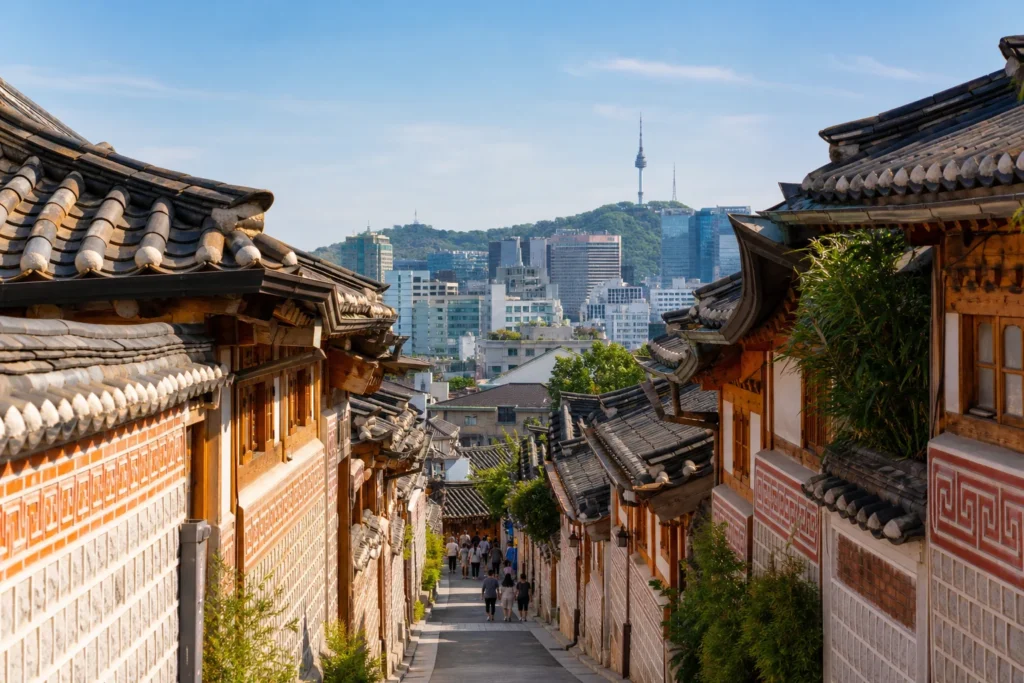
Visitors come for concentrated contrasts: accessible Joseon palaces and hanok alleys that show deep history sit beside high-energy retail streets and creative neighborhoods.
Food markets such as Gwangjang offer hands-on culinary experiences, restored urban spaces like Cheonggyecheon create pleasant walking corridors, and viewpoints at N Seoul Tower or Seoul Sky help orient you across the Han River and the skyline.
These layered experiences make Seoul an inviting destination for first-time visitors and for repeat travelers seeking new neighborhoods and seasonal programming.
Top Things to Do in Seoul, South Korea
Seoul’s highlights are compact enough to combine across a day or two: historic palaces and hanok streets in Jongno, lively shopping in Myeongdong and Hongdae, market food at Gwangjang, plus skyline views from N Seoul Tower or Lotte World Tower.
Gyeongbokgung Palace
Gyeongbokgung Palace is the principal palace of the Joseon dynasty and occupies a broad axial layout framed by Gwanghwamun Gate and the Bugaksan backdrop. A typical visit moves through sequential gates into layered court spaces, culminating at Geunjeongjeon, the raised throne hall used for official ceremonies.
Nearby Gyeonghoeru pavilion stands over a reflective pond once used for royal banquets, while smaller pavilions and residential halls illustrate court life and hierarchy.
On‑site interpretation, guided tours and attached museums (the National Palace Museum and the National Folk Museum) provide context for the architecture and material culture. Allow time to walk the courts slowly and to see both formal halls and quieter garden pavilions; check schedules for special ceremonies and costume experiences.
Changdeokgung Palace (and Huwon/Secret Garden)
Changdeokgung Palace is celebrated for an adaptive layout that follows the natural hillside and pungsu (feng shui) principles, arranging official halls to the south and a large rear garden to the north.
The complex separates administrative, residential and ceremonial spaces across three courts, with wooden structures on stone foundations and curving pathways that frame intimate views and secluded pockets of calm.
Huwon, the Secret Garden, occupies much of the rear area and contains ponds, winding streams, small hills and discrete pavilions once used for private royal rest and entertainments. Changdeokgung’s palace‑and‑garden composition earned UNESCO recognition; access to Huwon is managed, so check entry rules and guided‑walk schedules before you go.
Official Changdeokgung Palace (and Huwon/Secret Garden) website →
Bukchon Hanok Village
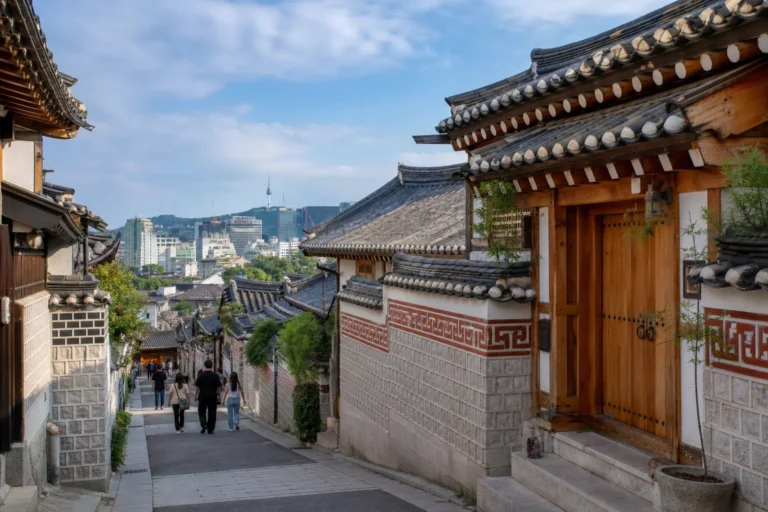
Bukchon Hanok Village preserves several hundred traditional hanok houses on a ridge between Gyeongbokgung and Changdeokgung, many of which remain lived‑in homes rather than reconstructions. Narrow lanes reveal tiled roofs, wooden beams, ondol floor plans and stone foundations that demonstrate Joseon‑era domestic architecture.
The neighborhood includes named pockets such as Gahoe‑dong and Gye‑dong, plus resources like the Bukchon Cultural Center and official walking maps with viewpoints and interpretive stops.
Several hanok function as small museums, artist workshops and cafés, giving visitors hands‑on craft encounters and short demonstrations. Because Bukchon is a living neighborhood, respect residents by keeping noise low, avoiding interior filming and following local visitor guidance.
Insadong Cultural Street
Insadong Cultural Street is a long‑established corridor for traditional arts, antiques and crafts in Jongno. The main thoroughfare and side alleys host galleries, calligraphy and brush shops, hanji paper sellers, ceramics studios and traditional teahouses.
Visitors browse folk paintings and ceramics alongside contemporary craft boutiques, while stair‑linked complexes like Ssamziegil provide compact curated shopping and rotating exhibitions.
Insadong also serves as a weekend performance and demonstration space with buskers and craft stalls. Its proximity to Jogyesa Temple and palace precincts makes pairing visits easy; for a richer experience ask shopkeepers about materials and sit in a teahouse to sample brewed teas and regional snacks.
N Seoul Tower (Namsan Tower)
N Seoul Tower crowns wooded Namsan Park and provides layered views that move from parkland and plaza up to panoramic observation decks. The tower’s high‑speed elevator reaches an observation floor with 360‑degree sightlines across central Seoul and the surrounding skyline.
The complex includes restaurants, shops and small exhibition spaces, so visits often combine skyline viewing with a meal or terrace walk.
Many visitors approach on foot along shaded park trails, by cable car, or via a local shuttle bus, enjoying the contrast between the greenery of Namsan and the dense city below. Features such as the Love Locks terrace and photo platforms are popular, and visibility varies with weather and air quality.
Myeongdong Shopping District
Myeongdong is a compact, intensely commercial neighborhood known for fashion, cosmetics and lively street food. The district concentrates flagship stores, Korean cosmetic brands and small boutiques along a dense main artery and side alleys.
Daytime shopping focuses on stores and department‑store duty‑free floors; evenings bring temporary street‑food carts offering quick snacks and a bustling atmosphere.
The area is easy to navigate on foot from the subway, but expect heavy foot traffic at peak times. Many shops offer tax‑free options for nonresidents—verify policies at purchase—and the neighborhood is a convenient first stop to experience Seoul’s contemporary consumer culture and street‑food scene.
Hongdae (Hongik University area)
Hongdae centers on the creative campus of Hongik University and channels student‑driven energy into murals, experimental cafés, galleries and playful storefronts. The pedestrianized Hongdae Walking Street and R2 busking zone form public hearts where performers, dance crews and singer‑songwriters busk and weekend markets showcase student crafts.
Side lanes host small live venues and indie music nights that complement the larger Club Street nightlife.
Hongdae concentrates Seoul’s youthful DIY arts, experimental music and café culture; exploring both daytime and late‑evening atmospheres shows very different sides of the neighborhood. Be mindful of designated performance zones and local residents when photographing or filming, and check municipal pages for scheduled markets and program updates.
Cheonggyecheon Stream
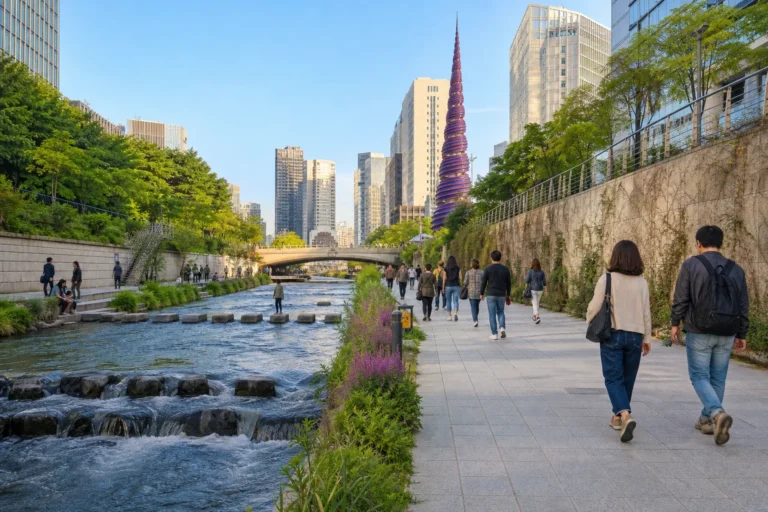
Cheonggyecheon Stream is a restored linear urban waterway and pedestrian corridor that runs through central Seoul. The modern restoration reopened a downtown section previously covered by infrastructure, transforming it into a green axis of stepped promenades, planted banks, small bridges and public art.
Visitors stroll along the shallow, gently flowing channel, pause at interpretive plaques and enjoy occasional installations and seasonal programming.
The project prioritized pedestrian access and daylighting of an urban watercourse, creating habitat pockets and quieter soundscapes amid the city. Use main plazas and bridge crossings as orientation points and plan to experience a section of the stream slowly rather than walking the entire corridor.
Gwangjang Market
Gwangjang Market is one of Seoul’s oldest working markets, established in 1905 and still concentrating fabrics, hanbok materials and tailoring on upper floors while food alleys draw most visitors.
The market’s covered alleys create a layered retail environment where longtime vendors serve dishes such as bindaetteok (mung‑bean pancakes), mayak gimbap (small seasoned rice rolls), sundae (blood sausage) and yukhoe (seasoned raw beef).
Eating here is communal at shared counters or metal tables while you watch food prepared at the stall. The market preserves urban craft and daily foodways—watch hanbok makers upstairs and then descend to crowded food rows.
Bring cash if you prefer quick transactions and arrive ready to eat in close quarters.
Lotte World Tower / Seoul Sky
Lotte World Tower rises 555 meters and houses mixed uses—retail, offices, residences and a hotel—while Seoul Sky occupies top floors as an observation complex. Indoor galleries provide 360‑degree panoramas across the Han River and greater Seoul, and the Sky Deck features a glass‑floor section and a bridged skywalk for dramatic height exposure.
High‑speed elevators (Sky Shuttle) shorten the ascent to the observatory, which also stages themed exhibitions, photo zones and a dessert café. Visibility depends on weather and air clarity; plan for timed entry or advance reservations and check official Seoul Sky notices for access rules and temporary displays before you go.
Best Time to Visit Seoul
Seoul has four distinct seasons. Spring (April–May) brings comfortable temperatures and blossoms; autumn (mid‑September–November) is generally the clearest, with colorful foliage ideal for palace gardens and short hikes.
Summer is hot, humid and includes monsoon rains; winter is cold and dry with clearer air and fewer visitors. For the best outdoor walking and sightseeing, aim for spring or autumn to balance mild weather, festivals and full access to palace grounds and parks.
Getting Around Seoul
Seoul’s subway is extensive, fast and tourist‑friendly, connecting major attractions and airports. Dense bus routes and taxis fill gaps.
Central sights—palaces, Bukchon, Insadong, Myeongdong—are walkable with short transit hops; Hongdae and Lotte World Tower are reachable on direct subway lines. Use a rechargeable T‑money card for seamless fare payment.
Station signage and many apps offer English directions; avoid peak‑hour crowds for a more comfortable trip.
Location
Map of Seoul, South Korea
The interactive map loads only when you choose to view it.
Plan Your Visit to Seoul
Carry a rechargeable T‑money card for subways, buses and many taxis; cards are sold at convenience stores and station kiosks. Subway hours generally run from about 05:30 to around midnight, so check last‑train times if you’re out late.
Wear comfortable shoes for short walking segments between sites and heavy pedestrian traffic in shopping areas. For palaces and the Secret Garden, confirm ticketing and timed-entry requirements and allow extra time for security checks and crowds.
Local Tips for Seoul
Save a few Korean phrases and keep key addresses in Hangul on your phone for taxi drivers. Download local navigation apps (KakaoMap or Naver Map) and the Visit Seoul app for attraction details.
Cash remains useful in traditional markets and for small vendors, though cards and T‑money are widely accepted. Visit palaces, Bukchon and Insadong early in the morning or late afternoon on weekdays to avoid peak crowds, and respect quiet and photo restrictions where residents and living hanok remain active.
Live conditions
Current Weather
Updated 2026-08-25 13:30
- Feels like
- 34°C / 93°F
- Today’s high / low
- 31°C / 88°F · 25°C / 77°F
- Humidity
- 54%
- Wind
- ← 13 km/h
- Precipitation
- 0 mm
- Chance of rain
- 60%
- Local time
- 2026-08-25 13:46
Places to Visit Near Seoul
Gyeongbokgung Palace, Changdeokgung Palace (including Huwon/Secret Garden), Bukchon Hanok Village and Insadong Cultural Street sit adjacent within central Jongno and are easy to combine on foot or with short subway rides.
Cheonggyecheon Stream runs through downtown and links to Gwangjang Market, where food alleys and textile vendors give a strong sense of local commerce and cuisine.
Myeongdong Shopping District and N Seoul Tower (Namsan) lie to the southwest of Jongno. Hongdae (Hongik University area) is west with nightlife and busking.
Lotte World Tower / Seoul Sky is in Jamsil to the southeast and reachable by subway.
Safety
Seoul is generally safe for visitors, with low violent‑crime rates in tourist areas. Take normal precautions: use well‑lit routes after dark, avoid isolated alleys, and secure belongings in crowded markets and on packed subways.
In emergencies call police at 112 or medical assistance at 119; tourist help is available via 1330. Large demonstrations can occur—avoid protest areas and follow local instructions and official channels for major disruptions.