
Travel Guide
Find top sights, local places, maps, weather, and simple trip tips for Mexico City, Mexico.
Looking for Things to Do in Mexico City, Mexico? Use this guide to compare top sights, local tips, maps, weather, and nearby places.
Things to Do in Mexico City start with its mix of pre-Hispanic ruins, grand colonial plazas, world-class museums, and leafy parks. This guide helps you compare top sights, local tips, maps, weather, and nearby day trips.
Neighborhoods like the Historic Center, Chapultepec, Coyoacán, Roma, Condesa, and Polanco each offer a distinct feel. Within short distances you can move from the Zócalo to major museums or travel northeast to Teotihuacán for monumental pyramids.
Why Visit Mexico City
Mexico City packs a remarkable concentration of culture and history into one metropolis. Its museums—from the Museo Nacional de Antropología to Museo Frida Kahlo—explain Mexico’s deep past and vibrant present.
Historic sites, neighborhoods, and living traditions such as Xochimilco’s canals give travelers varied experiences in a compact area.
The city also delivers excellent food, parks, and festivals. That mix makes Mexico City efficient for travelers who want history, art, markets, and green space without long transfers between highlights.
Top Things to Do in Mexico City, Mexico
From the ceremonial Zócalo to the pyramids at Teotihuacán, these essential sites introduce Mexico City’s layered history, major museums, and lively neighborhoods.
Zócalo (Plaza de la Constitución)
The Zócalo, officially Plaza de la Constitución, anchors Mexico City’s Historic Center. This broad rectangular plaza sits on the heart of old Tenochtitlan and is a short walk from archaeological remains and the Templo Mayor museum.
Flanked by the Metropolitan Cathedral and the National Palace, the square hosts ceremonies, concerts, demonstrations, and official commemorations. Its open expanse and surrounding colonial arcades make it an ideal starting point for exploring the city’s layered history.
Check official event schedules before your visit to avoid or join large public events.
Museo Nacional de Antropología (National Museum of Anthropology)
The Museo Nacional de Antropología sits inside Chapultepec Park and frames a central courtyard under the famous concrete “paraguas” canopy. Galleries radiate from that courtyard, grouping artifacts by region and period to explain social organization, ritual practice, and technological achievements across pre‑Columbian Mexico.
Signature objects—such as the Sun Stone, monumental Olmec heads, Pakal’s funerary mask, and Atlantean figures—anchor the museum’s reputation. The building’s design and rotating exhibitions also shape the visitor experience, so allow time for the major halls and check official channels for ticketing and special displays.
Official Museo Nacional de Antropología (National Museum of Anthropology) website →
Bosque de Chapultepec (Chapultepec Park)
Bosque de Chapultepec is Mexico City’s largest historic green space, spread across linked sections of canopy, formal avenues, lakes, and open lawns. The park mixes natural areas with cultural institutions and memorials that reflect national history.
Within the park are the Castillo de Chapultepec (Museum of History), the Museo Nacional de Antropología nearby, a zoo, botanical gardens, and sculptural monuments. A visit works best as a sequence of short stops—walk shaded promenades, climb to the castle for skyline views, and pause at museums and picnic areas.
Verify closures or reroutes before planning a day in the park.
Palacio de Bellas Artes (Palace of Fine Arts)
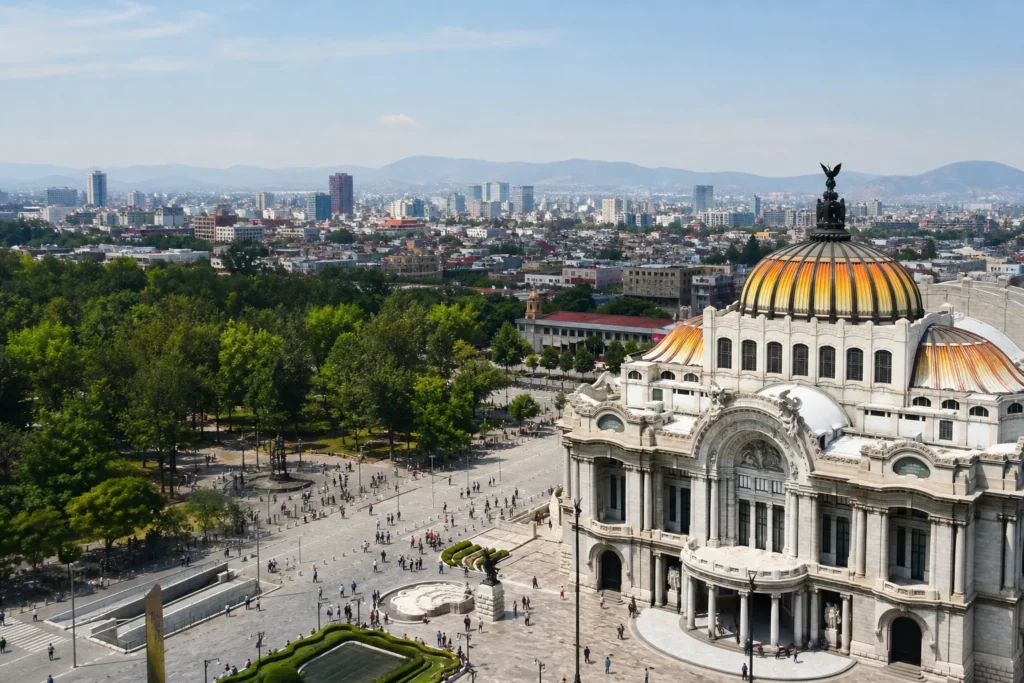
Palacio de Bellas Artes stands beside Alameda Central as Mexico’s premier cultural palace. The building hosts opera, dance, orchestral performances, and rotating visual-art exhibitions beneath a striking dome that mixes Art Nouveau and Art Deco elements.
Inside, visitors find large-scale murals by the Mexican muralist generation and an opalescent stage curtain. The palace functions as both a performance venue and a museum gallery.
Because it often hosts live programs and conservation work, check schedules and possible closures before you go; guided tours explain the building’s design and artistic treasures.
Official Palacio de Bellas Artes (Palace of Fine Arts) website →
Museo Frida Kahlo (Casa Azul)
The Museo Frida Kahlo, commonly known as the Casa Azul, preserves the house where Frida Kahlo lived and worked in Coyoacán. The museum keeps original rooms, a compact studio, and a garden courtyard that shaped her daily life and creative routine.
Displays mix Frida’s paintings with personal objects, domestic textiles, and items collected by Frida and Diego Rivera. The intimate domestic layout highlights the relationship between daily life and artistic practice.
The museum is managed as a trust and balances public display with careful conservation—check the official site for ticketing and access rules.
Xochimilco canals and trajineras
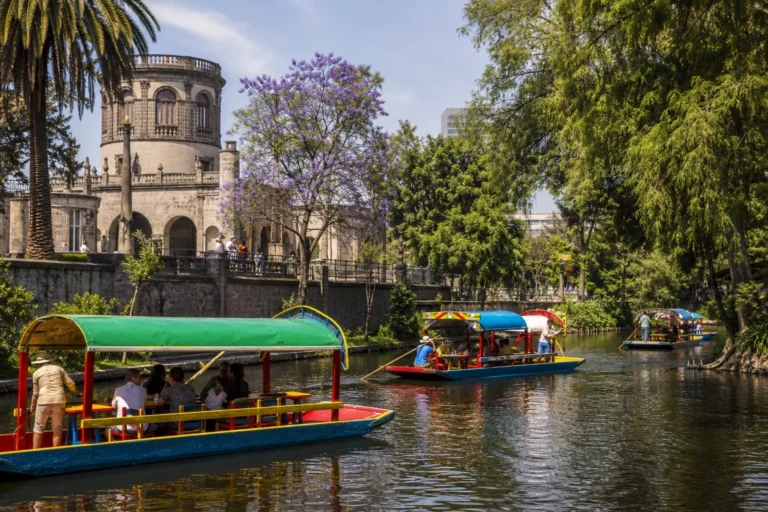
Xochimilco preserves fragments of the Valley of Mexico’s ancient lake system and chinampa agriculture. The UNESCO‑recognized canals and chinampas form a living cultural landscape where agriculture, ritual life, and community traditions continue alongside tourism.
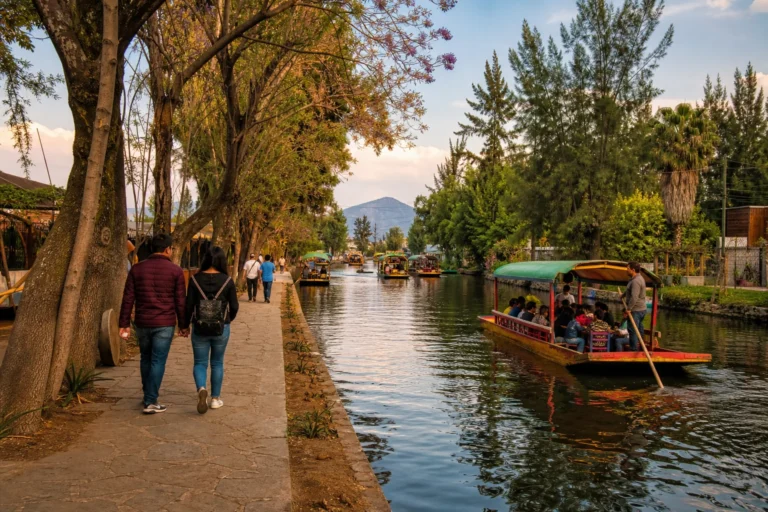
Most visitors take a trajinera, a brightly painted flat boat piloted by local boatmen. Boats pass willow-lined banks and floating gardens while vendors and musicians often provide food and serenades.
Use licensed piers and experienced operators, and allow time to visit markets, village squares, and chinampa plots.
Teotihuacán archaeological site
Teotihuacán is a monumental pre‑Hispanic city northeast of Mexico City, defined by its Avenue of the Dead and the Pyramid of the Sun and Pyramid of the Moon. Walking those alignments conveys the city’s deliberate urban plan and ceremonial geometry.
Balance panoramic climbs—where permitted—with visits to residential compounds, carved sculptures, and fragments of painted murals. The on‑site museum and interpretation trails explain domestic layouts and symbolic motifs.
Because the site is managed for conservation, verify access rules and permitted routes on the official site before visiting.
Museo Soumaya
Museo Soumaya displays a private collection in a distinctive modern building in Nuevo Polanco. Founded by Fundación Carlos Slim, the museum brings together pre‑Hispanic objects, colonial sculpture, European old masters, nineteenth‑century French art, and modern Latin American works to create cross‑period dialogues.
The building’s reflective, hexagonal‑tile facade and column‑free interior create a compact, vertical sequence of galleries that emphasize sculptural display. Highlights include an important grouping of Auguste Rodin works.
Check the museum’s official channels for current exhibitions and visitor services.
Best Time to Visit Mexico City
Mexico City’s highland location keeps temperatures mild year-round. The most comfortable travel window is late fall through spring (November–April) when rain is minimal and outdoor exploring is easiest.
Summer (June–September) brings regular afternoon showers that cool the city but can interrupt outdoor plans. Major events—Day of the Dead and Independence Day—offer rich local programming but also higher visitor density, so book in advance for those dates.
Getting Around Mexico City
The city’s transport network is extensive: the Metro and some light-rail lines serve central corridors, while Metrobús BRT and buses cover major avenues. Rideshare services and taxis are common for door-to-door trips.
Many central districts are compact and pleasant to walk. Cycling infrastructure and public bike programs operate in core areas.
For Xochimilco or Teotihuacán, regional buses, organized tours, or private transfers are typical—allow extra time for traffic.
Location
Map of Mexico City, Mexico
The interactive map loads only when you choose to view it.
Plan Your Visit to Mexico City
Group sights by area to avoid long transfers: the Historic Center for the Zócalo and Cathedral. Chapultepec for the Museo Nacional de Antropología and Bosque.
Coyoacán for Museo Frida Kahlo. Xochimilco for canal rides.
And the northeast corridor for Teotihuacán.
Use the Metro for many inner-city trips and combine it with authorized taxis or ride-hailing for late-night journeys. Carry an offline map and a charged phone.
Many museums, trajinera operators, and special exhibits recommend advance reservations at peak times.
Local Tips for Mexico City
Pack a lightweight daypack, a refillable water bottle, and layered clothing—elevation and sun can change conditions quickly. Learn a few Spanish phrases: staff at parks and some museums often use Spanish first.
At Chapultepec, follow marked entrances and official paths to reach major museums and the castle. For Xochimilco, use licensed piers and agree prices with trajinera operators in advance.
For Teotihuacán, visit in the morning or late afternoon to avoid heat and crowded tour buses.
Live conditions
Current Weather

Updated 2026-08-24 23:30
- Feels like
- 14°C / 58°F
- Today’s high / low
- 19°C / 66°F · 12°C / 53°F
- Humidity
- 78%
- Wind
- ↙ 5 km/h
- Precipitation
- 0.22 mm
- Chance of rain
- 84%
- Local time
- 2026-08-24 23:41
Places to Visit Near Mexico City
Historic Center: Zócalo (Plaza de la Constitución), Metropolitan Cathedral, the National Palace, and nearby Templo Mayor form the colonial and ceremonial core. Walk pedestrian lanes and arcades to explore layered history.
Chapultepec area: Bosque de Chapultepec, Museo Nacional de Antropología, and Castillo de Chapultepec create a concentrated cultural district with museums, lakes, and memorials that suit half- or full-day visits.
Coyoacán: Museo Frida Kahlo (Casa Azul), Jardín Centenario, and Mercado de Coyoacán offer a neighborhood rhythm of cafes, plazas, and crafts. Southern canals and chinampa plots in Xochimilco provide waterways experiences, while Teotihuacán to the northeast is a major day-trip site of pyramids and broad ceremonial avenues.
Safety
Mexico City is generally safe for visitors who take common-sense precautions. Avoid poorly lit or deserted streets at night, keep valuables discreet, and use official taxis or reputable ride-hailing services after dark.
The Metro is efficient but crowded—watch bags during peak hours and avoid empty cars late at night. Follow posted signage and staff directions at parks and archaeological sites, and consult official city or transit sources for any current advisories.