
Travel Guide
Find top sights, local places, maps, weather, and simple trip tips for Athens, Greece.
Looking for Things to Do in Athens, Greece? Use this guide to compare top sights, local tips, maps, weather, and nearby places.
If you’re searching for things to do in Athens you’ll find a compact historic core where the Acropolis and Parthenon dominate a walkable array of major sites. The city pairs world-class antiquities (the Acropolis, Acropolis Museum and National Archaeological Museum) with intimate neighborhoods such as Plaka and Monastiraki, plus hilltop viewpoints like Mount Lycabettus.
That compactness makes it straightforward to combine deep museum visits with leisurely neighborhood strolls, rooftop views and local cafés.
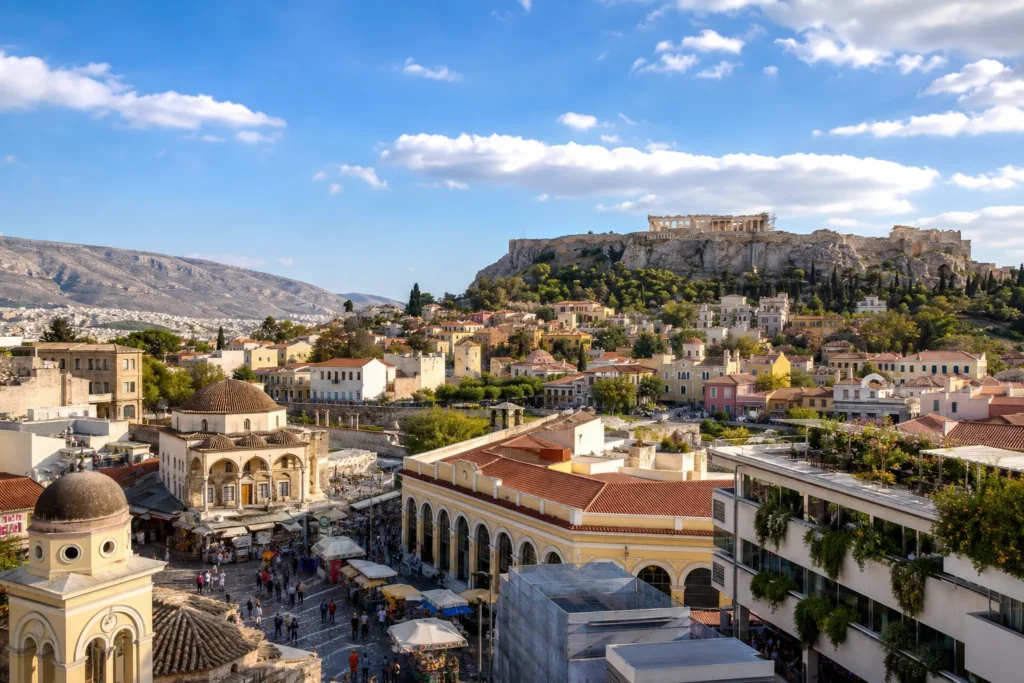
Why Visit Athens
Athens concentrates an exceptional range of ancient monuments and museums within a small, navigable area. The Acropolis and Parthenon are the city’s defining landmarks, while the Acropolis Museum and National Archaeological Museum place finds in rich archaeological and historical context.
Strolling Plaka, exploring the Ancient and Roman Agoras, watching the Evzones at Syntagma, and climbing Lycabettus mix archaeology, civic ritual and everyday urban life, so even short visits can feel complete and varied.
Top Things to Do in Athens, Greece
Athens’ highlights sit close together, so you can pair major archaeological sites with museums and neighborhood wandering in a single day. Below are the main attractions and what to expect at each.
Acropolis and the Parthenon
The Acropolis crowns a limestone outcrop above central Athens and presents a closely grouped sequence of Classical monuments centered on the Parthenon, a fifth-century BCE Doric temple. Visitors see the Parthenon’s friezes, metopes and pediments alongside the Propylaea gateway, the Erechtheion with its Caryatid porch, and the Temple of Athena Nike.
Conservation work is visible across the site; anastylosis and matching Pentelic marble have been used in long-term restoration projects.
Expect uneven surfaces and steep approaches. Bring sun protection and sturdy shoes, plan visits for cooler hours, and check official access information before you go.
Acropolis Museum
Sited beneath the Acropolis’ southern slope, the Acropolis Museum arranges finds to reflect the archaeological sequence and the Parthenon’s sculptural program. The museum’s transparent galleries and raised structure create visual links to the rock above; highlights include the Parthenon Gallery with surviving sculptural elements and the original Caryatids displayed on a specially lit gallery.
Large glass floors reveal ongoing excavations beneath the building, emphasizing the city’s layered past.
The museum is interpretive and focuses on conservation and context—check the museum’s official visitor information for temporary exhibitions and accessibility arrangements before visiting.
Ancient Agora of Athens
The Ancient Agora was Athens’ marketplace and civic center, with foundations and monuments that map public life across Archaic to Roman periods. Excavations by the American School of Classical Studies have revealed long occupation layers and everyday finds—inscriptions, juror tickets and pottery—that illuminate law, commerce and religion.
Key monuments include the reconstructed Stoa of Attalos, which houses the Agora Museum, and the Hephaisteion (Theseion), one of Greece’s best-preserved Doric temples.
Visitors walk open squares and archaeological paving; the Stoa of Attalos offers sheltered displays and interpretive context. Verify access and ticketing details on official sites before visiting.
National Archaeological Museum
The National Archaeological Museum is Greece’s largest archaeology museum and a major reference for the ancient Mediterranean. Its collections span Prehistory through Late Antiquity and include Cycladic figurines, frescoes from Akrotiri, Mycenaean goldwork, and prominent bronzes such as the Artemision and Antikythera figures.
The museum also houses the Antikythera Mechanism, an extraordinary ancient geared device.
The neoclassical building contains dense galleries and large sculpture halls; allow time for focused sections rather than trying to see everything. Check photography rules, cloakroom services and accessibility information on the museum’s official pages.
Plaka historic neighborhood (including Anafiotika)
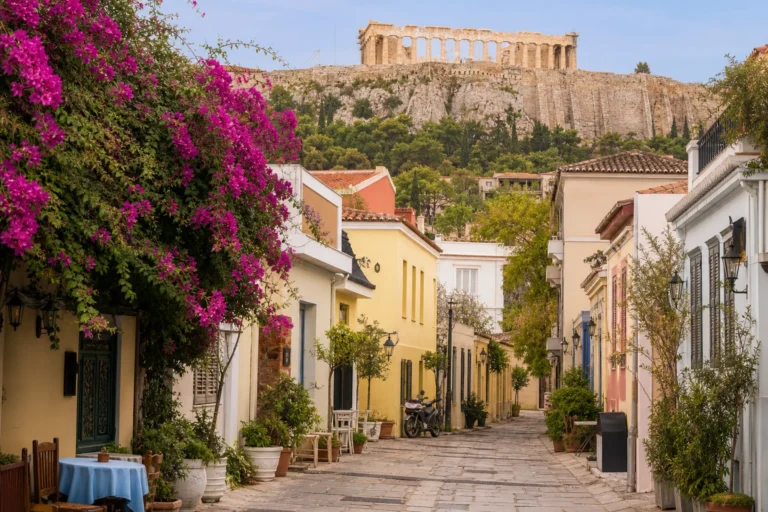
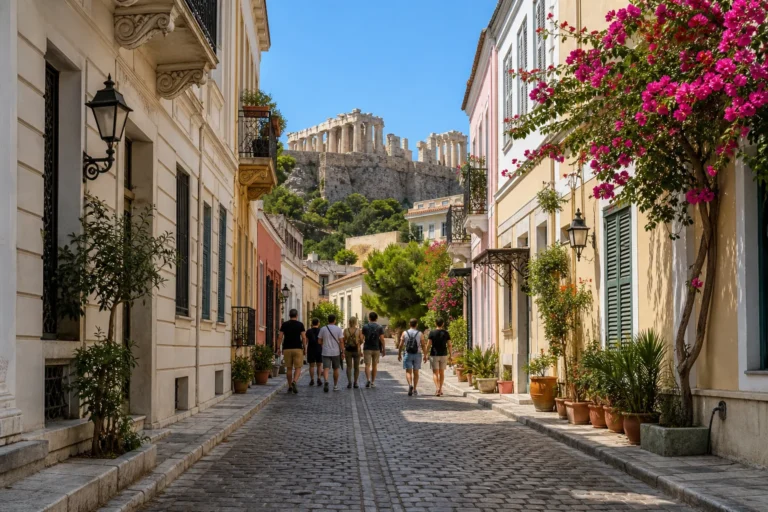
Plaka lies beneath the Acropolis and reads like an urban palimpsest, where Ottoman-era houses, nineteenth-century neoclassical buildings and Byzantine chapels coexist along narrow alleys. Wandering its lanes reveals small museums, family-run tavernas and craft shops; the area’s layered history is the primary attraction.
Anafiotika is a pocket on Plaka’s slope with whitewashed, Cycladic-style houses built by island craftsmen in the 1800s, offering a quieter, photogenic micro-village feel.
Explore by foot, watch for uneven pedestrian streets and steps, and treat the neighborhood respectfully—its character depends on residents and small businesses.
Official Plaka historic neighborhood (including Anafiotika) website →
Syntagma Square and the Hellenic Parliament (Evzones/changing of the guard)
Syntagma Square is Athens’ modern civic center, fronting the nineteenth-century Hellenic Parliament and the Tomb of the Unknown Soldier. The Presidential Guard, the Evzones, perform an hourly changing of the guard and a larger weekly ceremonial parade in traditional uniform, making the square a focal point for civic ritual and visitors.
The Parliament occasionally offers guided tours, though schedules depend on parliamentary business.
Approach respectfully, observe from designated viewpoints, and be aware that demonstrations or security measures can affect access. Check official Parliament or city sources before planning a visit.
Official Syntagma Square and the Hellenic Parliament (Evzones/changing of the guard) website →
Mount Lycabettus (Lykavittos)
Mount Lycabettus is Athens’ highest urban viewpoint, a pine-covered limestone cone rising to about 277 metres and offering sweeping panoramas of the Acropolis, Aegean and surrounding hills. The summit has a small whitewashed Chapel of Saint George, a café/restaurant and a compact plaza for photography and sunset views.
Walkers can ascend via planted paths and stepped trails, while a short funicular from Kolonaki provides an easier approach.
Wear sturdy shoes for uneven paths and expect exposed, wind-prone conditions at the top. Check local sources for funicular operation and seasonal events before you go.
Panathenaic Stadium (Kallimarmaro)
The Panathenaic Stadium, known as Kallimarmaro, occupies the valley used for ancient Panathenaic contests and was rebuilt in gleaming Pentelic marble in the nineteenth century. Its restored U-shaped marble bowl became a symbol of Greece’s Olympic revival and was the site of the first modern Olympic Games in 1896.
Visitors walk the steep marble tiers, pass through vaulted corridors, and view museum displays interpreting the stadium’s long athletic and civic history.
Be prepared for hard, reflective marble that can be sun-bright and slippery when wet, and follow conservation signage. Check official visitor information for tours and event schedules.
Monastiraki Square and the Roman Agora
Monastiraki Square is a lively market crossroads where narrow alleys open into pedestrian streets, anchored by the historic Tzistarakis Mosque and surrounded by flea markets, antique shops and cafés.
Just beyond the square the Roman Agora preserves post-classical streets, colonnades and the octagonal Tower of the Winds, which once functioned as a clock and weather station. A surviving marble gateway dedicated to Athena marks the Roman site’s entrance.
Visiting combines open-air archaeology with everyday urban life; wear sturdy shoes for uneven surfaces and verify access arrangements on official municipal or cultural pages before you go.
Best Time to Visit Athens
Late spring (May–early June) and early autumn (September–October) offer the most comfortable sightseeing: warm daytime temperatures, long daylight, and smaller crowds than high summer. Late winter and early spring are good for fewer visitors and museum access, though outdoor comfort is cooler.
Summer (July–August) is very hot and busy—plan early-morning or late-afternoon site visits and reserve indoor museum time during peak heat.
Getting Around Athens
Central Athens is highly walkable: many major sights lie within short walks of one another. The integrated public-transport network—metro (Lines 1–3), buses, trolleybuses and tram—makes longer hops simple, with single tickets or multi-day OASA passes valid across modes.
Metro stops for central sightseeing include Syntagma, Monastiraki and Acropolis. Taxis are widely available and relatively inexpensive for short trips.
Expect some uphill sections and cobbles—comfortable shoes and a transit app or city map make navigation straightforward.
Location
Map of Athens, Greece
The interactive map loads only when you choose to view it.
Plan Your Visit to Athens
Athens centers on a compact historic core, so plan routes that combine nearby sites (the Acropolis, Acropolis Museum, Ancient Agora, Monastiraki, Plaka and Syntagma). Use the Athens Metro (Lines 1–3) and OASA buses/trams for farther destinations; Syntagma and Acropolis stations are convenient for central museums and monuments.
Buy multi-day OASA passes for unlimited rides and book timed-entry tickets for the Acropolis and Acropolis Museum in high season to avoid queues and capacity limits.
Local Tips for Athens
Start early to see the Acropolis and Parthenon in cooler light and with fewer crowds, then visit the Acropolis Museum later to follow artifacts with their original context. Wear sturdy shoes for uneven archaeological surfaces and narrow streets in Anafiotika and the Agoras.
Carry a refillable water bottle—many museums and squares have fountains or cafés—and reserve popular rooftop restaurants near the Acropolis on busy summer nights.
Live conditions
Current Weather

Updated 2026-08-25 06:45
- Feels like
- 26°C / 80°F
- Today’s high / low
- 36°C / 97°F · 26°C / 79°F
- Humidity
- 45%
- Wind
- ↑ 12 km/h
- Precipitation
- 0 mm
- Chance of rain
- 1%
- Local time
- 2026-08-25 06:53
Places to Visit Near Athens
The hilltop citadel is the city’s central landmark and a useful starting point for routing around central Athens.
The museum sits beneath the Rock and links finds directly to the monuments above.
The Agora and Stoa of Attalos lie a short walk from Monastiraki and illustrate Athens’ civic life.
A key repository for artifacts spanning prehistoric to late antique Greece.
The historic neighborhood below the Acropolis mixes neoclassical lanes with island-like Anafiotika houses.
Civic ceremonies and the Tomb of the Unknown Soldier anchor city-center itineraries.
The city’s highest urban hill offers panoramic views and a funicular from Kolonaki.
Near the National Garden, the all-marble stadium connects ancient athletics with the modern Olympics.
A lively market hub and nearby Roman Forum with the Tower of the Winds.
Safety in Athens
Athens is a typical major-city destination: violent crime is rare, but petty theft and pickpocketing occur in crowded tourist zones, busy metro lines and outdoor markets. Keep valuables secure in front-closure bags, split cash and cards, and be especially aware near Syntagma, Monastiraki and transit hubs.
Follow local transport rules and staff directions. On archaeological sites watch for steep, uneven paths and avoid cliff edges at viewpoints, especially after dusk.