
Travel Guide
Find top sights, local places, maps, weather, and simple trip tips for Berlin, Germany.
Looking for Things to Do in Berlin, Germany? Use this guide to compare top sights, local tips, maps, weather, and nearby places.
Berlin is Germany’s capital and a large, polycentric metropolis where 20th‑century history, broad cultural institutions, and lively neighborhood life coexist. The cityscape moves from the neoclassical Brandenburg Gate and the Reichstag’s glass dome to the UNESCO‑listed museums on Museum Island, the open‑air East Side Gallery, and expansive green spaces such as the Großer Tiergarten.
If you’re searching for things to do in Berlin, you’ll find world‑class museums, solemn and accessible memorials about the city’s modern history, creative neighborhoods with distinct food and nightlife scenes, and rivers and parks that invite relaxed exploration.
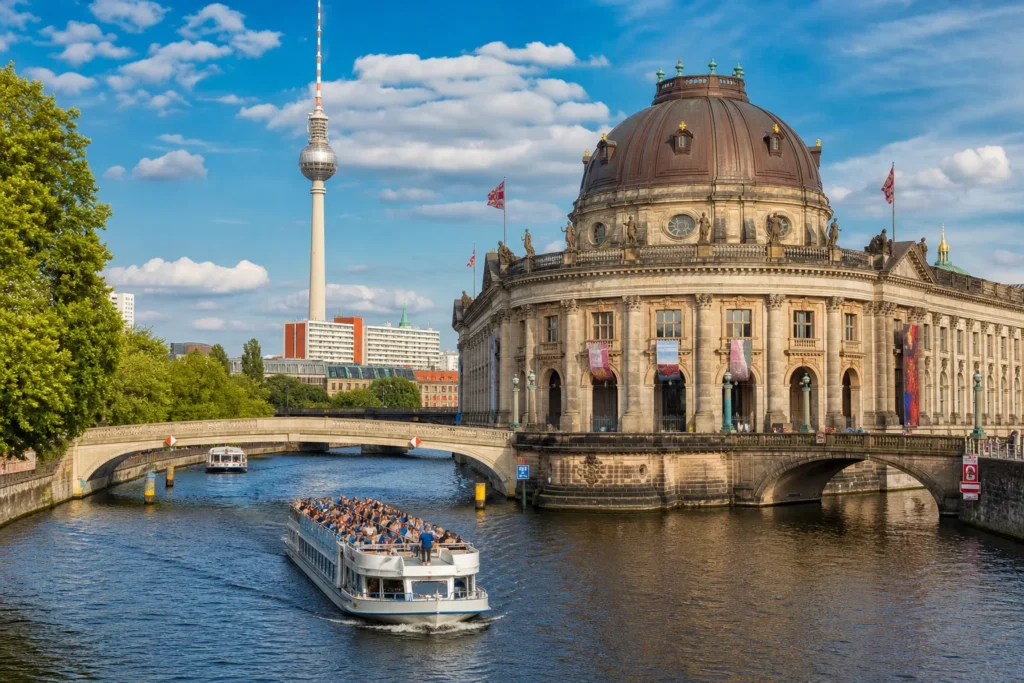
Why Visit Berlin
Visitors come for Berlin’s combination of world‑class museums, memorial sites that explain Europe’s modern history, and a lively contemporary culture.
Museum Island concentrates major archaeological and fine‑art collections. The Reichstag and Brandenburg Gate anchor guided walks through political history.
And sites such as the Berlin Wall Memorial and East Side Gallery provide public interpretation of division and reunification.
Beyond history, distinct neighbourhoods. From Mitte and Prenzlauer Berg to Kreuzberg and Charlottenburg.
Offer varied food, design and music scenes, while large parks and waterways provide green space and outdoor recreation.
Top Things to Do in Berlin, Germany
From iconic landmarks and memorials to museums and green lungs, the following highlights capture Berlin’s historical layers, cultural breadth, and neighborhood life. Each entry notes what to expect on site and practical planning considerations.
Brandenburg Gate (Brandenburger Tor)
The Brandenburg Gate stands as Berlin’s best‑known classical landmark and city gate, designed by Carl Gotthard Langhans with Doric columns that echo the Propylaea. Built at the end of the eighteenth century, it originally marked an entrance to the city and the government quarter, and the pedestrian Pariser Platz frames approaches from Unter den Linden.
A copper Quadriga by Johann Gottfried Schadow crowns the gate; the sculpture has its own dramatic history, once taken to Paris and later returned. Through the twentieth century the gate became a powerful political symbol, standing beside the Berlin Wall and later emblematising German reunification.
On site, visitors experience the monument’s scale, stone details and vibrant public square life.
Reichstag Building (Reichstagsgebäude)
The Reichstag Building combines historic nineteenth‑century architecture with a modern glass dome and serves as Germany’s parliamentary seat. Renovated in the 1990s by Sir Norman Foster, the dome introduces public transparency: a spiralling walkway leads visitors above the debating chamber and offers panoramic views of the city core.
The building also houses a permanent exhibition on parliamentary history and constitutional development. Access to the dome and roof terrace normally requires registration and photo ID because of security procedures; check official Bundestag visitor information in advance.
Audio guides and interpretive material explain the building’s transformation and civic role.
Museum Island (Museumsinsel)
Museum Island is a compact ensemble of five major museums on the Spree—the Altes Museum, Neues Museum, Alte Nationalgalerie, Bode Museum and Pergamon Museum—where collections range from Egyptian and Near Eastern antiquities to Greek and Roman sculpture and nineteenth‑century painting.
The Pergamon is notable for monumental reconstructions, while the Neues Museum houses Egyptian treasures including the Nefertiti bust.
The site’s nineteenth‑ and early‑twentieth‑century museum architecture and the James‑Simon‑Galerie visitor hub contribute to its UNESCO World Heritage status. Management by the Prussian Cultural Heritage Foundation coordinates conservation and visitor routing; expect staged access changes and verify current routes before you go.
Berlin Wall Memorial (Gedenkstätte Berliner Mauer)
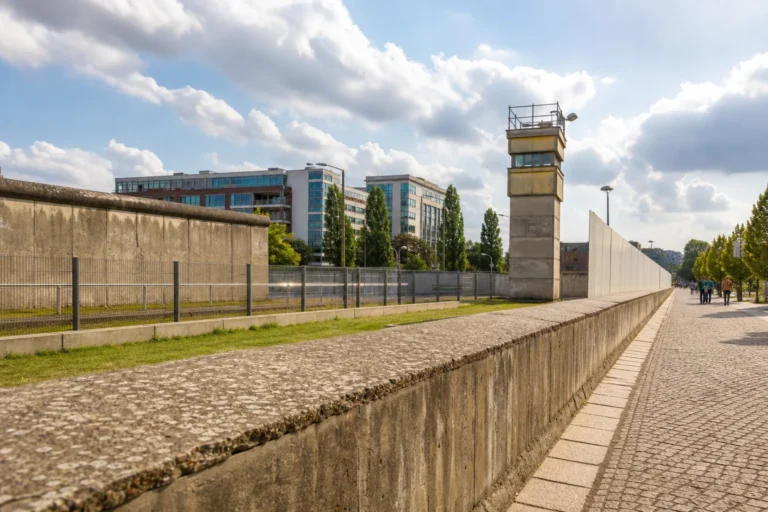
The Berlin Wall Memorial on Bernauer Straße preserves an authentic section of the former border landscape—death‑strip traces, wall fragments and a guard tower—and frames them for reflection and study. A Documentation Center anchors the site with an exhibition tracing the Wall’s political origins, the border regime and everyday experiences of divided Berlin.
The Chapel of Reconciliation stands on the footprint where a church was demolished in 1985 and now symbolises loss and reconciliation. A tower viewing platform helps visitors grasp the physical scale of the barrier.
The memorial prioritises sober documentation and educational programmes and is run by the Stiftung Berliner Mauer; begin at the visitor centre for orientation.
Official Berlin Wall Memorial (Gedenkstätte Berliner Mauer) website →
East Side Gallery
The East Side Gallery is the longest preserved outdoor section of the Berlin Wall, painted by a multinational group of artists immediately after the border opened in 1989. Stretching along Mühlenstraße between the Oberbaumbrücke and near Ostbahnhof, the roughly kilometre‑long mural ensemble turns concrete slabs into public statements about freedom and reunification.
Visiting means a paced riverside walk from panel to panel, encountering figurative scenes, political commentary and vivid graphic statements. The site’s public, open‑air condition means weather and street life shape the experience; conservation and repainting have been necessary over time, and stewardship is coordinated through Berlin’s memorial foundation.
Checkpoint Charlie (Mauermuseum Haus am Checkpoint Charlie)
The Mauermuseum – Museum Haus am Checkpoint Charlie is a privately run museum beside the historic Friedrichstraße crossing known as Checkpoint Charlie. Founded in the early 1960s by Rainer Hildebrandt, the museum documents the Berlin Wall, Cold War tensions and dramatic escape attempts with artefacts, photographs and first‑person testimony.
Inside, displays focus on escape devices, suitcases with hidden compartments, tunnel diagrams and photographic archives; large panoramas and documentary material connect individual stories to broader political context. The museum’s exterior, near a replica guardhouse and the famous crossing marker, is a public focal point for photos and quick orientation.
Official Checkpoint Charlie (Mauermuseum Haus am Checkpoint Charlie) website →
Charlottenburg Palace (Schloss Charlottenburg)
Charlottenburg Palace began as a baroque residence for Sophie Charlotte in the late seventeenth century and grew over later centuries into a complex of gala apartments, a chapel and later wings. Visitors encounter ornate façades, twin towers and richly furnished parade apartments that recall royal ceremonial life, alongside notable porcelain and decorative arts ensembles.
The palace sits within extensive gardens that move from formal baroque parterres near the building to a more natural English‑style landscape further out. The site has undergone careful restoration after wartime damage and now functions as a museum; check official visitor information for guided tours and any conservation closures.
Official Charlottenburg Palace (Schloss Charlottenburg) website →
Großer Tiergarten
The Großer Tiergarten is Berlin’s principal central park, once princely hunting grounds and now a broad urban landscape with tree‑lined avenues, intersecting paths, lawns and ponds. Its avenues and layered plantings reflect historic change from baroque formality to nineteenth‑century landscape redesign.
Key focal points include the Großer Stern and the Neuer See, whose café edge and boating invite longer visits. The park contains memorials and public art that reference twentieth‑century history; visitors can walk, cycle or picnic while enjoying the park’s role as a civic green spine through the city centre.
Best Time to Visit Berlin
Berlin has a temperate seasonal climate and is pleasant year‑round for different activities. Late spring through early autumn (May–September) brings the warmest weather, long daylight and outdoor programming; festivals, markets and terraces are common then.
Shoulder seasons (April and October) are quieter with fewer crowds, while winters offer festive markets and a calmer museum experience but shorter daylight and colder weather.
Special events
Upcoming Events
BMW BERLIN-MARATHON
One of the world’s premier city marathons, the BMW BERLIN-MARATHON draws elite athletes and mass participants to a fast, internationally famous urban course. The race weekend includes multiple public events—offers for spectators, a large expo, and community races—making it a major draw for visitors and running fans. Travelers should plan well in advance for accommodations, transport changes, and spectator vantage points; the event also offers charity and tour-operator entries for guaranteed bibs.
- Dates
- September 27, 2026
- Venue
- Finish area behind the Brandenburg Gate
Festival of Lights Berlin
The Festival of Lights in Berlin is an annual public light-art festival that transforms the city’s landmarks into large-scale illuminated artworks and projection canvases. Free to view from public spaces, the program showcases international and local light artists, video mapping, and immersive installations that draw photographers, families, and culture travelers to evening light routes across central Berlin. It’s a high-impact visual event that offers unique night-time perspectives on historic façades and squares, plus occasional ticketed companion performances and guided light tours.
- Dates
- October 9, 2026 - October 18, 2026
Berlin International Film Festival (Berlinale)
The Berlin International Film Festival (Berlinale) is a major annual film event that draws global industry professionals, filmmakers and cinephiles to screenings, red-carpet premieres and the European Film Market. Held across multiple cinemas with the Berlinale Palast as its flagship venue, the festival mixes high-profile competition films, industry markets, talent development programmes and expanded public sessions. Travelers attend for premiere screenings, talent panels, star sightings and a lively citywide cultural atmosphere that turns Berlin into a focal point for contemporary world cinema.
- Dates
- February 10, 2027 - February 21, 2027
- Venue
- Berlinale Palast and multiple Berlinale venues across the city
ITB Berlin (International Travel Trade Show)
ITB Berlin is the world’s leading B2B travel trade show that brings global tourism professionals, destinations, suppliers, and travel-tech innovators together under one roof. Travelers and travel industry buyers care because ITB functions as a market barometer for trends, new product launches, partnership opportunities, and official host-country showcases—useful for trip planners, tour operators, and destination marketers seeking direct industry access and timely intelligence. The organiser and venue publish official registration and visitor information on the event website. ([itb.com](https://www.itb.com/en?utm_source=openai))
- Dates
- March 16, 2027 - March 18, 2027
- Venue
- Berlin Exhibition Grounds / Messe Berlin (Berlin ExpoCenter City), Messedamm 22
Gallery Weekend Berlin
Gallery Weekend Berlin is a citywide, gallery-led contemporary art festival that gathers Berlin’s commercial galleries, international curators, collectors, and public-program partners. Travelers should care because it concentrates high-quality openings, curated gallery routes, talks and museum satellite programs into a single weekend, making it an efficient way to see new exhibitions, meet artists, and experience Berlin’s neighborhoods. The event typically features special hours, guided tours, and institutional collaborations that amplify the city’s contemporary-art scene and draw an international audience.
- Dates
- April 30, 2027 - May 2, 2027
Getting Around Berlin
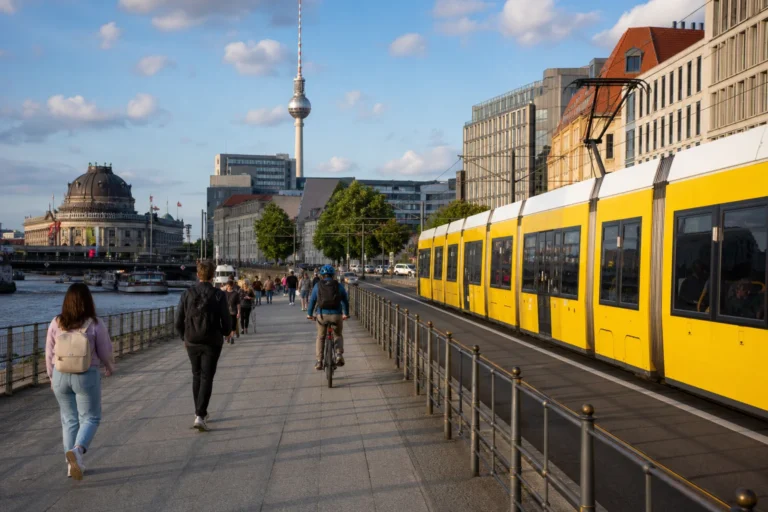
Berlin’s public‑transport network makes independent exploration straightforward. S‑Bahn and U‑Bahn rapid transit, trams and buses link central neighbourhoods and outer boroughs; regional rail connects to Brandenburg.
Central attractions cluster along river and park corridors and are often walkable within neighbourhoods.
Cycling is practical thanks to dense bike lanes and city bike services. For cross‑city sightseeing, consider a multi‑day transit pass; validate tickets before boarding and check AB vs ABC zones for airport or Potsdam travel.
Location
Map of Berlin, Germany
The interactive map loads only when you choose to view it.
Plan Your Visit to Berlin
Plan by neighbourhood rather than a single city centre—Berlin is large and spread out. Use the BVG/VBB network for most sightseeing and buy tickets before boarding (single, day, or WelcomeCard for combined transport and attraction discounts).
Reserve Reichstag entry online in advance and expect timed entries at major museums, especially on Museum Island.
Carry a card and some euros for small vendors, book popular Charlottenburg Palace and guided museum slots ahead, and allow walking time between clustered sights such as the Brandenburg Gate and the Reichstag.
Local Tips for Berlin
Download the BVG Fahrinfo or VBB app for realtime routes, disruptions and ticket purchases; many buses and trams accept contactless payment. Walk or cycle in central districts—bike lanes are extensive but watch tram tracks.
Visit the East Side Gallery and the Berlin Wall Memorial in the early morning or late afternoon to avoid peak crowds. Use official tourist information centres (near Hauptbahnhof or Alexanderplatz) for maps, WelcomeCard sales and accessibility advice, and observe posted rules at memorial sites.
Live conditions
Current Weather

Updated 2026-08-25 05:30
- Feels like
- 13°C / 55°F
- Today’s high / low
- 25°C / 77°F · 14°C / 57°F
- Humidity
- 74%
- Wind
- → 8 km/h
- Precipitation
- 0 mm
- Chance of rain
- 2%
- Local time
- 2026-08-25 05:39
Places to Visit Near Berlin
Brandenburg Gate and the Reichstag lie adjacent and are easily paired on the same walk. Nearby Großer Tiergarten offers a large urban park for a longer stroll.
Museum Island clusters the Pergamon, Altes Museum and Neues Museum; Alexanderplatz and the Museumsinsel S‑Bahn/U‑Bahn hubs provide quick connections to the island’s collections.
The East Side Gallery runs along the Spree near Warschauer Straße and the Oberbaumbrücke, making it a natural extension of visits to Kreuzberg and the riverfront.
Checkpoint Charlie and the Mauermuseum sit in Mitte near Kochstraße station and pair well with nearby historic walking routes.
Charlottenburg Palace sits in the west; nearby Schlossstraße and Savignyplatz offer cafés and shopping to round out a palace visit.
Hauptbahnhof and Potsdamer Platz serve as major transit and hotel nodes useful for day trips and onward rail connections.
Safety
Berlin is generally safe, but standard urban precautions apply. Pickpocketing and bag theft occur in crowded tourist spots, on public transport and at major stations—keep valuables secure and tickets validated where required.
Be cautious around demonstrations and large events and follow police instructions if present. Cyclists have priority in many lanes—watch when crossing and when opening car doors.
In emergencies call 112; for police assistance use 110.