
Travel Guide
Plan your visit around Wawel Royal Castle, Main Market Square, and more of Kraków, Poland.
Things to do in Kraków range from wandering the compact Old Town and Planty Park to touring Wawel Royal Castle, visiting the Main Market Square and St. Mary’s Basilica, and exploring Kazimierz’s Jewish heritage or taking a day trip to the Wieliczka Salt Mine.
The city’s walkable core concentrates major museums, galleries and cafés within easy reach.
Why Visit Kraków
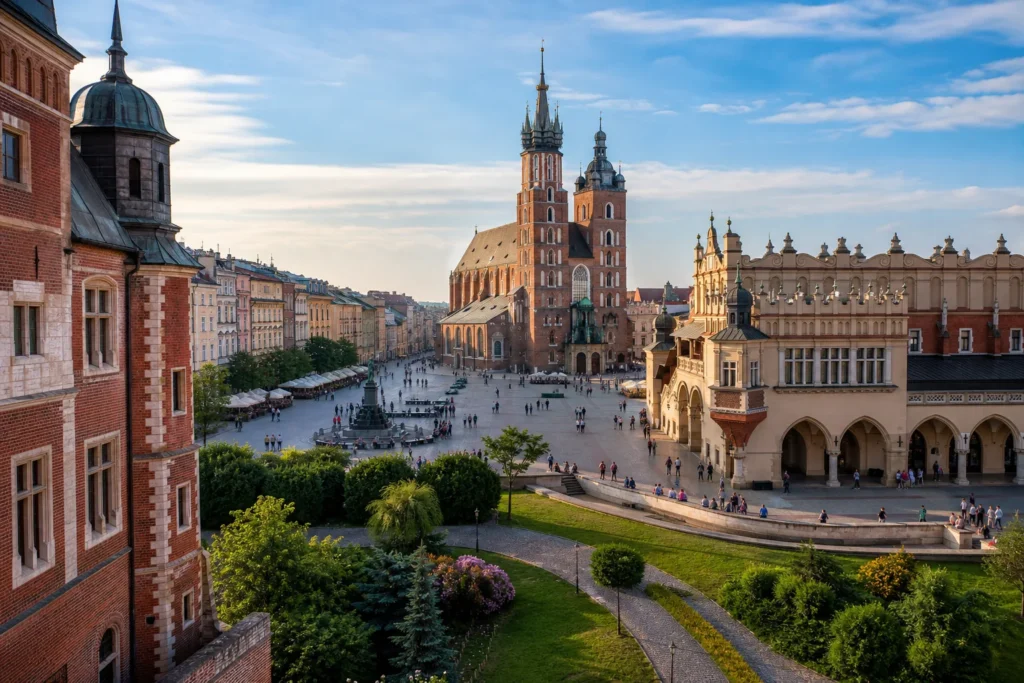
Visitors come for Kraków’s concentration of major cultural sites and the strong sense of historical continuity they offer. Wawel Royal Castle and its cathedral embody the nation’s medieval and state history, while the Main Market Square remains an exceptional public medieval space anchored by St. Mary’s Basilica.
Kazimierz preserves layered Jewish heritage and contemporary cultural life, and nearby Wieliczka Salt Mine extends Kraków’s World Heritage significance. The city also supports respected museums—such as the Museum of Krakow’s Schindler’s Factory branch and MOCAK—plus lively street life, cafés and accessible day‑trip options.
Top Things to Do in Kraków, Poland
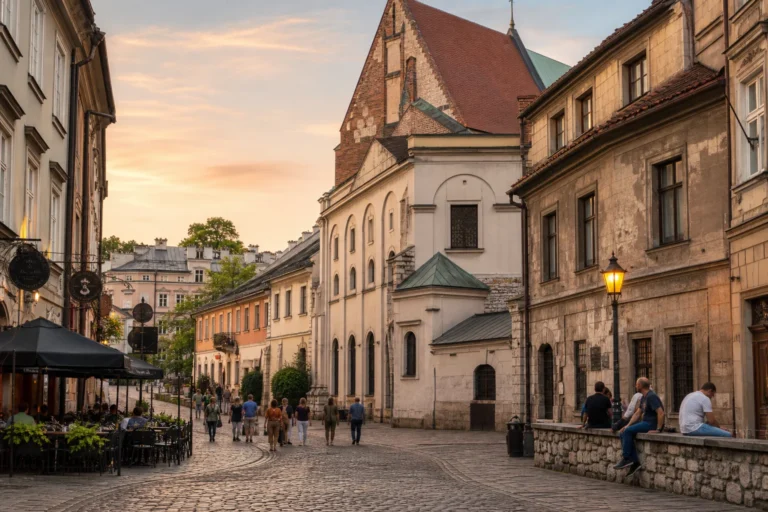
Kraków’s major attractions are clustered within a compact historic core that favors walking. Plan visits around Wawel Hill, the Main Market Square and the Kazimierz district, and reserve extra time for the underground world of Wieliczka.
Wawel Royal Castle
Wawel Royal Castle crowns a compact limestone hill above the Vistula River and served for centuries as Poland’s political and cultural heart. The complex presents layered architecture—medieval foundations with Renaissance rebuilding and later historicist additions—so visits reveal evolving royal tastes and construction phases.
Today the castle functions as a state museum with several distinct routes. Expect State Rooms and Royal Private Apartments showing formal court interiors, plus displays such as a Porcelain Cabinet and historical Ottoman tents.
The cathedral sits beside the palace on Wawel Hill, creating a combined royal and ecclesiastical precinct; many visitors pair both sites to understand coronation and burial practices. Verify timed entries and route availability on the official site before you go.
Main Market Square (Rynek Główny)
The Main Market Square is Kraków’s historic heart, laid out in the thirteenth century and retaining its medieval rectangular plan. Dominant features include the Sukiennice Cloth Hall, St. Mary’s Basilica and the Town Hall Tower; the square remains a stage for public life, seasonal markets and festivals.
Beneath the surface are archaeological remains presented in an underground museum that explain the square’s development. At street level the square supports cafés, street performers and monuments such as the Adam Mickiewicz statue.
Walk slowly to read architectural details and use side streets to find quieter corners—event schedules change regularly, so check local listings for festivals and markets.
St. Mary's Basilica (Mariacki Church)
St. Mary’s Basilica stands on the east side of the Main Market Square with a striking brick Gothic silhouette and two unequal towers. The interior is dominated by the carved wooden altarpiece by Veit Stoss—a fifteenth‑century limewood retable considered one of Europe’s great late Gothic masterpieces—and the basilica remains central to Kraków’s liturgical life.
Every hour a trumpeter plays the Hejnał from the taller tower, an abrupt traditional signal linked to a medieval alarm story. Visitors move among vaulted aisles, chapels and stained‑glass windows; parts of the building may close for services or conservation, so verify visitor access and guided‑tour options on the church’s official pages before visiting.
Kazimierz Jewish Quarter
Kazimierz lies immediately south of the Old Town and Wawel Hill and was for centuries Kraków’s main Jewish district. Its narrow lanes, two market squares and synagogues—such as the Old Synagogue on Szeroka Street and the active Remuh Synagogue with its cemetery—document long communal life and ritual practice.
The Holocaust devastated the local Jewish community, and twentieth‑century revival has blended commemoration with contemporary cultural programming. Institutions like the Galicia Jewish Museum and branches of the Museum of Krakow present exhibitions and guided trails that help interpret complex histories.
Allow time to explore small museums, cafés and tucked‑away galleries on walking routes through the quarter.
Wieliczka Salt Mine
Wieliczka Salt Mine is an underground cultural landscape of carved chambers, narrow galleries, saline lakes and chapels sculpted from rock salt. The tourist route passes sculpted reliefs, halite chandeliers and St Kinga’s Chapel—an artistic space where miners translated faith into monumental salt carvings and altars.
The mine illustrates centuries of continuous salt extraction that shaped regional economy and settlement. Interpretation highlights mining technology, ventilation and drainage, plus preserved timber and iron equipment.
The route involves steps and uneven surfaces and can be atmospheric rather than museum‑white; check official guidance for current visitor routes and accessibility before you go.
Oskar Schindler's Enamel Factory (Museum of Krakow)
Oskar Schindler’s Enamel Factory occupies the former Deutsche Emailwarenfabrik in the Zabłocie district and presents a city‑level account of Kraków under German occupation. Housed in the factory’s administrative and restored spaces, the museum stages chronological exhibitions using film, objects and archival materials to explain wartime law, shortages, repression and daily life.
The branch situates individual stories—such as those connected to Schindler—within broader administrative and social systems. The industrial setting and Zabłocie’s post‑industrial streets provide spatial context; scheduled entries and visitor rules apply, and many visitors prefer a paced walkthrough or guided visit to contextualize difficult material.
Official Oskar Schindler's Enamel Factory (Museum of Krakow) website →
MOCAK — Museum of Contemporary Art in Kraków
MOCAK sits in Zabłocie beside historical factory buildings and presents contemporary Polish and international art through rotating exhibitions and long‑term displays. The museum combines high basements, large halls and smaller project rooms to show conceptual, media and site‑specific work, while a foyer, library, bookstore and café extend the visit beyond galleries.
Architectural design is integral to the experience: interlinked courtyards, a long ramped approach and an industrial roofline motif create varied gallery conditions. Check MOCAK’s official channels for current temporary exhibitions and guided programmes, and pair a visit with nearby Zabłocie cultural sites for fuller context.
Official MOCAK — Museum of Contemporary Art in Kraków website →
Planty Park (Planty Krakowskie)
Planty is a continuous green belt encircling Kraków’s medieval Old Town, planted across the nineteenth century where the city’s walls once stood. The roughly four‑kilometre ring features promenades, tree lines and named garden sections planted with linden and horse‑chestnut among many species, providing shaded routes and frequent benches.
Covering about twenty‑one hectares, Planty links major historic sites and contains small monuments and information panels that mark the lost city walls. For visitors it offers a restorative walking route between the Royal Route, Wawel and the Main Market Square—bring comfortable shoes and use the park to escape the busiest parts of the Old Town.
Best Time to Visit Kraków
Kraków is attractive year‑round. Late spring through early autumn (May–October) brings milder weather, longer daylight and outdoor cafés; May–June and September–October often have fewer peak crowds.
Winters are cold and darker but offer lower prices and quieter museums for travelers focused on indoor cultural exploration.
SPECIAL EVENTS IN Kraków
Unsound Festival (Unsound Kraków)
Unsound is an internationally recognised festival founded in Kraków that spotlights experimental, electronic and avant‑garde music alongside visual art, installations and a robust discourse programme. The festival commissions new works and stages performances across the city, combining late‑night club programming with daytime talks, exhibitions and site‑specific events. Travelers attend Unsound for adventurous, boundary‑pushing lineups, close encounters with international and local artists, and the chance to experience Kraków’s creative scene through uncommon venues and curated cultural programming.
- Dates
- October 8, 2026 - October 11, 2026
- Venue
- Hotel Forum and multiple venues across Kraków
Międzynarodowe Targi Książki w Krakowie (International Book Fair in Krakow)
Międzynarodowe Targi Książki w Krakowie is Poland’s largest publishing and bookselling trade fair, bringing publishers, authors, industry professionals and readers together for industry panels, author signings, rights meetings and themed exhibition zones. Held by Targi w Krakowie, the fair showcases Polish and international publishers, adaptations and multimedia initiatives, and is a useful stop for travelers seeking author events, book launches, local literary culture and opportunities to visit Kraków’s literary venues. The event also attracts film and rights professionals exploring book-to-screen projects.
- Dates
- October 22, 2026 - October 25, 2026
- Venue
- EXPO Kraków
Getting Around Kraków
The historic center is exceptionally walkable: Wawel, the Main Market Square and Planty Park lie within a compact pedestrian core. MPK Kraków’s trams and buses link Kazimierz, the railway station (Kraków Główny) and outer neighborhoods; many visitors combine public transit with short taxi or rideshare trips.
Regional SKA trains and shuttle services connect the main station with Wieliczka and the airport. Cycling and improved pedestrian routes are useful for short hops across the city.

Location
Map of Kraków, Poland
The interactive map loads only when you choose to view it.
Plan Your Visit to Kraków
Plan to explore the Old Town and royal route on foot, then use trams or buses for longer transfers. Buy public‑transit tickets from official vending machines, mobile apps or on board where allowed.
Major sites such as Wawel, Wieliczka, Schindler’s Factory and MOCAK recommend advance tickets during high season and may enforce bag checks or cloakrooms. Expect cobbled streets, stairs and limited vehicle access in protected zones—wear comfortable shoes and check official sites for timed‑entry and accessibility information.
Local Tips for Kraków
Use the Main Market Square as your orientation point and walk Planty Park for shaded routes between monuments. Reserve time in Kazimierz for synagogues, small museums and tucked‑away cafés; guided trails help interpret complex histories.
Reach Wieliczka by SKA regional train or organized transfer and be prepared for steps and narrow passageways underground. Note Wawel’s cloakroom and bag rules, and check Schindler’s Factory and other museum pages for closures or scheduled maintenance before visiting.
Live conditions
Current Weather

Updated 2026-09-23 03:30
- Feels like
- 6°C / 43°F
- Today’s high / low
- 14°C / 57°F · 8°C / 47°F
- Humidity
- 96%
- Wind
- ← 13 km/h
- Precipitation
- 0.31 mm
- Chance of rain
- 64%
- Local time
- 2026-09-23 03:34
Safety
Kraków is generally safe for visitors, but busy tourist sites attract pickpockets and opportunistic theft; keep wallets and phones secure and avoid leaving bags unattended. Follow posted rules at historic sites (for example, no flash photography where prohibited and using cloakrooms for large bags) to protect collections and avoid fines.
In emergencies dial EU standard 112; for non‑urgent police matters consult municipal portals. Stay aware near riverbanks, on tram tracks and when crossing cobbles at night.