
Travel Guide
Plan your visit around Plaza de Armas, Cusco Cathedral, and more of Cusco, Peru.
Discover the best things to do in Cusco, Peru, from signature sights to memorable local experiences.
The city sits high in the Peruvian Andes as the historic capital of the Inca Empire and a living heritage center where pre‑Columbian stonework and Spanish colonial architecture meet.
Start at the Plaza de Armas and nearby museums, sample local life at San Pedro Market, and take day trips to Sacsayhuamán, the Sacred Valley (Pisac and Ollantaytambo), or onward to the Historic Sanctuary of Machu Picchu. Allow time to acclimatize to the elevation before strenuous activity.
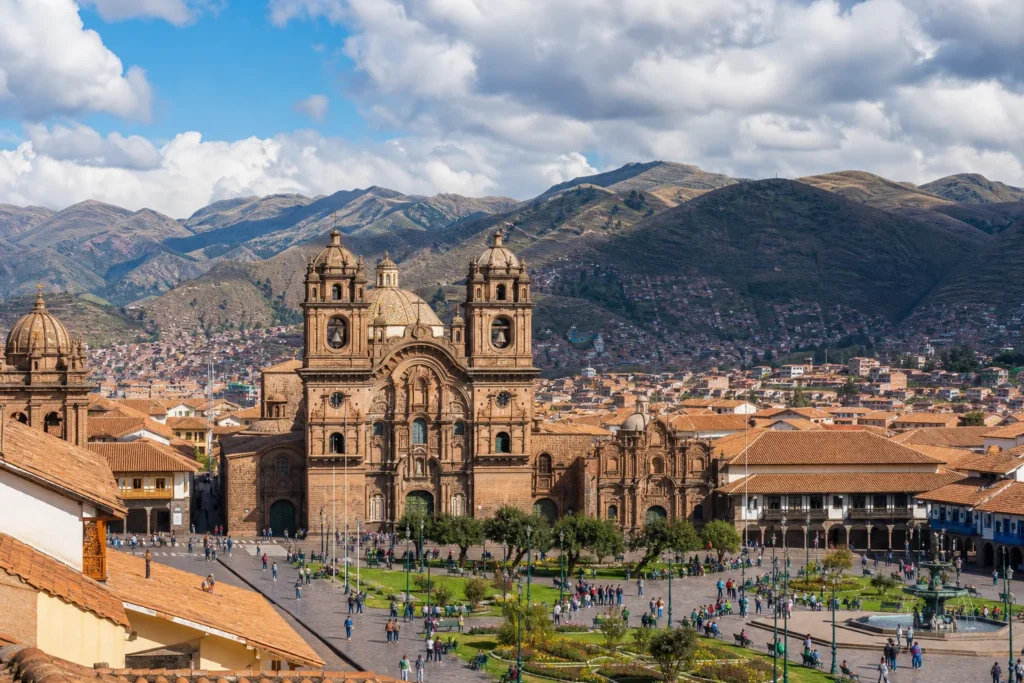
Why Visit Cusco
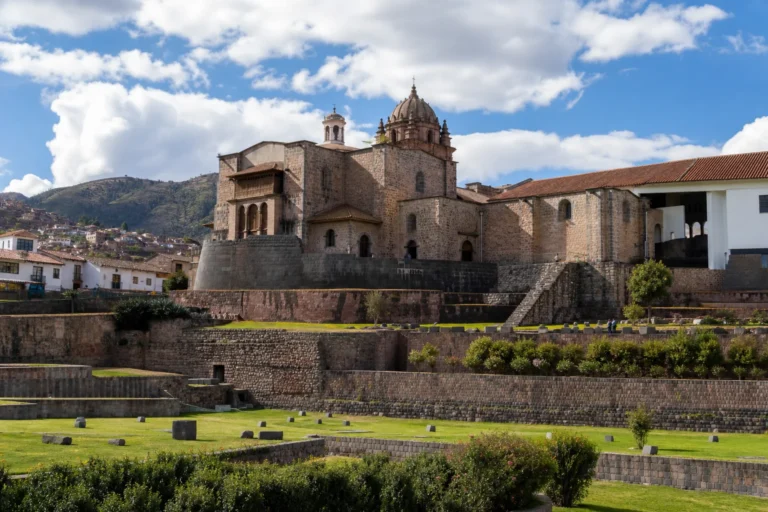
Visitors come to Cusco for its concentration of Andean history and accessible archaeological monuments paired with a vibrant cultural life. The Plaza de Armas and Cusco Cathedral reveal colonial art built on Inca foundations, while Qorikancha shows in situ Inca masonry beneath a Spanish convent.
Nearby massive stone terraces and fortifications at Sacsayhuamán dramatize imperial engineering, and museums such as the Museo Inka provide archaeological context. Cusco functions both as an independent destination and as the practical gateway for day trips into the Sacred Valley and for travel to Machu Picchu.
Top Things to Do in Cusco, Peru
Cusco’s compact historic core concentrates its top attractions within easy walking distance. Below are the principal sites, markets, museums, and nearby circuits that define a first visit.
Plaza de Armas (Cusco main square)
The Plaza de Armas occupies the geographic and symbolic heart of Cusco, originally the Inca ceremonial space called Huacaypata. Today a broad, open rectangle is ringed by colonial arcades, cafés and municipal buildings; the square’s anchors include the Cathedral and the Church of the Society of Jesus, both raised atop earlier Inca foundations.
The plaza still functions as the city’s public living room: arcades house shops and cafés, open lawns host processions and gatherings, and plaques and nearby small museums explain the site’s layered history.
Use the Plaza de Armas as a starting point for nearby museums and walking routes through the historic centre, and check local schedules for seasonal festivals or temporary closures.
Cusco Cathedral (Cathedral Basilica of the Assumption of the Virgin)
Standing on the north side of the Plaza de Armas, the Cusco Cathedral occupies land once used for an Inca palace and was built from the mid‑16th century onward in Gothic, Renaissance and Baroque forms.
Its twin towers and heavy façade present a formal colonial face to the main square, while inside the building remains a working church and a major repository of viceregal art.
The cathedral’s nave, carved choir stalls, gilded retablos and silverwork come from local workshops, and the collection includes Cusco School paintings—most famously a Last Supper that incorporates regional foods. The complex also contains a museum and chapels; allow time to view devotions and conserve quiet during Mass and conservation work.
Qorikancha (Temple of the Sun)
Qorikancha—literally the “golden enclosure”—was the Inca Empire’s principal temple dedicated to Inti, the sun god. In central Cusco, polished Inca stonework survives at ground level while the colonial Convent of Santo Domingo was built atop those foundations, creating an immediate, visible layering of imperial and colonial architecture.
The site showcases exceptional ashlar masonry with precisely cut stones fitted without mortar and trapezoidal corners for seismic strength. Interpretive displays in the convent museum explain Inca ritual practice and the temple’s role in state ceremony and astronomy.
Controlled visitor paths protect exposed masonry, so consult official sources for current exhibit details and any restricted areas.
Sacsayhuamán archaeological complex
Sacsayhuamán crowns the ridge above Cusco with massive, zigzagging terraces and enormous andesite blocks fitted together without mortar. The site’s monumental walls, terraces and plazas are often described as defensive, ceremonial and emblematic of Inca engineering; the exact blend of functions reflects a long building sequence attributed to several rulers.
Visitors walk among giant megaliths to inspect stone joints and enjoy panoramic views over the historic centre. Conservation and archaeological work continues, and interpretive signage at the site explains construction techniques and probable uses.
Allow time for steep walking and variable high‑altitude weather, and check official guidance for permitted routes and seasonal restrictions.
San Pedro Market (Mercado San Pedro)
San Pedro Market is a working food and craft market in Cusco’s historic core and remains primarily a place for daily life rather than a theatrical attraction.
Inside a dense covered hall, narrow aisles display Andean tubers, native potatoes, highland fruits, dried grains and bundles of coca leaves, while small comedor counters serve soups and local lunches to neighborhood shoppers.
The market also hosts textile and craft stalls where local women sell handwoven goods and simple silverwork. For visitors it’s a practical place to sample regional ingredients, observe foodways and support local livelihoods; carry small local bills, respect vendor space when photographing, and verify current visitor guidance through municipal channels.
Museo Inka (Inka Museum, Cusco)
Museo Inka occupies a historic colonial house near the main square and presents a comprehensive local archaeological collection administered by the local university. Galleries move through pre‑Hispanic cultures into the Inca imperial period, displaying ceramics, lithics, metalwork and textiles in a building adapted for fragile materials.
Highlights include ceremonial queros, finely made textiles and curated human remains that illuminate funerary practice and social ranking. Exhibits emphasize provenance, technique and archaeological context rather than speculation.
Photography and handling are often restricted to protect delicate objects; group visits and academic requests typically need prior coordination with museum administration.
Historic Sanctuary of Machu Picchu (Machu Picchu)
Machu Picchu sits on a ridge at about 2,430 metres, set within a protected sanctuary of steep cloud‑forested slopes and jagged peaks. The citadel’s terraces, plazas, stairways and carved walls form a finely ordered stone city with distinct agricultural, residential and ritual sectors.
Key features include the Intihuatana, the Temple of the Sun and intricate dry‑fitted masonry.
Designated a World Heritage Site, the Historic Sanctuary balances archaeological protection and fragile Andean ecosystems. Trails and stone surfaces are steep and uneven at altitude, so move slowly, allow acclimatization time, and consult official management sources for regulated visitor routes and current access rules before your visit.
Official Historic Sanctuary of Machu Picchu (Machu Picchu) website →
Sacred Valley (including Pisac and Ollantaytambo)
The Sacred Valley follows the Urubamba River northwest from Cusco through fertile slopes and deep gorges, combining rich farmland, transport corridors and ritual landscapes. Major centers such as Pisac and Ollantaytambo cluster along it because the valley’s microclimates supported diverse crops and complex agricultural systems still visible today.
Pisac features high terraces, a hilltop citadel and a lively market below the ruins; Ollantaytambo preserves a living Inca town with massive terraces and a Temple of the Sun that reveal precise stonework.
The valley forms an accessible circuit of markets, terraces and living communities, and links readily with rail and road routes toward Machu Picchu and other sites like Moray and Maras.
Best Time to Visit Cusco
The driest, most reliable months for outdoor archaeology and trekking are May through September, with mostly sunny mornings and clearer trails. Shoulder months (April and October) can offer fewer crowds but more variable weather.
Heavy rains typically fall November–March, which can cause travel delays. Nights are cool year‑round at high altitude; pack layers, plan for strong daytime sun, and allow extra time for acclimatization before strenuous hikes.
Getting Around Cusco
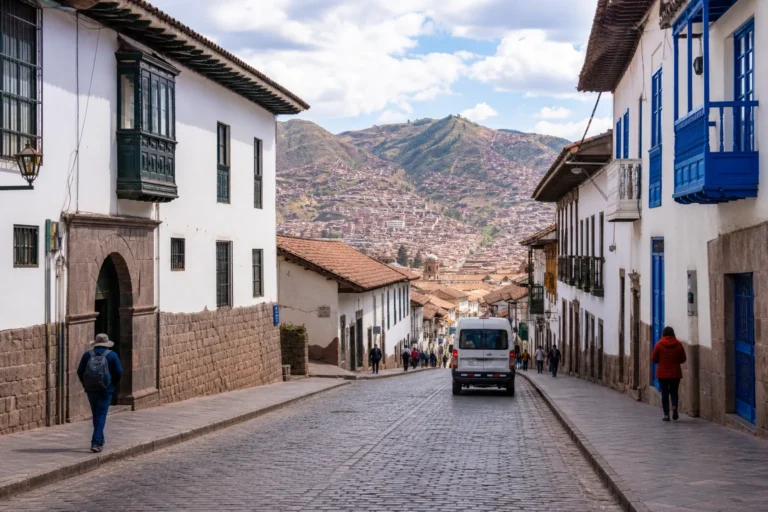
Cusco’s historic centre is compact and easily explored on foot; major landmarks such as the Plaza de Armas, Cathedral, Qorikancha, Museo Inka and San Pedro Market are usually a 10–20 minute walk from each other. For short hops use licensed taxis or colectivos—agree fares up front or use a metered/tourist taxi.
Day trips to Sacsayhuamán, Pisac, Ollantaytambo and the Sacred Valley are typically taken by guided tour, shared shuttle or regional bus. To reach Machu Picchu most visitors travel by train from Ollantaytambo or on multi‑day treks; book rail and park reservations in advance.
Location
Map of Cusco, Peru
The interactive map loads only when you choose to view it.
Plan Your Visit to Cusco
Base yourself in or near the Historic Centre (Plaza de Armas) to access attractions, markets, transport hubs and tour operators. Allow 1–2 days in Cusco to acclimatize before attempting strenuous high‑altitude walks.
Reserve Machu Picchu entry and train tickets well ahead and confirm reservations with official operators. Use licensed taxis or arranged transfers for early departures and keep printed and digital copies of reservation confirmations and ID documents.
Local Tips for Cusco
Learn basic Spanish phrases and carry small‑denomination soles for markets like San Pedro. On your first day eat lightly, avoid alcohol, and consider coca tea for mild altitude symptoms.
Respect archaeological and colonial sites: do not touch delicate stonework or climb restricted terraces. Buy museum and site tickets at official counters or accredited sellers, and shop for textiles at authorized cooperatives—bargain politely and inspect items before paying.
Live conditions
Current Weather

Updated 2026-09-20 14:00
- Feels like
- 13°C / 55°F
- Today’s high / low
- 18°C / 64°F · 6°C / 43°F
- Humidity
- 16%
- Wind
- ← 8 km/h
- Precipitation
- 0 mm
- Chance of rain
- 17%
- Local time
- 2026-09-20 14:12
Safety in Cusco
Altitude sickness is the primary health risk—watch for headache, nausea, and breathlessness and descend or seek medical care if symptoms worsen. Follow Ministry of Health guidance for gradual acclimatization, rest and hydration.
Petty theft and bag snatching occur in crowded areas and on public transport; use a money belt or anti‑theft bag, avoid displaying valuables, and stay alert around the Plaza de Armas and markets. For treks and visits to protected areas, hire licensed guides and confirm operators are authorized by SERNANP.