
Travel Guide
Find top sights, local places, maps, weather, and simple trip tips for Kyoto, Japan.
Looking for Things to Do in Kyoto, Japan? Use this guide to compare top sights, local tips, maps, weather, and nearby places.
If you’re looking for things to do in Kyoto the city delivers layered history, concentrated cultural sites, and distinct neighborhoods to explore.
Once Japan’s imperial capital, Kyoto sits in a basin of low mountains and contains more than 2,000 religious sites, multiple UNESCO components, and compact districts. From Higashiyama’s temples to Gion’s geisha quarter and Arashiyama’s river-and-bamboo landscapes.
Why Visit Kyoto
Kyoto offers concentrated access to Japan’s classical cultural expressions: temples and shrines spanning eras, carefully maintained gardens, castle architecture, and living traditions such as tea ceremony and kaiseki cuisine.
Major highlights. Fushimi Inari Taisha’s torii approaches, Kiyomizu-dera’s hilltop views, Kinkaku‑ji’s gilded pavilion, Ginkaku‑ji’s refined walkways, Nijo Castle’s palace halls, and the Imperial Palace.
Form a complementary set of experiences. Beyond landmarks, seasonal lightings, artisanal shops, and neighborhood exploration reward slow cultural learning.
Top Things to Do in Kyoto, Japan
Kyoto’s top sites cluster into walkable circuits and short transit hops. Below are essential places and experiences—plan early starts or weekday visits for the busiest highlights and combine nearby sites to make efficient half‑ or full‑day outings.
Fushimi Inari Taisha
Fushimi Inari Taisha is Kyoto’s best‑known Shinto shrine and the head of Japan’s Inari network, venerating Inari — historically linked to rice, agriculture and later commerce. The shrine’s defining experience is the Senbon Torii: long rows of closely spaced vermilion gateways that form tunnel‑like approaches up the slopes of Inari‑yama.
Stone and bronze fox statues appear throughout the precincts as Inari’s messengers, and subsidiary shrines and viewpoint clearings line the mountain trails. Many visitors treat the ascent as a short hike, pausing at niche shrines and springs.
Practical points: the torii path includes narrow, stepped sections and uneven surfaces; respectful behavior and quiet photography preserve the religious atmosphere.
Kiyomizu-dera Temple
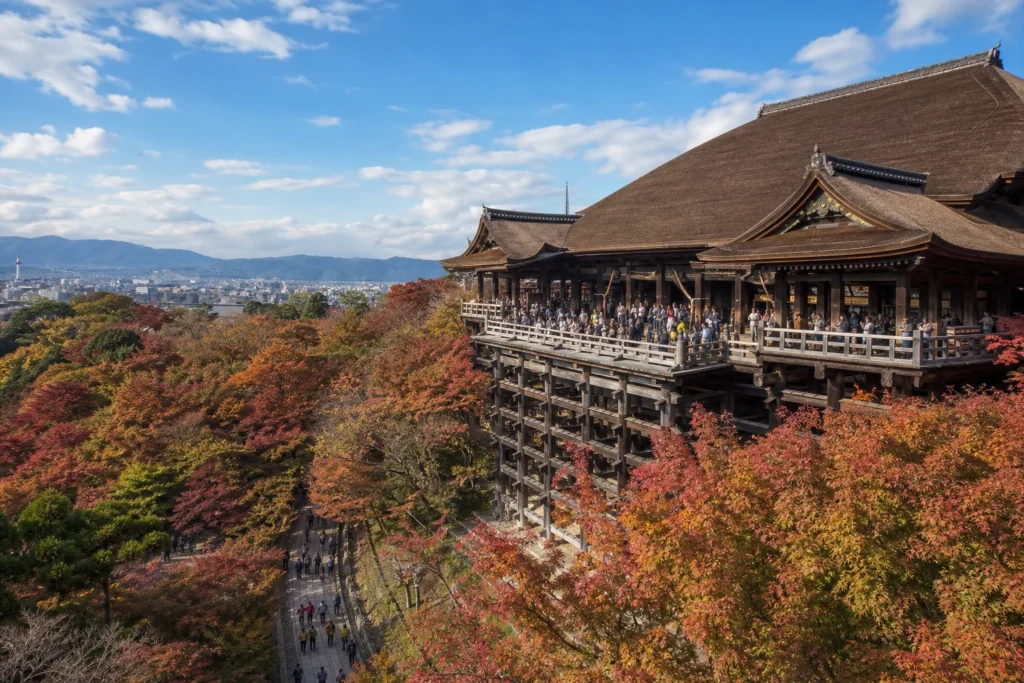
Kiyomizu‑dera perches on the wooded slopes of Otowa Mountain and dates to the 8th century, developing around a sacred spring and major Kannon devotion. Its signature feature is the broad wooden veranda, the “Kiyomizu stage,” which projects over a steep cliff on tall wooden pillars and offers sweeping views across eastern Kyoto.
Below the main hall the Otowa Waterfall divides into three streams long used by pilgrims for symbolic benefits. The complex also includes numerous subsidiary halls, pagodas and lively approach streets lined with shops.
Practical notes: approaches and terraces can be crowded and many paths include steps and slopes; consult official guidance for conservation notices and visitor rules before visiting.
Kinkaku-ji (Golden Pavilion)
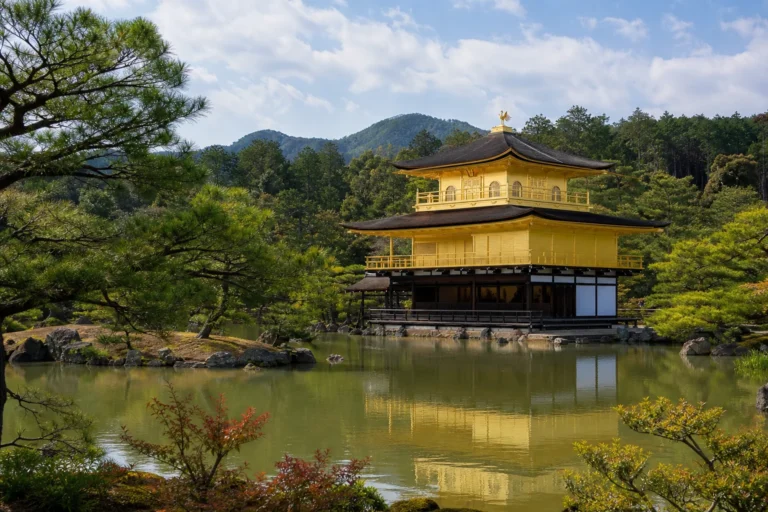
Kinkaku‑ji presents one of Kyoto’s most iconic images: a three‑story pavilion sheathed in gold leaf set beside a still pond. The pavilion functions as a reliquary hall and each floor expresses a different historical architectural mode, framed deliberately from viewing paths that compose the building’s reflected silhouette.
The surrounding strolling‑pond garden represents an idealized Pure‑Land paradise, with islands, stones and clipped plantings arranged to direct the eye. Kinkaku‑ji began as a Muromachi‑period villa converted into Rokuon‑ji temple and has long influenced Japanese garden design.
Practical context: visitors follow formal viewing routes and may encounter managed crowds; some vantage points can be restricted during conservation work.
Ginkaku-ji (Silver Pavilion)
Ginkaku‑ji (Jisho‑ji) occupies a gentle hillside in eastern Kyoto and embodies the restrained Higashiyama aesthetic. Established as Ashikaga Yoshimasa’s retirement villa in the late fifteenth century, it later became a Zen temple.
The pavilion sits above a pond and a mossy stroll garden that favors asymmetry and subtle textures, including raked white sand and a conical sand mound used as a sculptural element. Though not actually covered in silver, the name contrasts the site with Kinkaku‑ji and signals modest beauty.
Visitors are encouraged to slow down and observe the careful placement of stones and materials. Practical notes: paths are naturally sloped and can be uneven; check official sources for access advisories during conservation.
Arashiyama Bamboo Grove (Arashiyama district)
The Arashiyama Bamboo Grove in Sagano offers a short but immersive path through dense stands of fast‑growing Moso bamboo, creating a calm green light and a memorable vertical soundscape when wind passes through the stalks.
The grove sits beside temples, shrines and riverside promenades, and connects easily with Tenryu‑ji, Nonomiya Shrine and Togetsukyo Bridge to form a half‑day visit in Arashiyama. Because paths are public and narrow, the grove has preservation concerns and visitor guidance asks that people do not touch or carve bamboo.
Practical advice: early morning and weekdays reduce crowds and produce better light; verify any local access notes before going.
Official Arashiyama Bamboo Grove (Arashiyama district) website →
Nijo Castle (Nijo-jo)
Nijo Castle (Nijo‑jo) is an early modern fortified palace commissioned by Tokugawa Ieyasu as a symbol of shogunal authority in Kyoto. The complex combines defensive moats and gates with richly decorated palace halls; the Ninomaru Palace is noted for painted sliding doors (fusuma), polished floors that chirp underfoot and carefully worked carpentry.
The castle’s gardens — including the Ninomaru Garden — were arranged to be viewed from palace rooms and promenades and illustrate early modern landscape composition.
Practical points: the site routinely offers guided tours and audio guides; visitors should expect to remove shoes for palace interiors and to follow designated routes to protect delicate floors and artworks.
Kyoto Imperial Palace
The Kyoto Imperial Palace sits within Kyoto Gyoen National Garden and functioned as the imperial residence and ceremonial center until the capital moved to Tokyo in 1869. Visitors approach through broad gates into formal courtyards and timbered buildings such as the Shishinden and Seiryōden, whose layouts recall Heian court processional routes.
Public visits are usually organised along guided circuits by the Imperial Household Agency; some buildings remain protected and require permission for entry. Photography rules, bag checks and conservation measures help protect fragile interiors and artworks, and nearby Sento Imperial Palace complexes extend the imperial landscape across Kyoto Gyoen.
Gion district (Hanamikoji Street)
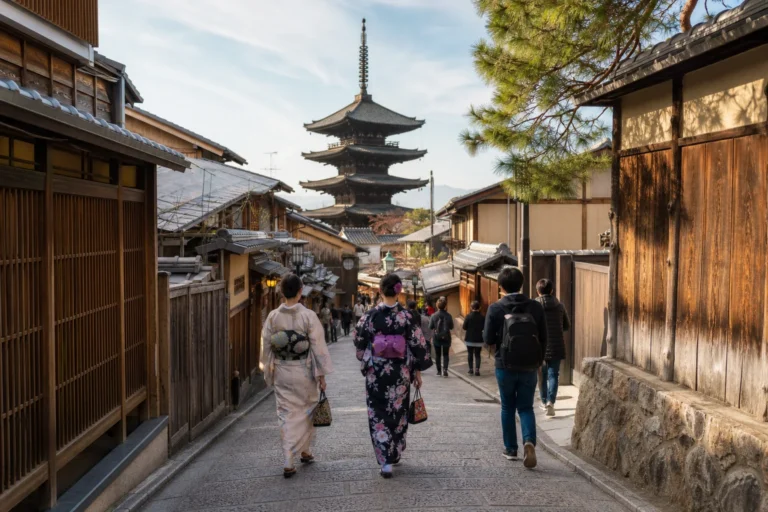
Gion centers on Hanamikoji Street and preserves atmospheric wooden machiya houses and traditional ochaya teahouses tied to geisha and maiko performance culture. The street runs between Shijo and Kennin‑ji and is lined with paper lanterns and narrow paving; its south side is formally protected as a historical landscape.
Hanamikoji’s character shifts from quiet daytime lanes to lantern‑lit evening promenades, but much of the area remains private and invitation‑only. Practical etiquette: do not enter private property or obstruct doorways, avoid photographing or following performers without permission, and behave quietly to respect residents and performers’ privacy.
Best Time to Visit Kyoto
Kyoto is strongly seasonal. Spring (late March.
Early April) brings cherry blossoms and mild weather. Late autumn (mid‑November to early December) offers vivid maple colors and cool, dry days ideal for long walks.
Summers are hot and humid with lively festivals such as Gion; winters are cool and occasionally snowy, making temples quieter and more spare in feeling. For fewer crowds, aim for shoulder periods (late spring after blossom week or late autumn before peak color) and plan weekday visits to popular sites.
Special events
Upcoming Events
Jidai Matsuri (Festival of the Ages)
Jidai Matsuri is Kyoto’s dramatic Festival of the Ages, organized by Heian Jingu Shrine. A costumed historical procession of roughly 2,000 participants, with horses and ox-drawn carts, recreates scenes from Kyoto’s history across an extended street route ending at Heian Jingu. Travelers appreciate the pageantry for close-up photography, cultural storytelling, and a chance to see living costume traditions rarely staged at this scale. The event pairs well with visits to nearby shrines and the Kyoto Imperial Palace, and offers reserved seating options for clearer viewing.
- Dates
- October 22, 2026
- Venue
- Heian Jingu Shrine (procession route includes Kyoto Imperial Palace / Kyoto Gyoen)
KYOTO MARATHON
Kyoto Marathon is the city's annual full-distance road race that routes through historic neighborhoods and past major cultural landmarks, offering runners a scenic tour of Kyoto's temples, shrines, and traditional streets. Organized by Kyoto City and the Kyoto Marathon Executive Committee, the event includes the full marathon plus relay and wheelchair categories and draws both domestic and international participants. Travelers may care because it pairs a major sporting spectacle with sightseeing opportunities, local hospitality, and limited-entry registration — plan ahead for travel, accommodation, and official entry procedures.
- Dates
- February 21, 2027
- Venue
- TAKEBISHI Stadium Kyoto (start) / Heian-jingu Shrine (finish)
Getting Around Kyoto
Kyoto is compact and served by regional rail, private railway lines, two subway routes, an extensive bus network and taxis. Central districts and many key temples are walkable or reachable by short train or bus rides.
Major hubs include Kyoto Station and private‑line city stations (Hankyu, Keihan, Kintetsu). IC transit cards are widely accepted.
Combine rail for outer gates (Arashiyama, Fushimi Inari) with local buses or walking circuits and allow extra time for bus congestion near major attractions.
Location
Map of Kyoto, Japan
The interactive map loads only when you choose to view it.
Plan Your Visit to Kyoto
Core attractions cluster across Central/Kawaramachi, Higashiyama, Arashiyama and Fushimi. Plan multi‑site days around transit corridors: JR Nara Line and Keihan lines serve Fushimi Inari and Higashiyama; Hankyu and JR serve Arashiyama and western sites.
Look into one‑day passes or IC cards for convenience. Expect heavy foot traffic at sunrise and late afternoon; visit major temples early or late where allowed.
Reserve guided palace visits and special tours in advance when required.
Local Tips for Kyoto
Observe temple and shrine etiquette: bow at torii, remove hats and speak quietly inside buildings, and follow photography rules (many interiors prohibit flash or photos). Wear comfortable shoes for uneven stone steps and narrow lanes.
Carry a refillable bottle; vending machines are common but some smaller shops prefer cash. Learn a few Japanese phrases (thank you, excuse me) and check temple notices for seasonal closures or restoration work before visiting.
Live conditions
Current Weather

Updated 2026-08-24 16:00
- Feels like
- 35°C / 95°F
- Today’s high / low
- 35°C / 95°F · 25°C / 77°F
- Humidity
- 50%
- Wind
- ↙ 12 km/h
- Precipitation
- 0.19 mm
- Chance of rain
- 17%
- Local time
- 2026-08-24 16:17
Places to Visit Near Kyoto
Kyoto Station is the main transport hub with lockers and a tourist center, useful as a starting point for many journeys across the city.
Riverside walks along the Kamo River provide pleasant routes near Gion and central Kyoto for evening promenades and casual dining options.
Kawaramachi and Pontocho form a dining and nightlife corridor adjacent to Gion, with narrow lanes and riverside restaurants that complement daytime sightseeing.
Yasaka Shrine serves as a gateway to Higashiyama and Gion and is often paired with evening strolls through Hanamikoji and nearby streets.
JR Inari Station drops you at the lower precincts and the start of the Senbon Torii routes up Inari‑yama.
Kiyomizu‑michi and the temple approach streets lead to Kiyomizu‑dera’s terraces, shops, and viewpoints and form a compact walking circuit through eastern Higashiyama.
Arashiyama includes the Bamboo Grove, Tenryu‑ji and Togetsukyo Bridge and makes a scenic half‑day or full‑day excursion from central Kyoto.
These central sites work well together for walking loops that combine palace grounds, castle gardens and accessible transit links.
Safety
Kyoto is generally safe, but heavy visitor volumes create crowd and trip hazards on narrow streets, shrine stairways, and busy platforms—take care at peak times. Follow local rules for cycling and scooters where permitted, use crosswalks, and obey temporary pedestrian route changes during restoration work.
Petty theft is uncommon but possible in crowded zones—watch belongings on buses and trains. Respect shrine rules and restricted areas; emergency services are reachable via Japan’s national emergency numbers.