
Travel Guide
Find top sights, local places, maps, weather, and simple trip tips for Dublin, Ireland.
Looking for Things to Do in Dublin, Ireland? Use this guide to compare top sights, local tips, maps, weather, and nearby places.
If you’re searching for things to do in Dublin the city delivers a concentrated mix of medieval and Georgian streets, major museums, and large green parks within easy walking distance.
Trinity College’s Book of Kells and the Long Room, Dublin Castle and its State Apartments, Kilmainham Gaol, and the Guinness Storehouse are all clustered in the central zone. Phoenix Park offers one of Europe’s largest enclosed urban parks while Temple Bar provides a compact cultural quarter of galleries, live music and nightlife.
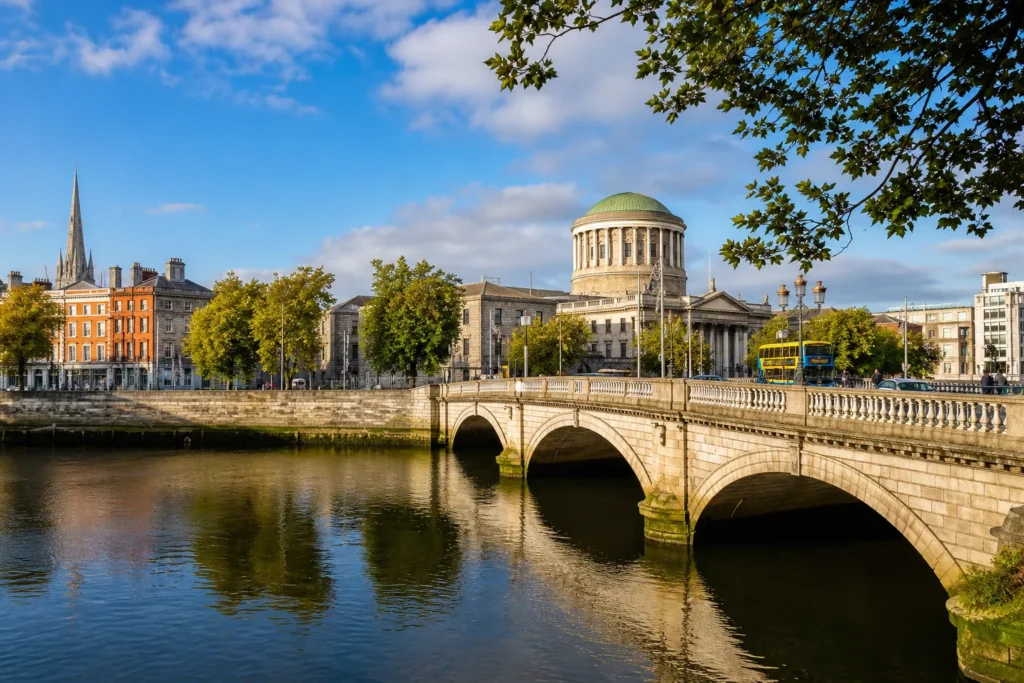
Why Visit Dublin
Dublin concentrates nationally important history, arts and green space within a small radius. See medieval and Georgian architecture at Trinity College and Dublin Castle, explore modern political history at Kilmainham Gaol, and view world-class Celtic and Viking collections at the National Museum of Ireland.
Archaeology.
Phoenix Park gives a ready nature break with lawns and roaming deer, while Temple Bar and sites like the Guinness Storehouse interpret the city’s cultural and industrial heritage.
Top Things to Do in Dublin, Ireland
Dublin’s central area gathers well-known landmarks and museums close together, making it easy to combine a library visit, a castle tour, a brewery experience and a park walk in a single day. Book timed entries when required and plan quieter visits for mornings or weekdays.
Trinity College Dublin – Book of Kells and the Long Room
The Book of Kells Experience opens in Trinity’s Old Library, where Ireland’s most famous illuminated manuscript is displayed in a secure, climate-controlled Treasury with interpretive panels and audio guides that explain the manuscript’s iconography and production. Visitors then pass into a purpose-built Pavilion of digital interactives and contextual material designed for wider audiences.
The route continues into the Long Room, a nearly 65-metre barrel‑vaulted chamber lined with dark oak bookcases, a high gallery and a procession of marble busts.
Timed entry is common and the whole experience is usually scheduled to take around ninety minutes; photography rules and accessibility resources apply, so check official visitor information before you go.
Official Trinity College Dublin – Book of Kells and the Long Room website →
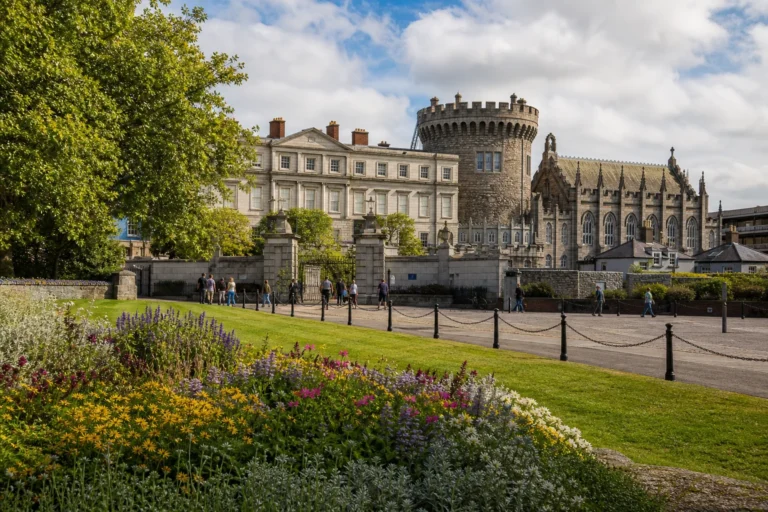
Dublin Castle
Dublin Castle occupies a compact city‑centre site with a layered history from a Norman fortress to later State Apartments used by English and British administration. The visitor route highlights the richly furnished State Apartments, the nineteenth‑century Chapel Royal with its ornate Gothic interior, and a surviving Medieval Tower that conveys the castle’s defensive origins.
The Dubh Linn Gardens sit within the precinct and the castle hosts galleries and rotating exhibitions that draw on its collections. Visitors can choose guided tours or self‑guided routes and should check ticketing, special exhibitions and accessibility information on the official site before visiting.
Guinness Storehouse (St. James’s Gate)
The Guinness Storehouse at St. James’s Gate repurposes brewery buildings to tell the story of Arthur Guinness’s 1759 lease and the site’s brewing history. The visitor route unfolds over several floors with objects, media and sensory displays about ingredients and brewing methods, and dedicated sections on advertising, design and the company archive.
A practical highlight is the tasting and pouring component, where visitors learn to serve and judge a pint, and the upper-level bar offers panoramic views across the city skyline. The experience combines heritage displays with active brewery operations, and pre-booked entry is recommended in peak season.
Kilmainham Gaol Museum
Kilmainham Gaol is a preserved late‑eighteenth‑century prison whose stone walls, long rows of cells and exercise yards give direct evidence of nineteenth‑ and early twentieth‑century penal regimes.
The site is central to modern Irish history, having held and executed leaders after the 1916 Easter Rising and later detained Republicans during the War of Independence and Civil War.
Now a museum, Kilmainham offers a visitor centre in the former courthouse, curated exhibitions and guided tours through cellblocks and yards that explain architecture, daily life and notable prisoners. Tours are popular and often guided only, so pre-booking and checking accessibility advice is recommended.
Phoenix Park
Phoenix Park is one of Europe’s largest enclosed urban parks, notable for broad tree‑lined avenues, open grasslands, Victorian gardens and scattered historic buildings. The park began as a seventeenth‑century royal hunting ground and now contains institutional sites such as Áras an Uachtaráin (the President’s residence), memorials like the Wellington Testimonial, and the Magazine Fort.
The park supports a resident herd of fallow deer and diverse plant and animal life; visitors use it for walking, cycling, sport and picnics, often combining a stroll with visits to Farmleigh House or Dublin Zoo. Park managers publish codes of conduct—do not feed or approach the deer and follow on‑site rules.
National Museum of Ireland – Archaeology (Kildare Street)
The National Museum of Ireland – Archaeology presents Ireland’s deep past through prehistoric objects, early medieval church treasures, Viking material and medieval artefacts. Treasury highlights include richly decorated metalwork such as the Ardagh Chalice and the Tara Brooch, while galleries like Ór (Ireland’s Gold) display Bronze Age and Iron Age goldwork.
Other displays reconstruct Neolithic passage‑tomb architecture, show everyday tools from early farming communities, and interpret bog‑body research and Viking and medieval material. Many displays are free to enter; check the museum’s official site for guided tours and accessibility details.
Official National Museum of Ireland – Archaeology (Kildare Street) website →
St Patrick’s Cathedral
St Patrick’s Cathedral is a layered Gothic building that functions as both a place of worship and a major historic site. The interior features a long nave, stained glass, coloured tiles and memorials—including Jonathan Swift’s tomb—and regular organ and choir music during services and rehearsals.
Interpretation panels, a small family discovery area and guided tours explain the monuments and architecture.
The cathedral links legend, medieval city life and modern identity: tradition places Saint Patrick’s baptisms nearby, and documentary records note a church on the site by the twelfth century. Visitors should respect services and conservation policies and check visitor guidance before attending.
Temple Bar cultural quarter
Temple Bar is best explored on foot, moving through narrow lanes and intimate squares that contain galleries, small theatres, film venues, bookshops, cafés and pubs. Meeting House Square and Temple Bar Square act as public stages for markets, outdoor screenings and seasonal events, so daytime visits often feel active and community‑oriented rather than purely touristic.
The quarter grew from an early 1990s urban regeneration project that encouraged artist studios, nonprofit cultural organisations and experimental venues. For visitors, check venue programmes for screenings, talks and gallery openings, and expect evenings to be lively and crowded while mornings are quieter for gallery visits.
Best Time to Visit Dublin
Dublin is welcoming year-round, but late spring through early autumn offers the longest daylight and livelier outdoor attractions. Shoulder seasons—late April to early June and September—bring milder weather and thinner crowds at sites like Trinity College, Kilmainham Gaol and the Guinness Storehouse.
Winters are milder than latitude suggests but wetter and darker; museums and indoor attractions remain appealing. During peak summer months, book limited-capacity experiences in advance and plan flexible indoor/outdoor days.
Special events
Upcoming Events
Dublin Fringe Festival
Dublin Fringe Festival is a citywide, curated arts festival showcasing adventurous theatre, dance, performance, and immersive work by Irish and international artists. It’s prized for short-run productions, site-specific pieces and late-night events that invite visitors to discover Dublin neighborhoods through risk-taking contemporary art. Travelers who enjoy experimental performance, intimate venues, and an energetic cultural calendar will find many new shows, pop-up performances, and festival hubs to explore. The festival also connects audiences with local creators, making it a strong choice for cultural travelers seeking discoveries beyond mainstream programming.
- Dates
- September 5, 2026 - September 20, 2026
Dublin Theatre Festival
Dublin Theatre Festival is Ireland’s long-established international theatre festival, presenting a curated mix of Irish and global productions across multiple stages and cultural venues in the city. The programme features world and Irish premieres, large-scale company work, experimental performance, talks and industry forums, with a strong emphasis on new writing and accessibility. Visitors benefit from concentrated theatre programming in central Dublin, opportunities to see leading Irish companies alongside international highlights, and a lively cultural atmosphere that complements the city’s dining and nightlife.
- Dates
- September 24, 2026 - October 11, 2026
Irish Life Dublin Marathon
The Irish Life Dublin Marathon is Dublin’s flagship city marathon and one of Europe’s largest road races, drawing domestic and international runners, large crowds, charity fundraisers, and a pre-race expo. Travelers may be interested in the vibrant street atmosphere, spectator-lined route through central Dublin, and the strong transport and hospitality planning surrounding the event. It’s a major annual sporting occasion for the city and often pairs well with sightseeing and weekend travel plans. ([irishlifedublinmarathon.ie](https://irishlifedublinmarathon.ie/?utm_source=openai))
- Dates
- October 25, 2026
- Venue
- Start: Leeson Street Lower; Finish: Mount Street Upper
TradFest Dublin (TradFest Temple Bar)
TradFest is Dublin’s major traditional and folk music festival rooted in the Temple Bar cultural quarter. It stages dozens of concerts, free pub sessions and community events across the city, bringing established and emerging Irish and international artists to historic venues. Travelers value TradFest for its lively atmosphere, intimate performances in distinctive settings, and easy walkability between sessions — making it ideal for short cultural breaks, music fans wanting authentic sessions, and visitors seeking a winter-season city experience steeped in Irish music and hospitality.
- Dates
- January 20, 2027 - January 24, 2027
St Patrick’s Festival (Dublin)
St Patrick’s Festival in Dublin is the city’s flagship national celebration of Irish arts, culture and community, featuring a large parade, street performances, music, family events and citywide installations. Visitors come for the lively atmosphere, traditional and contemporary arts programming, and opportunities to experience local food, music and heritage in central Dublin. The festival is organised by the official St Patrick’s Festival body in partnership with national tourism and city authorities, making it a reliable draw for international travellers and cultural tourists.
- Dates
- March 13, 2027 - March 17, 2027
Dublin LGBTQ+ Pride Festival
The Dublin LGBTQ+ Pride Festival is the city’s flagship annual celebration of LGBTQ+ life, culture and visibility. Visitors come for the colourful city-centre parade, live performances, community gatherings and a programme of events that activate streets, parks and venues across Dublin. Travelers should expect large crowds, special transit arrangements, accessible viewing areas and a mix of family-friendly and adult-focused activities. The festival also highlights local culture and businesses, making it a lively time to experience Dublin’s nightlife and neighbourhoods.
- Dates
- June 26, 2027
- Venue
- City centre parade route (assembly O'Connell Street; route via Eden Quay, Custom House Quay, City Quay to Merrion Street Lower)
Getting Around Dublin
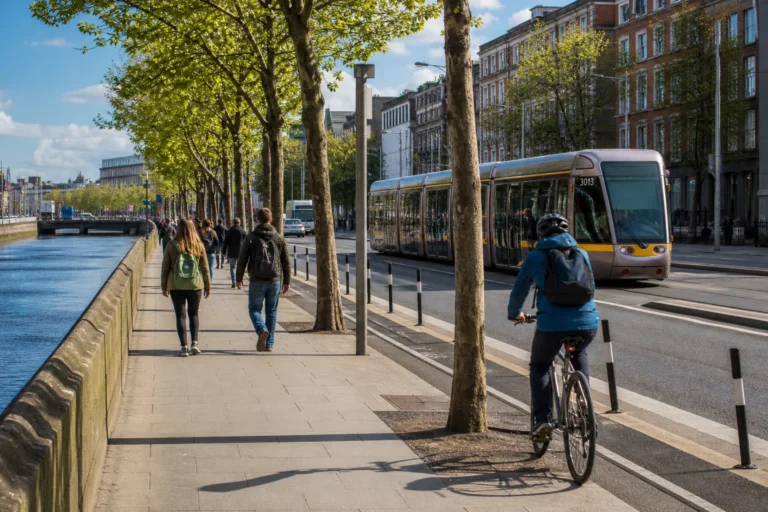
Central Dublin is compact and highly walkable: most major attractions lie within a 20–40 minute walk of the city centre. LUAS light-rail, the DART and Irish Rail, and an extensive bus network connect neighbourhoods and sites such as the Guinness Storehouse, Kilmainham and Phoenix Park.
Bicycles and e-scooters are common for short hops; taxis and rideshares fill gaps late at night. For coastal or intercity day trips, use the DART and regional rail services from central stations.
Location
Map of Dublin, Ireland
The interactive map loads only when you choose to view it.
Plan Your Visit to Dublin
Allow 1. 2 hours for single attractions such as the Book of Kells/Long Room and a half- or full-day for larger sites like the Guinness Storehouse, Kilmainham Gaol or Phoenix Park.
Many attractions use timed, pre-booked tickets—reserve online in advance, especially in summer and on bank-holiday weekends.
Central hotels place you within easy walking distance of Trinity College, Grafton Street and Temple Bar. Carry a rain layer and comfortable shoes, and allow extra time for security checks at popular sites.
Local Tips for Dublin
Buy tickets online for the Book of Kells Experience and Kilmainham Gaol Museum—both routinely sell out. Use the LUAS green line for St. Stephen’s Green and Grafton Street, and the red line for Heuston and the Guinness Storehouse.
The DART is best for coastal or harbour trips.
Many museums, including the National Museum – Archaeology, offer free entry but may require advance booking for special displays. Visit early morning or late afternoon to avoid peak crowds, and prefer weekdays for quieter visits.
Live conditions
Current Weather

Updated 2026-08-25 06:30
- Feels like
- 11°C / 51°F
- Today’s high / low
- 17°C / 62°F · 12°C / 54°F
- Humidity
- 93%
- Wind
- ↘ 9 km/h
- Precipitation
- 0 mm
- Chance of rain
- 87%
- Local time
- 2026-08-25 06:39
Places to Visit Near Dublin
Trinity College sits at the heart of the central zone and contains the Book of Kells Experience and the Long Room.
Dublin Castle’s State Apartments and the adjacent Chester Beatty Library are immediate neighbours in the medieval quarter.
The Temple Bar cultural quarter and Meeting House Square host galleries, markets and performance venues within short walking distance of the Liffey.
Grafton Street and St Stephen’s Green offer shopping, cafés and green space beside national collections on Kildare Street.
The Guinness Storehouse at St. James’s Gate anchors visits to the Liberties and nearby industrial heritage sites.
Kilmainham Gaol and the Irish Museum of Modern Art lie close together to the west of the centre.
Phoenix Park, with Farmleigh and Dublin Zoo, provides extensive lawns, memorials and institutional landmarks just a short transit ride from the centre.
Safety
Dublin is generally safe for visitors but apply normal urban caution. Pickpocketing and bag-snatching occur in crowded tourist zones such as Temple Bar, LUAS stops and busy shopping streets, so keep valuables secure and use a crossbody bag.
Watch for cyclists and buses on narrow streets when crossing. After dark stick to well-lit main streets or use licensed taxis and ride-hailing services.
For emergencies call 999 or 112 and consult local Garda (police) stations for non-emergencies.