
Travel Guide
Plan your visit around Palace of Knossos, Heraklion Archaeological Museum, and more of Crete, Greece.
Crete is Greece’s largest island, where Neolithic and Minoan archaeology sits alongside rugged mountains, fertile plateaus and vivid coastal lagoons. If you’re searching for things to do in Crete you’ll find major archaeological sites, dramatic gorges, family‑friendly beaches and traditional villages.
Each requiring a little planning because of the island’s size and varied terrain.

Why Visit Crete
Crete’s mix of outstanding archaeology, big natural contrasts and a living rural culture draws visitors of many interests. Key Minoan sites—most notably the Palace of Knossos and the Heraklion Archaeological Museum—anchor visits for anyone interested in Europe’s earliest complex societies.
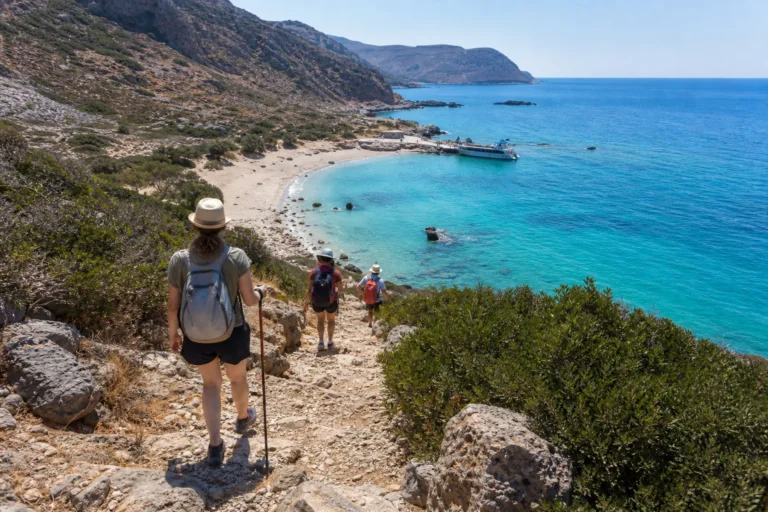
Outdoors enthusiasts find long-distance hiking (Samaria Gorge, mountain plateaus), dramatic coastal scenery (Balos, Elafonissi) and island boat excursions such as Spinalonga. Traditional villages, olive groves, windmills on the Lassithi Plateau and a distinct Cretan cuisine make it easy to pair active inland adventures with relaxed seaside stays.

Top Things to Do in Crete, Greece
Crete combines world-class archaeology, dramatic mountain gorges and some of Greece’s most striking coastal lagoons. Below are the island highlights and practical notes to plan visits to each one.
Palace of Knossos (Heraklion)
The Palace of Knossos is Crete’s largest Minoan centre, set on Kephala hill roughly five kilometres south of Heraklion. Walk among multi‑storey stone and mudbrick structures, paved courts, storage magazines and ceremonial rooms that were rebuilt repeatedly between about 1900 and 1375 BCE.
Restored plaster fragments, stairways and broad lightwells demonstrate how the complex organised light, movement and ritual across connected courtyards.
Knossos anchors our view of Bronze Age Aegean administration, craft and ritual. Excavations by Sir Arthur Evans revealed much of the plan but also introduced twentieth‑century reconstructions—look for where modern restoration meets ancient fabric, bring sun protection and sturdy shoes, and pair a visit with the Heraklion Archaeological Museum for fuller context.
Heraklion Archaeological Museum
The Heraklion Archaeological Museum holds one of the world’s most important collections of Minoan art and material culture, assembled from excavations across Crete. Galleries present pottery, carved stone vessels, bronzes, jewellery and fresco fragments from palaces such as Knossos, Phaistos and Malia, alongside clay tablets bearing Linear A and Linear B inscriptions and emblematic figurines.
Exhibition layouts emphasise chronological development and themes—burial customs, ritual practice and palace economy—giving close-up encounters with masterpieces like the Snake‑Goddess figures and bull‑leaper imagery. Displays and research programmes change periodically, so check official communications for current exhibitions and combine the museum with nearby field sites for deeper context.
Samaria Gorge (Samaria National Park)
Samaria Gorge is the central feature of Samaria National Park, a protected karst canyon in the White Mountains established for nature conservation.
The main trail is an approximately thirteen‑kilometre downhill route that leads hikers from high plateau terrain toward the Libyan Sea, passing a dramatic narrow defile known as the Gates where cliffs close to just a few metres apart.
The park conserves endemic flora, birds and the kri‑kri (wild Cretan goat). Paths are uneven and can be steep; bring sturdy footwear, plenty of water and start early.
Entry tickets, seasonal restrictions and visitor guidance are set by the park authority, so check official channels before you go.
Elafonissi Beach
Elafonissi is a protected coastal nature area on Crete’s southwestern shore, famed for its shallow turquoise lagoons, an oblong sandspit and pink‑tinged sand produced by ground shell fragments. The gently shelving waters and sheltered lagoons make it especially family‑friendly and ideal for wading and nature viewing.
As part of a Natura 2000 site, Elafonissi uses boardwalks and cordoned dune areas to protect sensitive habitats and nesting birds. Facilities and seasonal services vary; follow local guidance to reduce habitat damage and bring sun protection, water and respect for conservation measures while you explore the sandspit and lagoon.
Balos Lagoon and Gramvousa
Balos is a shallow lagoon of turquoise water, white sand and pale‑pink shell grit formed where the Gramvousa peninsula meets the sea. Visitors typically reach the lagoon by boat from Kissamos or via a rough coastal road and a steep descent from a high parking area.
The lagoon offers wide swimming and easy wading with long views across scattered islets.
Offshore, Imeri Gramvousa is topped by a well‑preserved sixteenth‑century Venetian fortress. A short climb to the fort rewards visitors with panoramic views and historical context.
Expect limited facilities at the beach, strong sun exposure and management measures to protect dunes and plant communities; bring water, shade and sturdy footwear.
Chania Old Venetian Harbour
Chania’s Old Venetian Harbour is the city’s visual and social centre, framed by the sea wall, the photogenic lighthouse and historic waterfront buildings. Shaped during Venetian rule, the harbour once housed shipyards and warehouses; many original façades now host cafés, small museums and maritime displays along the quay.
Key monuments include the Firkas bastion and the chain of Neoria shipyards; the low lighthouse at the breakwater is a popular sunset viewpoint. The harbour remains an active working space with fishing boats and excursion launches, and narrow inland streets open onto shaded squares and Ottoman‑era buildings, rewarding slow exploration on foot.
Rethymno Old Town and the Fortezza
Rethymno’s Old Town is a compact pedestrian quarter where Venetian, Ottoman and Cretan layers sit within narrow alleys, shaded cafés and small craft shops. Architectural details—carved stone doorframes, wooden balconies and medieval warehouses—make the area ideal for slow walking and discovery.
The Fortezza, a large late‑sixteenth‑century Venetian fortress on Paleokastro Hill, dominates the town. Its ramparts enclose military buildings, a mosque and cisterns; from the ramparts you get broad views over tiled roofs, the harbour and coast.
Combine a stroll through the Old Town with the climb to the Fortezza for the clearest sense of Rethymno’s maritime and military history.
Spinalonga Island (Elounda)
Spinalonga is a small fortified islet at the mouth of Mirabello Bay, known for its Venetian ramparts and later use as Greece’s twentieth‑century leper colony.
Approached almost always by boat from Elounda, Plaka or Agios Nikolaos, the island presents military walls, ruined houses, narrow lanes and simple civic buildings that together tell a layered story of strategic defence and enforced isolation.
A walk around Spinalonga offers panoramic sea views and a sobering view of life under quarantine; on‑site panels and curated routes help explain daily life in the colony and the island’s changing roles.
The islet is exposed and arid with uneven paths, so boat trips typically structure the visit length—check official sources for current visitor guidance.
Diktaean Cave (Psychro Cave)
Diktaean Cave (Psychro Cave) sits on the northern slopes of the Dikti range above Psychro village at about 1,025 metres.
After a short uphill approach from the plateau you enter an illuminated cavern with antechambers, a large central hall and dramatic stalagmite–stalactite formations, including the locally named “mantle of Zeus.” Archaeological finds show use from Neolithic through Minoan times, and ancient writers linked the cave to the mythic birthplace of Zeus.
Paths inside are formed and lit but can be slippery; wear sturdy shoes and prepare for cooler conditions inside the cave. Check local municipal or archaeological authority pages for the latest access and conservation guidance.
Lassithi Plateau
The Lassithi Plateau is a fertile karst basin in the Dikti massif at roughly 800–900 metres elevation, noted for irrigated fields, traditional villages and a dispersed ensemble of white‑sailed windmills. Small roads thread through agricultural plots, orchards and hamlets, giving a clear sense of an agricultural landscape shaped by centuries of irrigation and communal labour.
Many nineteenth‑ and early‑twentieth‑century windmills survive as restored monuments that once pumped groundwater into irrigation channels. The plateau also contains monasteries, folklore museums and access routes to Psychro Cave.
Visiting works best by car or organised tour that allows stops at windmill groups, village museums and short local walks.
Best Time to Visit Crete
Late April. June and September.
Early October are the most pleasant times to visit: spring brings wildflowers, flowing mountain streams and milder temperatures ideal for hiking and sightseeing, while early autumn retains warm sea temperatures with fewer crowds.
July–August offers reliably hot, dry weather and lively resorts, suited to beach-focused travelers who expect higher temperatures and busier harbors. Winter is quieter and greener inland, with lower prices and reduced services at some coastal or remote attractions.
Getting Around Crete
Crete is large and best seen using a mix of transport. Regular KTEL regional buses link Heraklion, Chania, Rethymno and Agios Nikolaos along the north coast, with more frequent service in summer.
Renting a car gives flexibility to reach beaches, mountain villages and remote gorges; be ready for narrow, steep or unpaved rural roads. Ferries and excursion boats connect coastal towns and day‑trip sites (Balos, Gramvousa, Spinalonga).
Domestic flights serve Heraklion, Chania and Sitia airports. Allow extra travel time for mountain routes and seasonal traffic.
Location
Map of Crete, Greece
The interactive map loads only when you choose to view it.
Plan Your Visit to Crete
Plan altitude and access for major sites: Samaria Gorge is a long downhill trail inside a national park with defined trailheads and seasonal openings. Check the Chania forestry authority or park operators for current conditions.
Archaeological sites such as Knossos and major museums like the Heraklion Archaeological Museum are managed by national authorities—tickets and guided tours reduce wait times. Island sites (Spinalonga) need a short boat crossing from nearby ports, while Balos and Gramvousa are commonly reached by boat or via a rough road and steep walk.
For Lassithi Plateau and Psychro (Diktaean Cave) expect mountain roads and short uphill walks from parking.
Local Tips for Crete
Base your stay to suit your interests: Heraklion and Chania are convenient for archaeology, museums and ferry connections, while Rethymno and Agios Nikolaos make quieter hubs for Old Town walks and island departures.
Use regional KTEL buses for intercity legs and book buses or ferries ahead in high season. Many rural attractions (Lassithi Plateau, Diktaean Cave) are easiest by rental car or organised day trip.
For Balos and Elafonissi, arrive early or take scheduled boat services to avoid long walks and limited parking.
Carry a reusable water bottle, sun protection and cash for smaller villages and museum kiosks.
Live conditions
Current Weather

Updated 2026-09-20 19:15
- Feels like
- 15°C / 58°F
- Today’s high / low
- 22°C / 72°F · 17°C / 62°F
- Humidity
- 63%
- Wind
- ↑ 16 km/h
- Precipitation
- 0 mm
- Chance of rain
- 9%
- Local time
- 2026-09-20 19:19
Safety in Crete
Crete is generally safe, but natural sites require caution. Summer sun and heat can cause dehydration—carry water and sun protection.
Sea conditions can change; swim in lifeguarded areas when available and heed local advice about currents and boat traffic. Hiking Samaria and other gorges needs sturdy shoes, early starts and awareness of steep, exposed sections; check park notices for closures.
Stay on marked paths in protected areas, secure belongings in busy towns, and use licensed boat operators and guides for crossings and remote-site access.