
Travel Guide
Plan your visit around Portara, Chora (Naxos Town) and the Venetian Kastro, and more of Naxos, Greece.
Discover the best things to do in Naxos, Greece, from signature sights to memorable local experiences.
Expect broad sandy beaches, a compact medieval and archaeological core, and a rugged interior of marble villages and hiking terrain. The island’s Portara frames the harbour, Chora’s Venetian Kastro anchors local history, and inland Mount Zas rewards hikers with panoramic views and mythic ties to Zeus.
Why Visit Naxos
Visitors come to Naxos for a classic Cycladic mix: extensive sandy beaches with clear waters, a compact medieval and archaeological core, and substantial inland scenery that rewards active exploration.
The island balances sunbathing and water sports at long shores like Agios Prokopios and Plaka with cultural visits to the Archaeological Museum, the Venetian Kastro and Sangri’s Demeter sanctuary.
Hikers and nature lovers head inland to Mount Zas and Zas Cave for panoramic views and mythic resonance, while mountain villages such as Apeiranthos offer traditional architecture, local crafts and a quieter counterpoint to Chora’s seaside bustle.
Top Things to Do in Naxos, Greece
Naxos pairs emblematic Aegean beaches with a compact medieval core and a rugged interior. The island’s highlights range from the Portara at the harbour to Chora’s Kastro, the Archaeological Museum, inland marble villages and Mount Zas hikes.
Portara (the Great Door / Temple of Apollo)
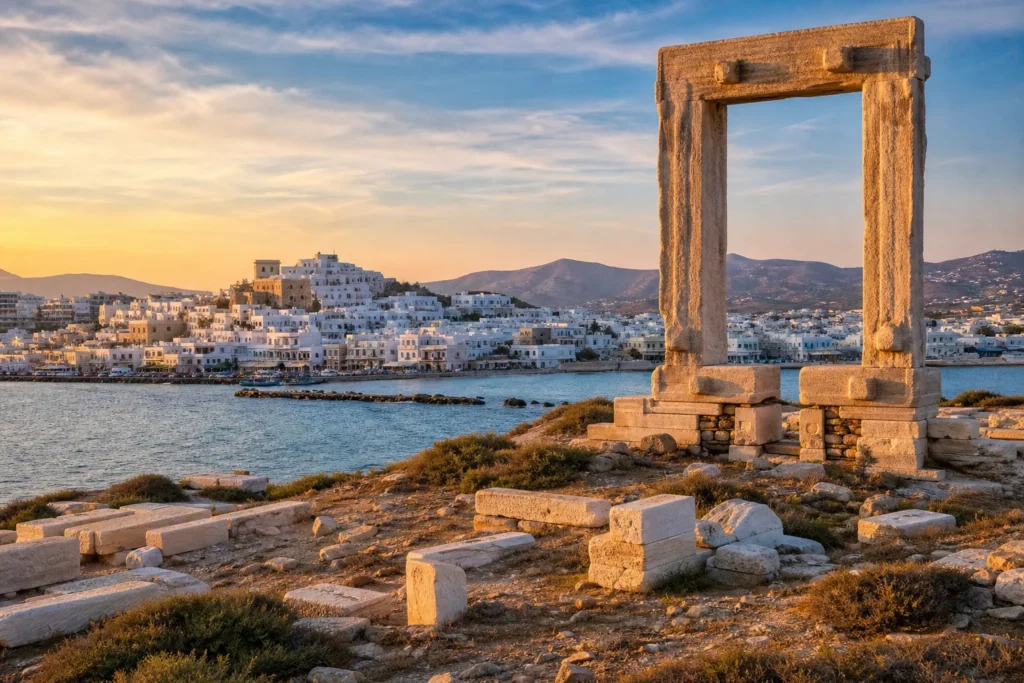
The Portara is the monumental marble gateway of an unfinished 6th‑century BCE Temple of Apollo, set on the small islet called Palatia just off Naxos’s main harbour. A paved causeway links the islet to town, allowing a short walk to the surviving lintel and uprights—large blocks of Naxian marble that convey the temple’s original scale.
Archaeological traces on the islet show foundation outlines and column bases, giving a sense of the temple’s dimensions and Ionic influence.
Visiting is primarily an outdoor experience of light, sea and landscape: the Portara frames views across the bay toward Chora and is a favourite sunset viewpoint.
Chora (Naxos Town) and the Venetian Kastro (Castle)
Chora is Naxos’s principal town—a compact, whitewashed place that rises around the medieval Venetian Kastro founded by Marco Sanudo in 1207. The Kastro’s fortifications, narrow alleys and multi‑storey houses reflect a layered urban history where Byzantine, Frankish and Venetian influences meet island traditions.
Inside the castle precinct you’ll find alleys, courtyard gardens and restored stone mansions bearing carved lintels and family coats of arms.
Exploration alternates between intimate domestic details and broad views: hidden squares open onto cafés and tavernas, while viewpoints from the Kastro overlook the harbour and countryside. Reserve time to wander the castle quarter and check museum opening information via official cultural channels.
Naxos Archaeological Museum
The Archaeological Museum of Naxos traces the island’s story from the Late Neolithic through Late Antiquity with Proto‑Cycladic marble figurines, Mycenaean pottery and grave goods, Classical and Hellenistic sculpture, Roman objects and Early Christian material.
Many objects come from local excavations—Grotta and other island sites—so the collection highlights Naxos’s craft traditions, burial practices and regional trade.
Displays reward close looking at marble and ceramic craftsmanship. The museum’s rooms have undergone conservation and temporary relocations at times, so verify current exhibition locations and visitor services on official cultural‑authority pages before you go.
Temple/Sanctuary of Demeter at Sangri
The Sanctuary of Demeter at Sangri (Gyroulas hill) is a well‑preserved Archaic temple complex built largely of white Naxian marble. Excavations revealed substantial foundations, restored wall sections and architectural members that clarify the temple’s plan and later phases, including conversion into an Early Christian basilica.
Finds include pediment fragments, column drums, votive objects and inscriptions that illuminate ritual practice and the island’s civic ambitions in the sixth century BCE.
Adjacent to the ruins, the Archaeological Collection of Sangri displays representative fragments and votive finds in a low‑profile building designed to relate closely to the site. Check Ephorate or ministry sources for current access and interpretive arrangements.
Mount Zas (Zeus) and Zas Cave hike
Mount Zas is the highest peak in the Cyclades and a dominant presence southeast of Filoti. Popular ascent routes begin near Filoti and climb along goat paths and marked trails past springs, terraced fields and aromatic scrub before reaching a summit ridge with wide island and sea views.
Partway up, Zas Cave offers speleological and archaeological interest: excavations recovered material from the Neolithic through the Roman period, and the cave contains stalactites and stalagmites worth careful exploration.
The hike combines geology, myth and panorama; trail sections include loose rock and steep pitches, so bring sturdy footwear, water and check seasonal trail conditions. Guided hikes are available from local operators for those preferring a narrated or safer cave visit.
Agios Prokopios Beach
Agios Prokopios is a broad, gently sloping beach of coarse golden sand and clear turquoise water on Naxos’s southwest side. The beach forms a long ribbon linking neighbouring shorelines and includes organized central sections and a quieter western end near the small chapel that gives the beach its name.
Its shallow entry and sand make it comfortable for families and for long shoreline walks.
A compact seaside settlement backs the beach with tavernas, cafés, rental shops and accommodation, which makes Agios Prokopios easy to combine with short trips to Chora by bike or bus. Facilities and beach organisation vary by season, so arrive early in high season for quieter space and easier parking.
Plaka Beach
Plaka Beach is a long, gently curving ribbon of golden sand stretching several kilometres along Naxos’s southwest coast. Backed in places by low dunes, tamarisk and juniper, its open coastal landscape favours long walks, sunset photography and quieter, less developed stretches.
The water is clear and typically shallow for many metres, which suits families and long wading swims.
Crowding concentrates near main access points and facilities; a short walk away from entrances usually finds more solitude. Some sections provide umbrellas, loungers and small beach bars while other stretches remain undeveloped and free to use.
Services and parking vary by season, so check local tourism pages for current details.
Apeiranthos village
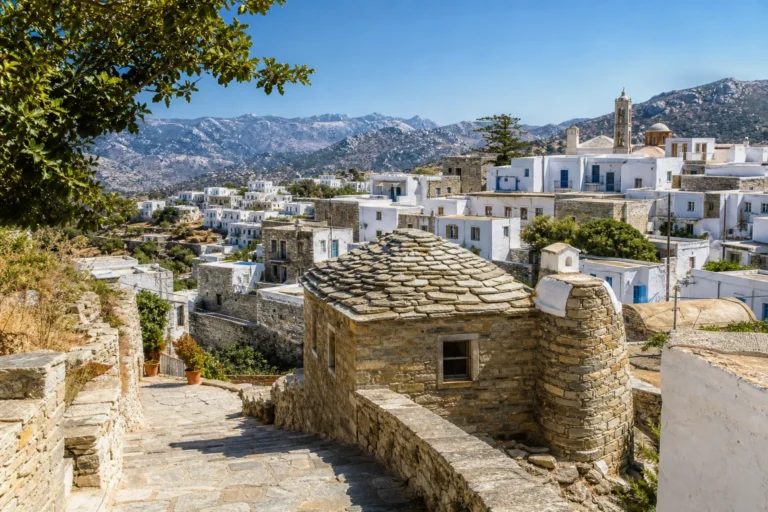
Apeiranthos is a mountain village on Naxos’s northern slopes, noted for marble‑paved alleys, stone houses and Venetian towers. Sitting at roughly 600 metres elevation, the village preserves narrow lanes, arched passages and small squares with cafés and tavernas.
Its use of local marble for pavements and doorframes gives Apeiranthos a distinctive look tied to long building traditions.
Several small museums present Early Cycladic finds, geology, natural history and folklore, making Apeiranthos unusually rich in curated material for its size. The village maintains living crafts and seasonal festivities; comfortable footwear is recommended because of steps and uneven marble paving, and public‑transport links vary seasonally.
Best Time to Visit Naxos
Late spring through early autumn (May–September) is the most practical time to visit for reliably warm sea temperatures, open cultural sites and regular ferry connections. May–June and September offer warm weather, blooming lowland flora, quieter beaches and more comfortable hiking on Mount Zas than high summer.
July–August bring peak island life, busier beaches and expanded services but also higher temperatures and crowds. Winters are mild but many visitor services reduce operations and transport options are limited.
SPECIAL EVENTS IN Naxos
Naxos Festival (Φεστιβάλ Νάξου)
An annual summer arts festival centered at the historic Bazeos Tower on Naxos, the Naxos Festival presents theatre, music, dance, exhibitions and interdisciplinary projects that showcase Greek and international artists. It has grown into one of the island’s principal cultural draws, combining heritage venue experiences with contemporary programming that appeals to visitors seeking festival performances, local culture and evening events in Naxos town. Travelers may plan visits around special performances and exhibitions staged across the festival season. ([naxosfestival.gr](https://naxosfestival.gr/en/))
- Dates
- May 31, 2026 - October 11, 2026
- Venue
- Bazeos Tower
Getting Around Naxos
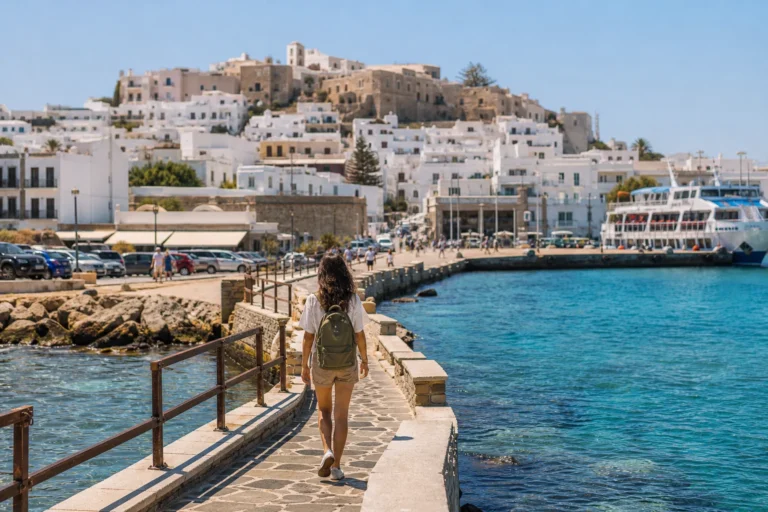
Naxos is best navigated by a mix of walking, local buses and rented vehicles. Chora is compact and walkable, with the Portara and Kastro a short stroll from the harbour.
A public bus network links Chora with major beaches (Agios Prokopios, Plaka, Agia Anna) and some inland villages, though inter‑village services are less frequent. Many visitors rent cars, scooters or ATVs to reach remote beaches, Sangri and Mount Zas trailheads.
The island has a commercial ferry port and a small regional airport with domestic flights.
Location
Map of Naxos, Greece
The interactive map loads only when you choose to view it.
Plan Your Visit to Naxos
Prioritise the Portara, Chora and the Archaeological Museum for early morning or late afternoon visits to avoid midday crowds and heat. Museums and archaeological sites require tickets and sometimes close one weekday, so check the Ministry of Culture or local museum pages before you go.
For Mount Zas and Zas Cave plan a full morning: trails can be steep and exposed, so start with good daylight and carry 1. 2 litres of water per person, sun protection and sturdy footwear.
Bring cash for small vendors in villages where card acceptance can be limited.
Local Tips for Naxos
Chora (Naxos Town) is the island’s transport hub and the easiest base for visiting the Portara, Venetian Kastro and the Archaeological Museum on foot. Summer KTEL buses connect Chora with Agios Prokopios, Plaka and other main beaches; timetables thin in shoulder season, so check schedules in advance.
Book popular summer ferry crossings early and allow extra time for luggage and port transfers. For Apeiranthos, Sangri and Mount Zas access, rent a car or hire a licensed driver—narrow mountain roads favour small vehicles.
Expect limited overnight services outside high season.
Live conditions
Current Weather

Updated 2026-09-20 19:15
- Feels like
- 19°C / 65°F
- Today’s high / low
- 23°C / 74°F · 21°C / 69°F
- Humidity
- 77%
- Wind
- ↑ 27 km/h
- Precipitation
- 0 mm
- Chance of rain
- 15%
- Local time
- 2026-09-20 19:24
Safety
Naxos is generally safe; the main hazards are environmental. Protect yourself from strong sun and high UV—use sunscreen, a hat and plenty of water, especially in summer.
Sea conditions can change: watch for wind‑driven currents at exposed beaches and follow lifeguard flags or local advice when available. Mountain trails to Mount Zas include loose rock and steep sections—use proper footwear, avoid solo hikes, and check weather before you set out.
In remote areas and off‑season expect reduced emergency services and slower transport; keep a charged phone and basic first aid supplies.