
Travel Guide
Plan your visit around Mykonos Town, Little Venice, and more of Mykonos, Greece.
Discover the best things to do in Mykonos, Greece, from signature sights to memorable local experiences.
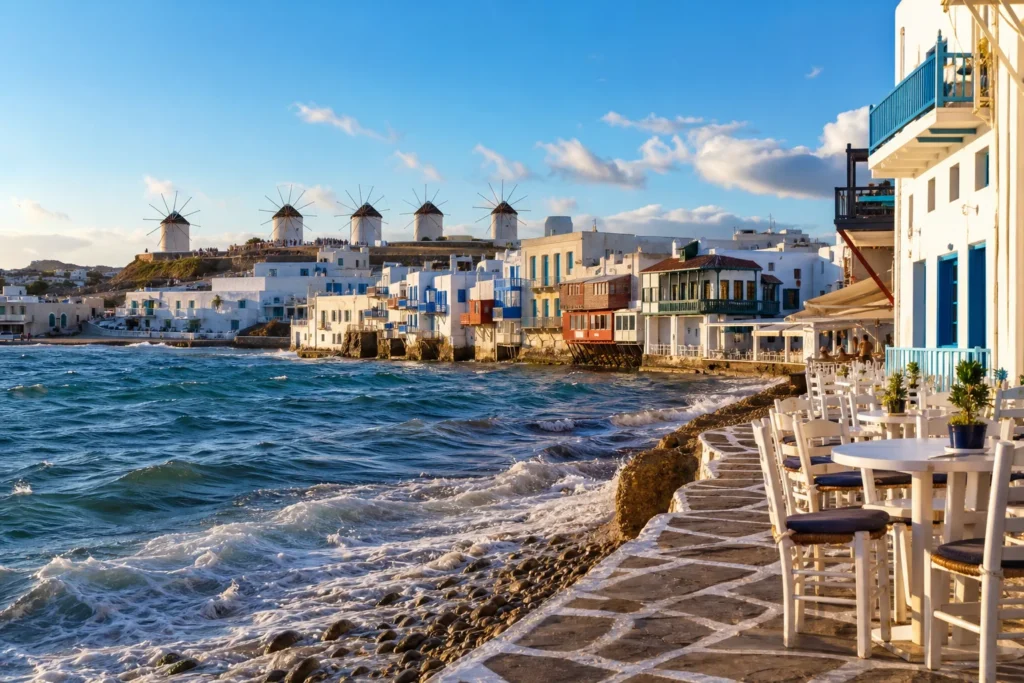
Start in Chora where whitewashed alleys, waterfront Little Venice, and the famous Kato Mili windmills condense the island’s character into a walkable quarter.
Mykonos pairs photogenic Cycladic architecture with a lively seaside culture. Upscale Psarou and party‑focused Paradise sit alongside quieter coves, while Ano Mera and the Panagia Tourliani monastery show a more traditional island side.
Short boat trips from Mykonos offer direct access to the UNESCO‑listed Archaeological Site of Delos for those interested in ancient history.
Why Visit Mykonos
Visit Mykonos to combine iconic Cycladic scenery with vibrant island life: wander the whitewashed alleys of Chora, watch the sunset from Little Venice, photograph Kato Mili, and admire the sculptural Panagia Paraportiani. Beaches span upscale Psarou and party‑oriented Paradise to quieter coves for swimming and snorkeling.
Ano Mera and the Panagia Tourliani monastery offer calmer village rhythms and distinctive local architecture. Use Mykonos as the gateway to the UNESCO‑listed Archaeological Site of Delos for a half‑day or full‑day dive into ancient Mediterranean history.
Top Things to Do in Mykonos, Greece
Mykonos packs iconic Cycladic scenery and lively seaside culture into a compact island capital and nearby beaches. Below are the essential places and experiences to plan into your days.
Mykonos Town (Chora)
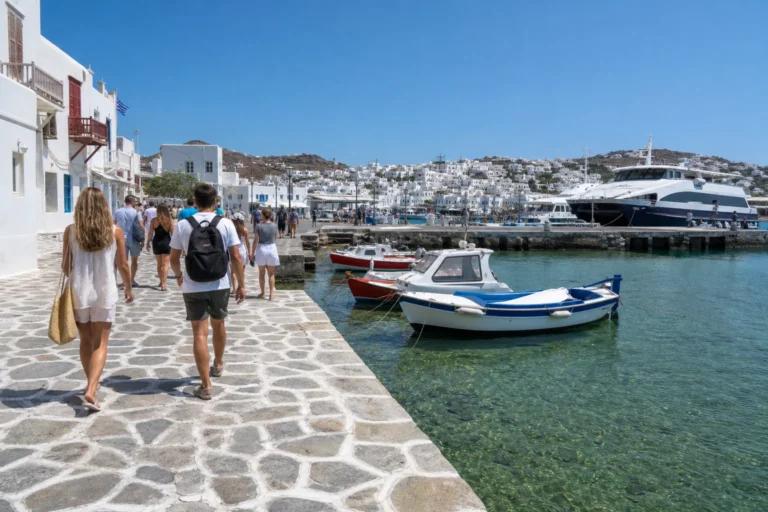
Mykonos Town, locally called Chora, is the island’s historic and social heart: a compact labyrinth of whitewashed, paved streets designed historically to confuse pirates and to funnel sea breezes. The town spreads from the old harbour up into low hills where cubic Cycladic houses cluster close together, creating shaded alleyways ideal for walking and discovery.
Architectural highlights include small chapels, stone‑paved lanes and the nearby windmills that form a dominant photographic backdrop. Chora concentrates cafés, bakeries, galleries and family shops within a short walk and also hosts a modest Archaeological Museum.
Wear comfortable shoes for uneven pavements and plan for shade during midday sun.
Little Venice
Little Venice is a compact, photogenic waterfront quarter on the western edge of Chora where colourful houses stand at the water’s edge with projecting balconies above the sea. Originally a sailors’ district, these buildings now host cafés and bars whose terraces provide direct sunset views across the bay.
The district’s intimacy and reflections make it a favourite for photographers and evening strollers.
Best explored on foot, Little Venice is lively in late afternoon and evening; arrive early or later to avoid peak crowds. The area remains partially residential above the waterfront, and narrow side streets reward slow exploration while providing a strong sense of the island’s maritime past.
Kato Mili (Mykonos Windmills)
Kato Mili, the row of white cylindrical windmills, crowns a low ridge on the southern edge of Mykonos Town and forms one of the island’s most recognisable skylines.
Built to harness strong northwesterly winds for grinding grain, the mills read today as an ensemble that offers panoramic sightlines toward the Aegean and the harbour—ideal around late‑afternoon light for photographs.
The site is primarily an outdoor, observational experience: you can inspect masonry drums, conical tops and the sockets where wooden sails were fixed. Note that the ridge is wind‑exposed and surfaces are uneven; nearby Bonis Mill has a restored interior interpretation that clarifies how the mills operated.
Panagia Paraportiani (Church)
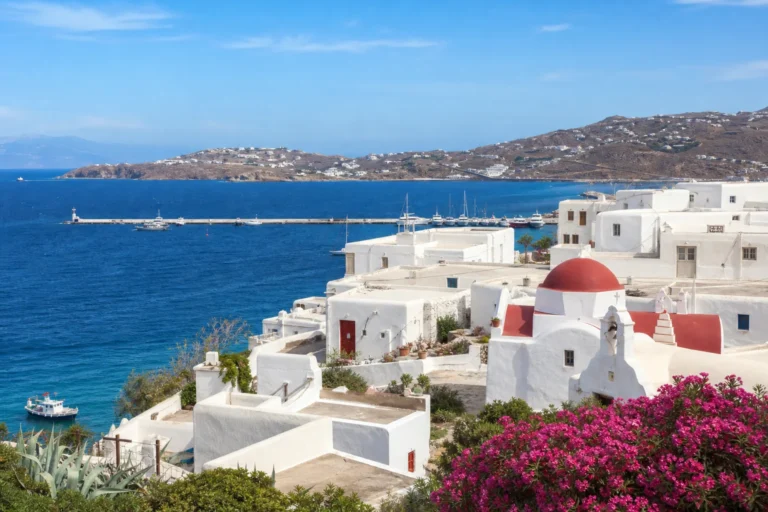
Panagia Paraportiani is a sculptural, whitewashed complex of five interconnected chapels at the edge of the old fortress (Kastro) quarter. Its irregular, cascading volumes and curved plaster surfaces create a distinctive silhouette visible from the harbour, while closer inspection reveals the sequence of individual chapels and small decorative details.
The ensemble grew over centuries, so it reads as a layered architectural palimpsest rather than a single planned monument. It remains an active place of worship and fragile historic fabric, so visitors should approach quietly, respect liturgical activity, and follow any protective circulation routes in place.
Archaeological Site of Delos (UNESCO)
The Archaeological Site of Delos, a UNESCO World Heritage site reachable by short boat from Mykonos, preserves the remains of a major sanctuary and trading town tied to Apollo and Artemis. The island presents temples, stoas, mosaic floors, sculptural bases and a well‑documented ancient cemetery that together reveal religious, civic and mercantile life across centuries.
Visits are outdoor walking experiences across uneven archaeological terrain; allow time to see both the site and the compact on‑site museum that houses important sculptures and finds. Because Delos is protected, visitor circulation is managed—check official cultural‑heritage channels and boat schedules before you go.
Ano Mera village and Panagia Tourliani Monastery
Ano Mera is Mykonos’s principal inland village and a calmer counterpoint to the coastal bustle. The compact square centers around cafés and tavernas and invites relaxed walking among low whitewashed houses.
The village is a practical base for visiting quieter beaches and experiencing everyday island life.
At the village heart is the Monastery of Panagia Tourliani, known for its marble iconostasis, carved woodwork and a revered icon of the Virgin. The monastery combines devotional life with preserved decorative elements; visitors should be respectful during liturgies and consult local sources for feast‑day or access details.
Psarou Beach
Psarou is a sheltered southern bay known for clear turquoise water, golden sand and a compact promenade lined with established beach clubs and waterside restaurants. Its gentle seabed and protection from strong northerly winds make swimming reliable, and the beach’s cosmopolitan scene offers sunbeds, attentive service and water activities.
Because Psarou is small, it fills quickly in high season—arrive early to secure a preferred spot or a waterfront table. The beach links easily to Platis Gialos and Mykonos Town by taxi, bus or short boat hop, which makes combining multiple beaches in one day convenient.
Paradise Beach
Paradise Beach on the southern shore is famed for its lively beach‑club culture, daytime parties and energetic nightlife. Broad sands slope into warm, clear water suitable for swimmers, while a row of clubs, bars and restaurants provide music, food and programmed events that attract a youthful, festive crowd.
The beach is easy to reach from Mykonos Town by road, bus or water taxi and is often a hub for nightlife transport. Expect a managed, service‑driven shoreline with rentable sunbeds and on‑site staff; visitors seeking quieter swimming should consider nearby alternative coves a short drive or boat ride away.
Best Time to Visit Mykonos
Late spring through early autumn (May–September) is the most rewarding time to visit. May–June and September offer warm sea temperatures, long daylight, and fewer crowds while retaining good boat service to Delos.
July–August is peak season with lively nightlife and full beach‑club programming but denser crowds, higher prices, and limited availability. Shoulder months (April, October) provide quieter exploration of Chora and Ano Mera, though some beach clubs and seasonal services may be reduced.
Winter is quiet with many tourist services closed.
Getting Around Mykonos
The island is compact but uses a mix of walking, buses, taxis and seasonal water taxis. Chora (Mykonos Town) is largely pedestrianised with narrow lanes best explored on foot.
KTEL buses link Chora to major beaches, Ano Mera and the New Port; schedules change with the season. Taxis are available but limited—book ahead during peak hours.
Water taxis and private boats provide short transfers to beaches such as Psarou and Paradise. Renting a car, scooter or ATV offers flexibility for remote spots, but check insurance and local driving rules.
Location
Map of Mykonos, Greece
The interactive map loads only when you choose to view it.
Plan Your Visit to Mykonos
Mykonos’s main ports and roads get very busy in July–August; allow extra transit time during peak season. Ferries to Delos depart from the Old Port—check authorised operators and archaeological‑service schedules and reserve ahead when possible.
If you plan to rent a car, scooter, or ATV, book early and confirm insurance and parking rules. Many quieter beaches and Ano Mera (Panagia Tourliani Monastery) are easiest reached by vehicle.
Carry an offline or printed map for Chora’s narrow lanes because mobile signals and GPS can be unreliable in tight alleys.
Local Tips for Mykonos
Use Chora as your orientation hub. Its alleys link Little Venice, Kato Mili and Panagia Paraportiani within easy walking distance, so favour walking‑first days to avoid parking stress.
Buy fresh supplies at central markets before heading to beaches, as popular bays fill early in high season.
For Delos, book a Mykonos–Delos boat from the Old Port in advance and bring sun protection and water—the archaeological island has little shade. If you rent a scooter or car, confirm insurance and parking rules and drive cautiously on narrow roads.
Live conditions
Current Weather

Updated 2026-09-21 18:30
- Feels like
- 18°C / 64°F
- Today’s high / low
- 23°C / 74°F · 21°C / 70°F
- Humidity
- 60%
- Wind
- ↑ 34 km/h
- Precipitation
- 0 mm
- Chance of rain
- 9%
- Local time
- 2026-09-21 18:41
Safety in Mykonos
Mykonos is generally safe for visitors, but peak crowds and nightlife can increase petty‑theft risk—keep valuables secured and supervise bags at beaches and bars. Road safety matters: many roads are narrow and share space with pedestrians; drive defensively, respect local speed limits, and wear helmets on scooters.
For visits to Delos and exposed beaches, bring sun protection, water, and suitable footwear for rough terrain. In emergencies, use local emergency numbers and the medical clinic in Mykonos Town; travel insurance that covers medical evacuation is recommended.