Travel Guide
Find top sights, local places, maps, weather, and simple trip tips for San Francisco, California.
Looking for Things to Do in San Francisco, California? Use this guide to compare top sights, local tips, maps, weather, and nearby places.
If you’re searching for things to do in San Francisco, you’ll find a compact, walkable city built on steep hills and a dramatic Pacific. San Francisco Bay shoreline.
From the Golden Gate Bridge and Presidio to Alcatraz in the bay, the Embarcadero’s museums at Pier 15, Fisherman’s Wharf and Pier 39, Chinatown’s cultural streets, and the broad green expanse of Golden Gate Park, core visitor areas sit close enough for short, multi‑attraction days linked by cable cars and frequent transit.
Why Visit San Francisco
San Francisco rewards varied interests: iconic engineering and photographic opportunities at the Golden Gate Bridge and nearby coastal overlooks. Living history and guided audio tours on Alcatraz Island.
Hands‑on science exhibits at the Exploratorium on Pier 15. Expansive outdoor recreation and museums in Golden Gate Park.
Waterfront entertainment and maritime history at Fisherman’s Wharf and Pier 39. Immersive streets and culinary exploration in Chinatown.
And the nostalgic experience of riding the Powell cable car lines.
These concentrated, world‑class experiences let visitors mix nature, history, museums, and neighborhood culture within a compact area.
Top Things to Do in San Francisco, California
San Francisco’s top sights cluster along waterfront corridors, parklands, and historic neighborhoods. Below are the city’s most visited attractions and why they matter.
Golden Gate Bridge
The Golden Gate Bridge crowns the entrance to San Francisco Bay and offers dramatic water and skyline views. Walking or biking the span gives changing perspectives of the city, Marin Headlands, and Alcatraz Island, while the south end visitor area and welcome center provide exhibits and interpretive panels about the bridge’s construction and design.
Engineers built the bridge with a 4,200‑foot main span and 746‑foot towers, completed in 1937; architect Irving F. Morrow added Art Deco details and selected the distinctive International Orange color to improve visibility in fog.
Popular photo stops on the San Francisco side include Fort Point and Battery East Vista, and Presidio trails connect directly to bridge viewpoints for longer walks.
Alcatraz Island
Alcatraz Island sits a short ferry ride off San Francisco and compresses military, maritime, and penal history on one small rock.
Most visitors arrive via the official ferry from Pier 33 and take the award‑winning “Doing Time” Cellhouse Audio Tour to move through cells, workshops, and yards while learning about the island’s layered past and later Native American occupations.
The site served as a mid‑19th century military fort, the West Coast’s first lighthouse (originally lit in 1854), and a federal penitentiary from 1934–1963. The dock lies about a quarter mile and 130 feet below the prison; an accessible tram and other accommodations assist visitors with mobility needs, but loaner wheelchairs are not provided.
Golden Gate Park
Golden Gate Park stretches across roughly one thousand acres on San Francisco’s western side and mixes cultivated gardens, lakes, museums, and recreational fields.
The park’s eastern end includes the Conservatory of Flowers, Japanese Tea Garden, and San Francisco Botanical Garden, while the Music Concourse frames the de Young Museum and the site long associated with the California Academy of Sciences.
Created on windswept dunes beginning in the 1870s, the park features meandering roads, lakes, groves, picnic lawns, and active recreation areas. Practical visitorship centers on walking and cycling paths, boat rentals at Stow Lake, and guided programs—consult official park maps and institution pages for trail conditions and access advisories.
Fisherman's Wharf (including Pier 39)
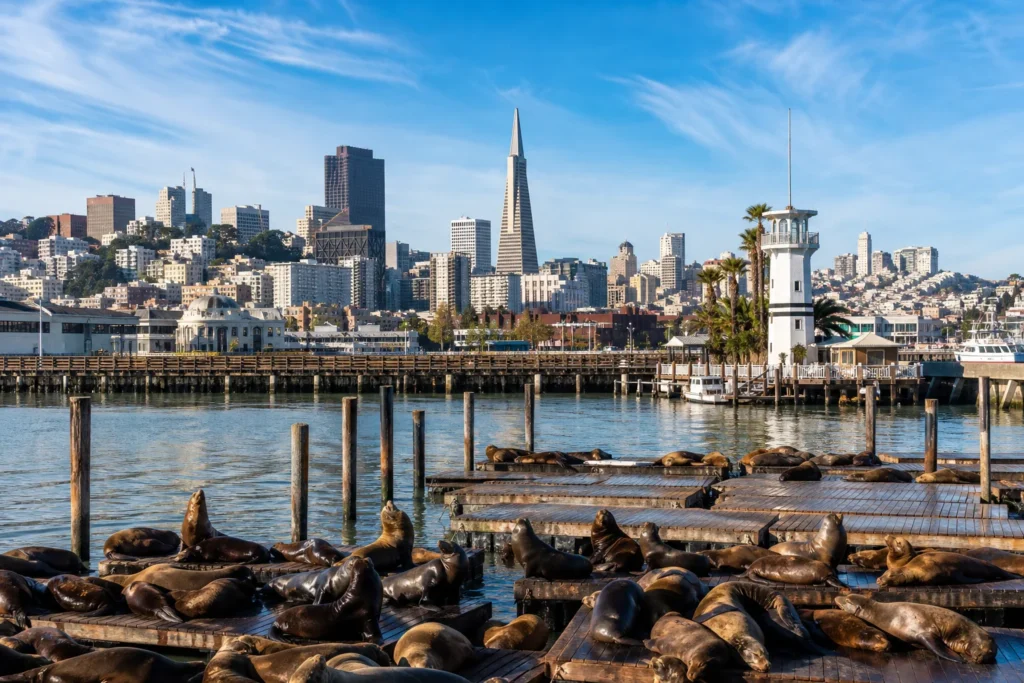
Fisherman’s Wharf is San Francisco’s historic waterfront district stretching from Ghirardelli Square toward Pier 39, blending working harbor uses with tourist attractions along the Embarcadero. Pier 39 provides shops, family attractions, concentrated bay views, and the well‑known California sea lions that haul out on the marina docks.
The district also includes maritime museums, Aquatic Park, the historic fishing fleet near Pier 45, and numerous waterfront restaurants serving local seafood. The F‑line historic streetcar and cable cars connect the Wharf to the city and offer a practical transit option when waterfront parking is limited.
Confirm specific boat tours and museum offerings on official sites before booking.
Chinatown
San Francisco’s Chinatown centers on Grant Avenue and Stockton Street and remains a dense, living neighborhood where markets, temples, bakeries, and family‑run shops reflect over a century of Chinese American life.
Visitors often enter beneath the Dragon Gate on Grant Avenue and move between tourist‑facing storefronts and the working markets on Stockton, where Cantonese and Mandarin are commonly heard.
The neighborhood’s history stretches from the Gold Rush through the 1906 earthquake to later rebuilding and community institutions. Useful stops include Portsmouth Square, tucked temples and balconies on Waverly Place, and the Chinese Historical Society of America.
Remember that Chinatown is a living community—hours and services vary—so check official museum and cultural‑center pages before visiting.
San Francisco Cable Cars (Powell lines)
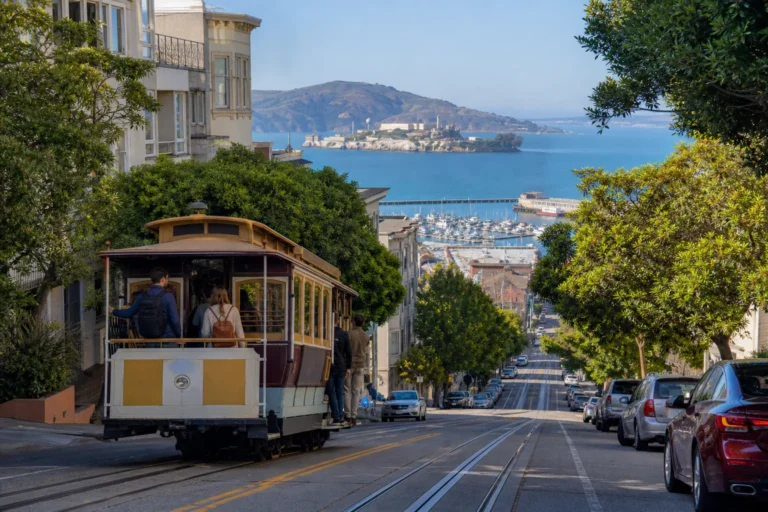
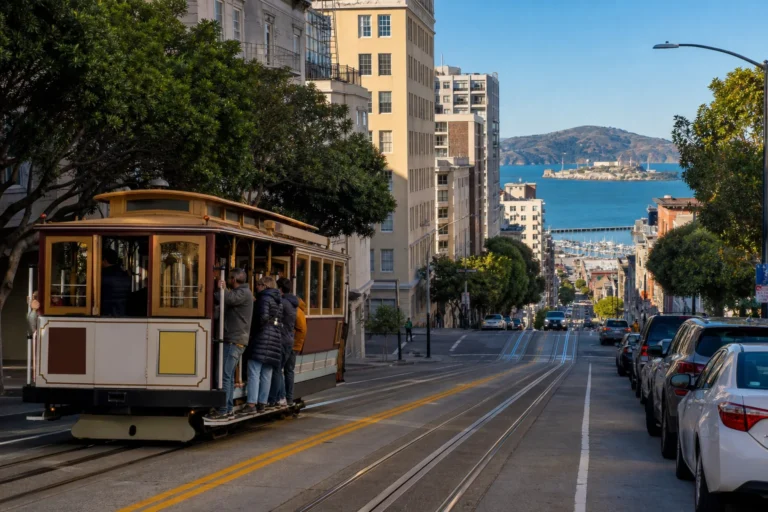
The Powell cable car lines (Powell‑Mason and Powell‑Hyde) offer a tactile historic transit experience: riders board open‑sided wooden cars, feel the city’s steep grades, and watch crews operate the grip and braking mechanisms.
The Powell turnaround at Market Street is theatrical, where crews manually turn cars on a turntable, and a nearby museum explains the winding wheels that pull the underground cables.
These routes climb Nob Hill, cross Russian Hill, and descend toward Fisherman’s Wharf, offering changing vistas and close urban scenes. Expect standing riders and frequent stops; lines commonly form at the Powell & Market terminal.
Load fare in advance using official transit apps or cards to speed boarding and check current accessibility procedures on the transit agency’s pages.
The Exploratorium (Pier 15)
The Exploratorium at Pier 15 is a hands‑on science museum on the Embarcadero that places hundreds of tactile exhibits against direct views of the bay. Indoor galleries and outdoor installations explore perception, physics, biology, and art through playful experimentation rooted in Frank Oppenheimer’s philosophy of learning by doing.
The pier setting includes a glass Bay Observatory that frames boats and shoreline as learning material, and outdoor exhibits take advantage of wind, sound, and light unique to the waterfront.
The museum supports programs for families, educators, and adults, and visitors should allow extra time to experiment and check ticketing, special programs, and accessibility arrangements on the institution’s official pages.
Palace of Fine Arts
The Palace of Fine Arts is a Beaux‑Arts monument originally built for the 1915 Panama‑Pacific International Exposition, designed by Bernard Maybeck with a colonnaded rotunda, lagoon, and landscaped lawns that suggest an elegant ruin.
San Franciscans preserved and later rebuilt the Palace in permanent materials; subsequent restorations and philanthropic support sustained the site as a civic landmark.
Visitors walk broad promenades and cross small bridges while photographing classical figures and ornamentation reflected in the shallow water. The site functions as public open space and a performance venue—check City or Palace organization pages for event schedules, rentals, or temporary access advisories before visiting.
Best Time to Visit San Francisco
San Francisco’s mild, maritime climate makes it comfortable most of the year, but microclimates vary by neighborhood. Late spring through early fall (May.
October) often brings the clearest, sunniest days for bridge views and oceanfront walks, though summer fog frequently cools western and waterfront areas in June. August.
Shoulder seasons (March–May, September–November) offer fewer crowds and kinder temperatures across neighborhoods. Pack layered clothing year‑round for wind, fog, and chilly evenings.
Special events
Upcoming Events
Hardly Strictly Bluegrass
Hardly Strictly Bluegrass is a long-running, free, non-commercial, multi-stage music festival created as a gift to San Francisco. It spotlights a broad mix of Americana, roots, folk, blues and related genres, pairing legendary performers with emerging local acts. Travelers should care because it delivers high-quality live music without an admission fee, offers a compact way to sample Bay Area music culture across multiple stages, and creates a vibrant, community-focused outdoor festival experience.
- Dates
- October 2, 2026 - October 4, 2026
- Venue
- Hellman Hollow, Lindley & Marx meadows (Golden Gate Park)
Castro Street Fair
The Castro Street Fair is a long-running community street festival in San Francisco’s Castro District that celebrates LGBTQ+ culture, local businesses, live performance, and neighborhood arts. Founded by Harvey Milk, the fair offers visitors an approachable, high-energy street atmosphere with food stalls, music stages, community booths, and opportunities to engage with Castro merchants and cultural organizations. Travelers appreciate it for its historic significance, neighborhood character, and easy access to dining, nightlife, and transit in the heart of the Castro.
- Dates
- October 4, 2026
- Venue
- Castro Street (Castro District)
San Francisco Fleet Week
San Francisco Fleet Week is a weeklong annual public festival that brings U.S. Navy, Marine Corps, Coast Guard and allied vessels and crews to the city’s waterfront for ship tours, a Parade of Ships through the Golden Gate, a public Fleet Fest, community outreach, and a large aerobatic air show over San Francisco Bay. Travelers come for close-up ship visits, bayfront viewing points, and the chance to see military aviation demonstrations; the event also features concerts, STEM programming, and career fairs useful for families and history-minded visitors.
- Dates
- October 4, 2026 - October 12, 2026
- Venue
- Multiple venues — San Francisco Bay and waterfront (Marina Green, Fort Mason, Pier 30/32, Piers 35, Fisherman's Wharf/Embarcadero)
San Francisco Chinese New Year Festival & Parade
San Francisco’s Chinese New Year Festival & Parade is a major annual Lunar New Year celebration centered on Chinatown and downtown. The illuminated night parade features dragon and lion dances, floats, marching units, cultural performances, and a large community street fair — all drawing local families, photographers, and international visitors. Travelers should plan for heavy crowds and transit impacts, and can combine the parade with nearby Chinatown markets, cultural sites, and special festival programming for a full cultural immersion.
- Dates
- February 20, 2027
- Venue
- Parade route (starts at 2nd & Market St., passes Union Square, ends at Kearny St. & Columbus Ave. In Chinatown)
Bay to Breakers
Bay to Breakers is San Francisco’s iconic, costumed footrace and street-party that draws locals and visitors for a city-spanning run from the Embarcadero area to Ocean Beach. Famous for creative outfits, lively crowds, live music along the route, and large-scale street closures, the event combines athletic competition with festival atmosphere. Travelers should expect heavy transit impacts, advance permit controls, and strong spectator energy — it’s a must-see for visitors wanting a distinctive, rambunctious San Francisco experience but plan logistics and transport well in advance.
- Dates
- May 16, 2027
- Venue
- Start: Main & Howard (downtown) — Finish: Ocean Beach / Great Highway (1000 Great Highway)
The San Francisco Marathon
The San Francisco Marathon is a major, city-spanning road race that attracts recreational and competitive runners worldwide. Runners experience iconic San Francisco scenery, organized race support, multiple distance options, and a weekend expo that serves as a travel and spectator draw. Travelers may care because the event brings extensive transit advisories, neighborhood street closures, and festival-style finish-line activity—so planning lodging, transit, and sightseeing around the race weekend is important for both participants and visitors.
- Dates
- July 24, 2027 - July 25, 2027
- Venue
- Embarcadero at Market Street (start/finish); Fort Mason Festival Pavilion (expo/packet pickup); MLK Jr. Drive, Golden Gate Park (2nd Half start)
Outside Lands Music Festival
Outside Lands is San Francisco’s major three‑day music, food and culture festival held in Golden Gate Park. Travelers come for high‑profile musical headliners across multiple stages plus a celebrated Taste of the Bay Area food program, local craft beverages, art activations, and sustainability initiatives that showcase the region. The festival draws large daily crowds and significant economic activity, so visitors should plan transportation and lodging in advance. It’s a notable way to experience Bay Area music and local culinary culture in a single weekend-long event.
- Dates
- August 6, 2027 - August 8, 2027
- Venue
- Golden Gate Park (Polo Fields and surrounding festival stages)
Getting Around San Francisco
Moving between downtown neighborhoods and major visitor sites is straightforward: historic Powell cable cars and Muni buses/trams serve central corridors; SFMTA light rail and historic streetcars run along the Embarcadero; ferries serve bay destinations including Alcatraz.
Many neighborhoods are compact and walkable, but steep streets and limited parking make public transit, rideshare, bicycling, or organized tours the most convenient choices for most visitors. Reserve Alcatraz ferry tickets in advance due to high demand.
Location
Map of San Francisco, California, United States
The interactive map loads only when you choose to view it.
Plan Your Visit to San Francisco
Plan neighborhood‑based days (for example Fisherman’s Wharf/Embarcadero or Golden Gate Park/Inner Richmond). Buy transit fares before boarding or use a Clipper card or the SFMTA MuniMobile app where accepted.
Cable cars accept cash or tickets but are not wheelchair‑accessible for boarding.
Reserve timed‑entry tickets for high‑demand sites such as Alcatraz and for some museum exhibitions. Expect frequent microclimates—bring layers and a windproof jacket near the water and the Golden Gate Bridge.
Local Tips for San Francisco
Walkable neighborhoods and short transit hops make sightseeing efficient, but expect steep hills and narrow sidewalks—comfortable shoes help. Peak tourist times run mid‑morning through early evening; mornings often offer clearer Golden Gate views before fog builds.
Use official visitor centers and SF Travel resources for maps and guidance. Follow local pick‑up/drop‑off signage when using rideshares or taxis; some streets have transit‑only lanes.
For cable cars, terminal boarding at Powell is busiest—consider nearby Muni bus or historic streetcar alternatives on busy days.
Live conditions
Current Weather
Updated 2026-08-24 18:30
- Feels like
- 55°F / 13°C
- Today’s high / low
- 68°F / 20°C · 56°F / 13°C
- Humidity
- 85%
- Wind
- ← 15 mph
- Precipitation
- 0 in
- Chance of rain
- 25%
- Local time
- 2026-08-24 18:51
Places to Visit Near San Francisco
Golden Gate Bridge — Crissy Field, Fort Point, Battery East Vista.
Alcatraz Island departures — Pier 33/Embarcadero; the Exploratorium (Pier 15) lies nearby.
Golden Gate Park — de Young Museum, California Academy of Sciences, Conservatory of Flowers.
Fisherman’s Wharf/Pier 39 — Ghirardelli Square, Maritime National Historical Park, Hyde Street Pier.
Chinatown — Portsmouth Square, Grant Avenue shops, Old St. Mary’s Cathedral.
Cable car lines (Powell) — Union Square and Market Street are adjacent commercial and transit hubs.
Palace of Fine Arts — the Presidio and Marina Green are within easy walking distance.
Safety in San Francisco
San Francisco is generally safe for visitors when you follow standard urban precautions: keep valuables secure, avoid leaving bags unattended, and be cautious in poorly lit or quiet areas at night. Some neighborhoods and transit hubs have higher property‑crime rates; lock bicycles and use secure bike parking where possible.
On steep sidewalks and at cable car stops, follow operator instructions and wait for a full stop before boarding or alighting. For emergencies call 911; use San Francisco 311 for non‑emergencies or transit and city service questions.
Check official park or attraction pages for any specific advisories.