
Travel Guide
Plan your visit around Plaza Botero, Museo de Antioquia, and more of Medellín, Colombia.
Discover the best things to do in Medellín, Colombia, from signature sights to memorable local experiences.
Medellín is Colombia’s second‑largest city, set in the Aburrá Valley and known for innovation, public art and easy access to nearby nature.
For travelers searching for things to do in Medellín the city’s compact core delivers museums, sculpture, botanical gardens, science centers, hillside viewpoints and a celebrated Metrocable that connects neighborhoods to parks and community tours.
Why Visit Medellín
Visitors come for the mix of modern urban life, cultural institutions, and immediate access to nature. The downtown axis of Plaza Botero and Museo de Antioquia introduces Antioquian identity and Colombian modern art, while Parque Explora and Jardín Botánico offer family-friendly science and green space.
The Metrocable links hillside communities and Parque Arví, where trails and markets showcase rural landscapes and local producers. Comuna 13’s escalators and street‑art tours tell a story of social transformation, and evenings around Parque Lleras deliver concentrated dining and nightlife.
Top Things to Do in Medellín, Colombia
Medellín’s attractions cluster in a compact, walkable core that mixes public art, museums, parks and hillside experiences. Use the Metrocable and the Metro to connect downtown highlights with green spaces and community-led tours.
Plaza Botero
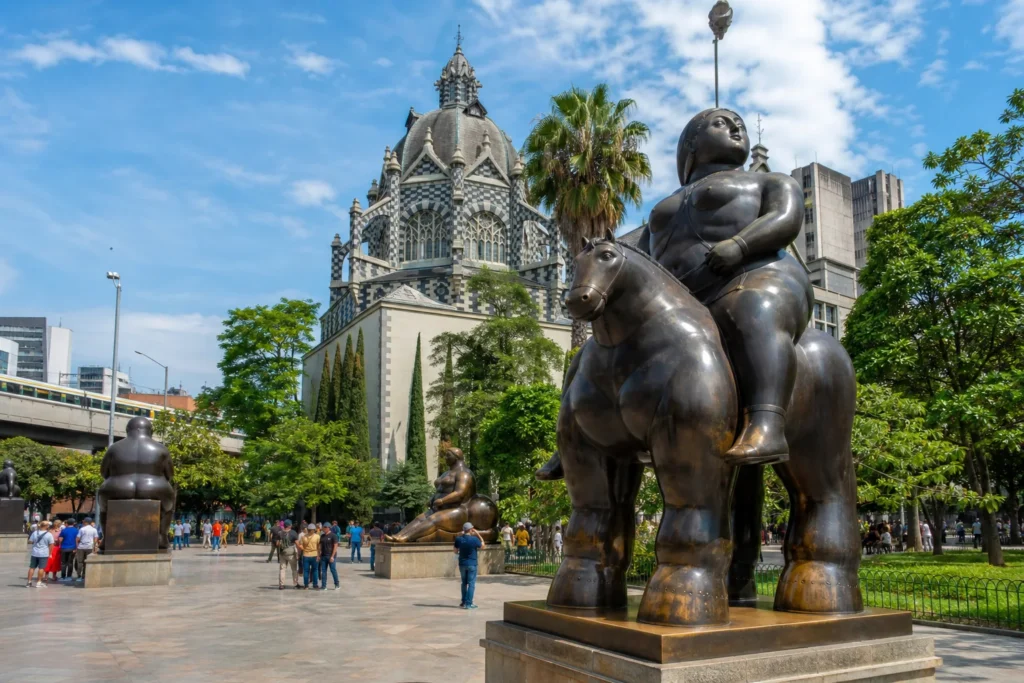
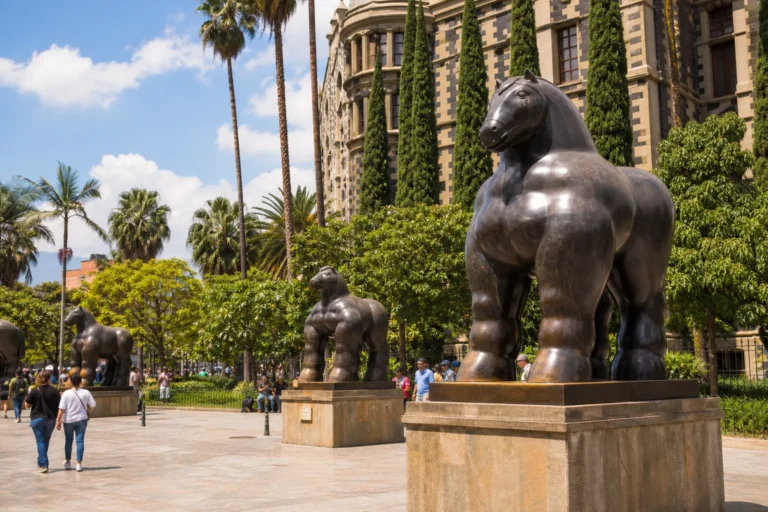
Plaza Botero is an open-air sculpture museum in downtown Medellín displaying 23 monumental bronze sculptures by Fernando Botero. The oversized figures, known for their rounded proportions, were donated to the city and installed to create a singular urban gallery that invites close, unmediated encounters with modern sculpture.
The plaza sits beside the Museo de Antioquia and fronts Parque Berrío, mixing late‑19th and 20th‑century civic architecture with heavy pedestrian traffic, street vendors and regular cultural activity. Visitors commonly walk among the works, photograph them from multiple angles, and linger on benches or around decorative fountains.
Combine a plaza visit with nearby museums or a metro stop for convenience.
Museo de Antioquia
Museo de Antioquia anchors Medellín’s main museum district in an historic civic building and presents collections that span archaeology, regional art and contemporary works.
Founded in 1881, the museum houses one of Colombia’s largest public groupings of Fernando Botero works, including a Botero Hall with paintings, sketches and smaller sculptures that provide context for the outdoor bronzes.
Galleries move visitors through chronological and thematic displays that highlight Antioquia’s artistic production and social history. The museum runs education programs and community initiatives linked to downtown revitalization; check visitor information for current exhibitions and photography rules before you go.
It pairs naturally with a stroll through Plaza Botero.
Parque Explora
Parque Explora is an interactive science museum and cultural complex in north Medellín that blends hands‑on exhibits, a freshwater aquarium, and a small planetarium.
Discovery‑focused galleries, tactile displays and audiovisual demonstrations encourage curiosity across ages, while the aquarium highlights native river and wetland species to communicate conservation themes in an accessible way for families and students.
The complex’s bright modular volumes sit in a planted urban park, creating a strong indoor–outdoor flow between galleries, demonstration areas and green space. Temporary exhibitions, maker workshops and scheduled talks broaden the experience.
Many visitors pair a museum visit with nearby Jardín Botánico since the sites are adjacent and well connected by public transit.
Jardín Botánico Joaquín Antonio Uribe
Jardín Botánico Joaquín Antonio Uribe is Medellín’s principal botanical garden, focused on research, conservation and public enjoyment. The garden displays organized beds, themed collections and conservation plots that illustrate regional flora and cultivated ornamentals, supported by a herbarium and documentation library used in scientific work and environmental education.
Architectural highlights include the Orquideorama, a hexagonal pavilion used for orchid displays and seasonal festivals, plus a butterfly house and interpretive collections. As a public green space the garden hosts cultural events and school programs; signage supports self‑guided visits, and the location pairs conveniently with Parque Explora and other nearby cultural institutions.
Parque Arví
Parque Arví is a large protected ecological park and cultural reserve on Medellín’s northeastern hills, anchored in Santa Elena. The park functions as a biological corridor and urban green lung, with shaded trails, streams and regeneration zones that showcase Andean ecosystems and traditional agroforestry practices.
A highlight is the Metrocable ride up into forested ridgelines that leads directly to trailheads and picnic areas. The park hosts seasonal markets, craft demonstrations and community programs that emphasize sustainable tourism and link visitors to local producers.
Trails range from short interpretive loops to longer hikes; plan for uneven footing and changing weather, and verify current programs before you go.
Comuna 13 (Escaleras Eléctricas and street art district)
Comuna 13 (San Javier) is a hillside district known for its outdoor escalator installation and expansive street art reflecting the neighborhood’s social transformation. The escalators improved access to the metro network and daily services, while the murals and public pieces serve as layered storytelling that mixes political memory, local biographies and collective creativity.
Guided graffiti tours—often led by local residents—interpret murals within the barrio’s history of conflict and cultural revival and channel tour revenue back into community projects. Respectful visits include choosing licensed local guides, following hosts’ safety advice, and asking permission before photographing people.
Wear comfortable shoes for steep streets and variable paving.
Official Comuna 13 (Escaleras Eléctricas and street art district) website →
Pueblito Paisa (Cerro Nutibara)
Pueblito Paisa is a reconstructed Antioquian village on the summit of Cerro Nutibara that recreates mid‑20th century town architecture—church, town hall and artisan shops—set around a compact paved plaza.
The site was conceived as a cultural viewpoint and identity marker rather than as an authentic historic village, and it offers craft stalls, small eateries and a sculptural group honoring the indigenous leader Nutibara.
Perched roughly eighty meters above the Aburrá Valley, the hill gives clear panoramic views of Medellín and surrounding hills. Paths around the summit lead to viewpoints and picnic spots; visitors commonly pair Pueblito Paisa with nearby museums and downtown sites for a half‑day outing.
Parque Lleras (El Poblado nightlife and dining district)
Parque Lleras is the lively core of El Poblado’s dining and nightlife cluster, a compact square surrounded by narrow streets of restaurants, bars and small shops.
By day it functions as a commercial neighborhood of cafés and boutiques; after dark it becomes one of Medellín’s busiest evening destinations with rooftop terraces, music venues and late‑night bars that attract both residents and visitors.
The area’s density of hospitality options means it supports a wide range of budgets and atmospheres, from casual cafés to dance clubs.
Weekends are busiest; practical tips include using licensed taxis or ride apps at night, keeping an eye on personal items in crowds, and pairing an evening here with earlier dining in the nearby Provenza neighborhood.
Official Parque Lleras (El Poblado nightlife and dining district) website →
Best Time to Visit Medellín
Medellín’s temperate, ‘City of Eternal Spring’ climate means travel timing is flexible. Rain typically peaks in April–May and September–November; the drier windows around January–March and late June–July are easier for outdoor hiking and Parque Arví visits.
The Feria de las Flores in August draws crowds and higher hotel demand, so visit the drier months outside major festival weeks if you prefer fewer crowds.
SPECIAL EVENTS IN Medellín
EDC Colombia (Electric Daisy Carnival)
EDC Colombia brings Insomniac’s flagship Electric Daisy Carnival production to Medellín with large-scale stages, immersive art, and internationally renowned electronic artists. The debut edition is positioned as a major nightlife and tourism draw, offering multi-stage programming that spans mainstream headliners to underground showcases. Travelers should care because the festival typically generates high demand for accommodation, transport, and hospitality services, and it provides a rare opportunity to experience global electronic-music culture in Medellín with curated travel guidance and on-site amenities.
- Dates
- October 10, 2026 - October 11, 2026
- Venue
- Complejo Deportivo Atanasio Girardot
Colombiatex de las Américas
Colombiatex de las Américas is the leading sourcing and trade fair for textiles, trims, machinery and apparel supply chains in Latin America, organized by Inexmoda in Medellín. The event draws manufacturers, international buyers and industry technologists seeking suppliers, innovation and business matchmaking, and it significantly supports specialized business tourism in the host city. Travelers may attend for direct sourcing meetings, supplier scouting, and industry conferences that showcase sustainability and manufacturing technologies. ([colombiatex.com](https://colombiatex.com/prepara-tu-visita/))
- Dates
- January 19, 2027 - January 21, 2027
- Venue
- Plaza Mayor
Getting Around Medellín
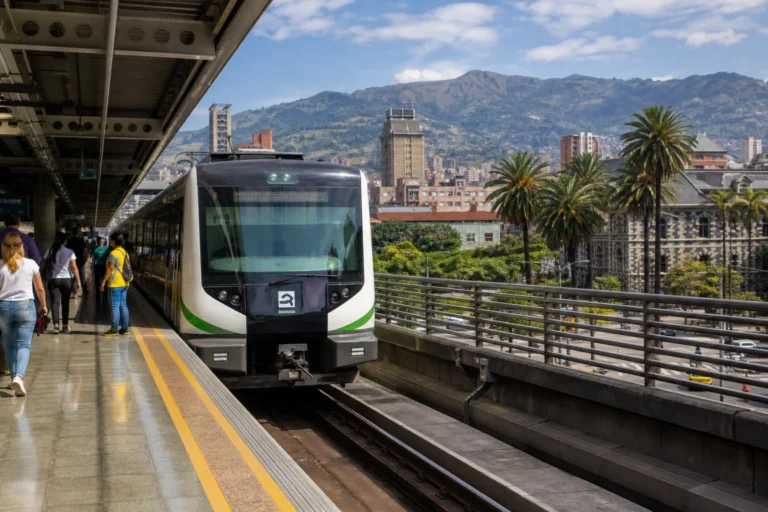
Medellín’s Metro, tram, buses and Metrocable make most attractions accessible without a car. The metro stations place Plaza Botero, Museo de Antioquia and Parque Explora within short walks, while Metrocable lines link hillside barrios like Comuna 13 and provide the route up to Parque Arví.
Taxis and ride‑hail apps are common for evenings in El Poblado; biking and e-scooters operate in central corridors but vary by neighborhood. For Comuna 13, join guided street‑art tours that combine safe navigation with interpretation.
Location
Map of Medellín, Colombia
The interactive map loads only when you choose to view it.
Plan Your Visit to Medellín
Medellín is a valley city best explored by neighborhoods rather than by distance. Rely on the integrated transit network.
Metro, tram, Metrocable, and buses. To move between Centro (Plaza Botero and Museo de Antioquia), the northern cultural corridor (Parque Explora and Jardín Botánico), Parque Arví, and El Poblado (Parque Lleras).
Allow extra time for Metrocable transfers and uphill walks at Parque Arví and Cerro Nutibara (Pueblito Paisa). Carry small cash for market stalls, wear comfortable shoes for uneven surfaces, and bring a reusable water bottle.
Local Tips for Medellín
Neighborhood character changes quickly: Centro is historic and busiest by day. Comuna 13 is best visited on organized, community‑led tours that support local guides.
And El Poblado (Parque Lleras) concentrates restaurants and nightlife. At Parque Arví and Jardín Botánico wear good walking shoes and sun protection for shaded trails and wildlife viewing.
Combine Plaza Botero with Museo de Antioquia on the same visit since they sit next to each other. Use taxis or ride apps for late-night returns from Parque Lleras.
Live conditions
Current Weather

Updated 2026-09-20 16:00
- Feels like
- 21°C / 70°F
- Today’s high / low
- 20°C / 68°F · 13°C / 56°F
- Humidity
- 85%
- Wind
- → 4 km/h
- Precipitation
- 1.11 mm
- Chance of rain
- 92%
- Local time
- 2026-09-20 16:19
Safety
Medellín is a large city with routine urban risks; exercise standard precautions. Avoid poorly lit streets alone at night, keep valuables discreet, and prefer official taxis or app-based rides after dark.
In Centro, be alert for pickpockets in busy spots such as Plaza Botero. In hillside neighborhoods expect steep streets and informal pathways—use marked routes and licensed local guides in Comuna 13.
For Parque Arví and other natural areas, stay on marked trails, check return transit options, and carry water and a basic first‑aid kit. Consult local municipal sources for current advisories.