
Travel Guide
Plan your visit around Haeundae Beach, Gwangalli Beach, and more of Busan, South Korea.
Discover the best things to do in Busan, South Korea, from signature sights to memorable local experiences.
You’ll find long sandy beaches, seafood markets, colorful hillside neighborhoods and dramatic coastal walks within a compact city footprint.
Why Visit Busan
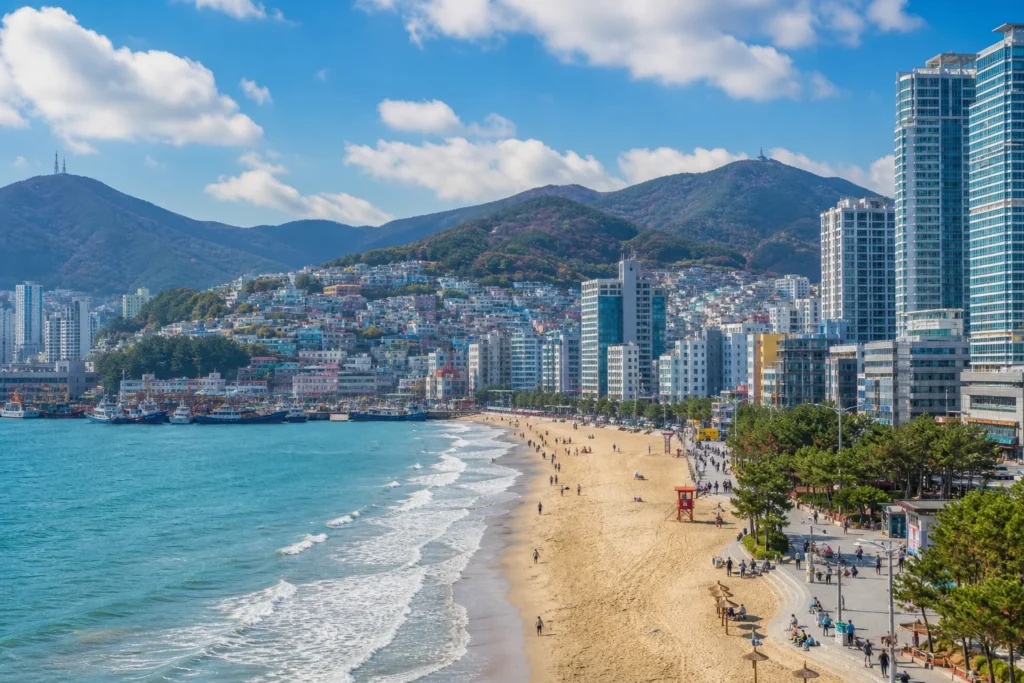
Visitors come to Busan for its convergence of seaside leisure and urban culture: long beaches for swimming and nightlife, fresh seafood and working markets, colorful hillside neighborhoods and art‑led regeneration, and coastal walks and cliffs close to the city.
The city’s transport links, seasonal festivals and compact walkable districts make it suited to short beach breaks or multi‑day cultural stays.
Top Things to Do in Busan, South Korea
Here are Busan’s signature attractions. Beaches, markets, cultural neighborhoods, and coastal viewpoints.
With practical notes to help plan visits and check current access or event impacts.
Haeundae Beach
Haeundae Beach is Busan’s best‑known urban sandy beach: a roughly 1.5 km curved shoreline with a wide promenade, cafes, seafood restaurants and the high‑rise Marine City/LCT skyline. Visitors come for long soft sand, seasonal swimming, promenade amenities and nearby attractions such as Dongbaekseom.
The beach hosts summer lifeguard services and public events; check official pages for seasonal swimming status and any event‑related zone closures.
Gwangalli Beach
Gwangalli Beach is known for its sweeping view to Gwangan (Gwangandaegyo) Bridge and a café‑lined promenade popular at sunset and after dark when the bridge lighting is visible. The area suits evening dining, photography and waterfront strolling, and it hosts frequent small festivals and light shows.
Verify event schedules and any temporary access restrictions on official Visit Busan pages.
Jagalchi Fish Market
Jagalchi Fish Market is one of Korea’s largest seafood markets on the Nampo‑dong waterfront, with stalls and indoor halls selling live fish, shellfish and dried seafood; nearby restaurants will prepare purchases. Expect close‑up viewing of live seafood and a lively market atmosphere, with early‑morning wholesale activity and steady retail trade through the day.
Wear sensible shoes, bring small cash or cards, and check official market pages for any temporary restrictions.
Gamcheon Culture Village
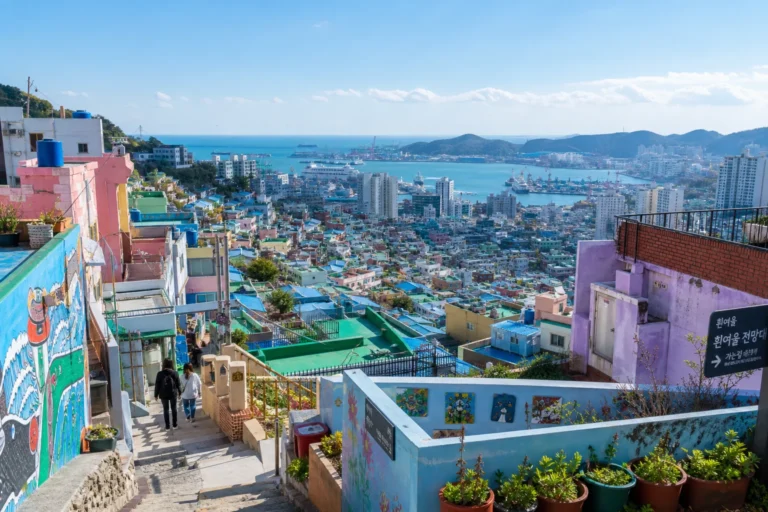
Gamcheon Culture Village is a terraced hillside neighbourhood transformed into a colourful arts destination of painted façades, murals, small galleries and viewpoint terraces. Walking its narrow alleys and following stamped self‑guided routes reveals community art projects and panoramic overlooks.
The village is steep and pedestrian‑only in places; some workshops or indoor programs require advance booking and visitors should respect resident life and official visitor rules.
Taejongdae Resort Park
Taejongdae Resort Park is a coastal scenic area on Yeongdo noted for wave‑cut cliffs, warm‑temperate forest, cliffside observation platforms and the historic Yeongdo lighthouse. Visitors enjoy dramatic coastal panoramas, forested walks and a short Danubi sightseeing train linking key stops; boat cruises operate from the quay for sea views of the cliffs.
Transport services and cruises are weather‑sensitive—check official park or Visit Busan notices for current schedules and any trail closures.
BIFF Square (Nampodong)
BIFF Square (Nampodong) is a compact cinema‑themed pedestrian precinct known for the Star Road handprints, dense street‑food clusters and neon shopping lanes. It functions as an open public space and a lively evening hub connecting Jagalchi, Gukje Market and Yongdusan Park.
Expect heavy crowds and potential street closures during film‑festival dates or large events; consult BIFF or Visit Busan notices to avoid event congestion.
Yongdusan Park & Busan Tower
Yongdusan Park is a hilltop urban park in Nampo‑dong topped by Busan Tower, offering city and harbor views, monuments like the Citizen’s Bell and shaded paths. The park is an open public space while Busan Tower operates as a separate indoor observation attraction with its own admission and possible timed access.
Check tower and city notices for current operational status and any special‑event closures.
Haedong Yonggungsa Temple
Haedong Yonggungsa Temple is a seaside Buddhist temple set on rock outcrops above the sea, noted for ocean views, stair sequences and waterfront shrines. It remains an active religious site—visitors should be respectful of worship areas and expect crowding at sunrise and on holidays.
Parts of the approach and lower platforms can be weather‑ and tide‑sensitive; verify any temporary access guidance on the temple’s official pages.
Oryukdo Skywalk
Oryukdo Skywalk is a cliff‑edge glass‑floored observatory that projects over the sea, offering views of the Oryukdo islets and coastal cliffs. It’s a brief scenic stop commonly paired with the Igidae coastal trail and nearby viewpoints.
The skywalk’s access depends on weather, maintenance and municipal decisions—check official Visit Busan or Nam‑gu notices for current operational status and any temporary closures.
Best Time to Visit Busan
Late spring (May–June) and early autumn (September–October) offer comfortable temperatures and lower rainfall. Summer brings warm sea bathing and major festivals but also higher humidity, crowded beaches and occasional monsoon rain—book early if visiting then.
Winter is milder than inland Korea but can be windy on exposed headlands. Check event calendars for festival dates such as BIFF.
Getting Around Busan
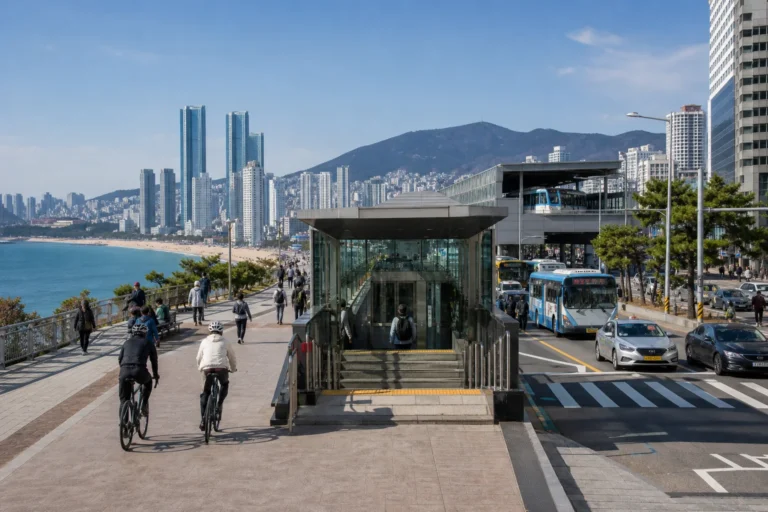
Busan has an extensive metro (four numbered lines), light rail and commuter links that serve major neighborhoods and tourist sites. Intercity KTX/regional rail, Gimhae International Airport, ferries and cruise terminals connect onward travel.
Local buses and taxis fill gaps; some coastal attractions are easiest by short taxi or local bus from metro stops. For flexible coastal routing, consider a rental car but expect heavy traffic near beaches and during holidays.
Location
Map of Busan, South Korea
The interactive map loads only when you choose to view it.
Plan Your Visit to Busan
Plan around topography and seasonal crowds: summer beach months and major events increase demand for transport and accommodation. Book hotels near your primary interest area (Haeundae for beaches, Nampo for markets and ferries) and confirm cancellation policies.
Use the city’s official transit portal and Visit Busan for construction, route detours, and festival alerts. Carry emergency and tourist‑help contacts and photocopies of your passport.
Verify museum and attraction opening status on official pages before visiting.
Local Tips for Busan
Busan is transit‑friendly; use the Busan Metro, regional transit cards (T‑money/Cashbee/Hanaro) and Visit Busan apps for route planning and mobile tickets. Major visitor areas are walkable but hilly—wear sturdy shoes and allow extra time for uphill streets and steps.
Avoid bringing oversized luggage onto standard city buses unless a specific route permit applies and consult official transit pages for current luggage policy.
Live conditions
Current Weather

Updated 2026-09-21 04:00
- Feels like
- 20°C / 68°F
- Today’s high / low
- 25°C / 77°F · 21°C / 69°F
- Humidity
- 75%
- Wind
- ↑ 17 km/h
- Precipitation
- 0 mm
- Chance of rain
- 6%
- Local time
- 2026-09-21 04:11
Safety
Busan is generally safe for travelers, but use standard urban precautions: watch belongings at crowded markets, beaches and festivals, especially at night. Save municipal and national emergency numbers and the Korea Travel Helpline for multilingual assistance.
Check official pages for real‑time advisories about weather, marine conditions, large‑event crowding or temporary transport suspensions before travel.