
Travel Guide
Plan your visit around Explore the Old City of Jerusalem, Visit the Western Wall, and more of Jerusalem, Israel.
Things to do in Jerusalem range from exploring the Old City’s four historic quarters to visiting major museums, archaeological sites, sacred landmarks, and lively markets. Across this hilly city, ancient religious traditions, Jewish history, Christian heritage, Islamic architecture, art, memory, and everyday local life exist side by side.
Why Visit Jerusalem
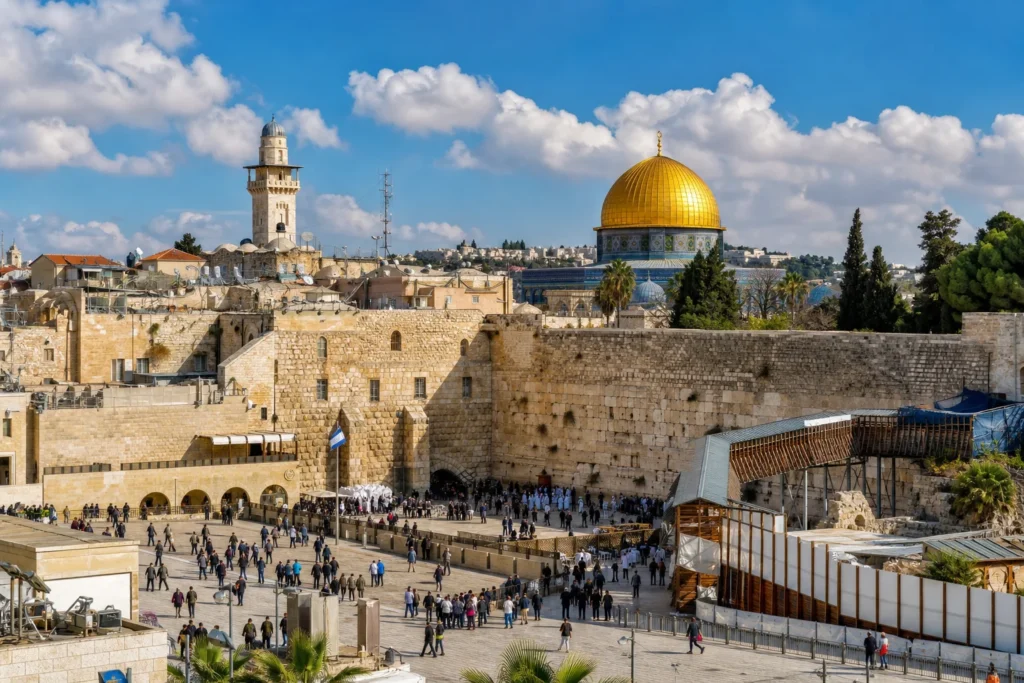
Jerusalem offers an unusually concentrated encounter with world history, living religion, archaeology, art, memory, and local culture. The Old City brings together the Western Wall, the Temple Mount and Al-Aqsa Mosque compound, the Church of the Holy Sepulchre, city walls, markets, and archaeological remains within a compact historic setting.
Beyond the Old City, the Israel Museum and Yad Vashem extend the city’s cultural story, while Mahane Yehuda Market provides a more immediate connection to food, commerce, and daily life. Jerusalem is especially rewarding for travelers who want cultural depth rather than a single sightseeing theme.
Its strongest experiences come from contrasting sacred and secular spaces, monumental landmarks and intimate streets, and ancient traditions with a lively modern city.

Top Things to Do in Jerusalem, Israel
Start in the Old City, then build your itinerary around its sacred landmarks, archaeological sites, museums, viewpoints, and market culture. The experiences below show the many layers of Jerusalem’s past and present.
Explore the Old City of Jerusalem
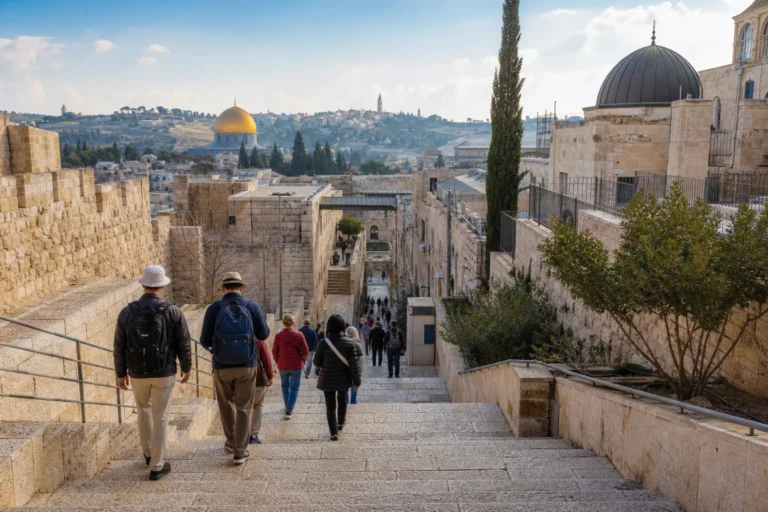
Jerusalem’s Old City is a compact, walled historic centre recognised by UNESCO as a World Heritage site. Its Ottoman-era walls enclose four traditional quarters: Jewish, Christian, Muslim, and Armenian.
Narrow lanes, vaulted passages, stone stairways, markets, courtyards, and busy squares lead to landmarks including the Western Wall, Temple Mount, Dome of the Rock, Church of the Holy Sepulchre, Via Dolorosa, Tower of David, and Cardo.
Exploration is mainly on foot and can fill several hours. Jaffa Gate suits first visits, while Damascus Gate, Zion Gate, and Dung Gate provide different approaches.
Wear comfortable shoes, dress respectfully at religious sites, and verify current routes and access arrangements before visiting.
Visit the Western Wall
The Western Wall is one of Jerusalem’s most significant Jewish prayer sites. It forms part of the retaining structure surrounding the elevated Temple Mount and is associated with the ancient Temple compound and centuries of prayer, mourning, hope, and pilgrimage.
Visitors enter the broad Western Wall Plaza before approaching the customary separate prayer sections. The site is both a place of living religious practice and an archaeological experience.
Western Wall Tunnels extend beneath adjoining buildings, revealing additional masonry, ancient street levels, arches, and chambers; guided visits require advance planning. Dress modestly, remain quiet and respectful, and follow posted rules about photography and conduct in prayer areas.
Visit the Temple Mount and Al-Aqsa Mosque compound
The Temple Mount, known in Arabic as Haram al-Sharif, is Jerusalem’s prominent Islamic sanctuary. The elevated platform contains Al-Aqsa Mosque, the Dome of the Rock, historic prayer spaces, gardens, arcades, and broad stone courtyards.
It is central to Islamic worship and deeply significant in Jewish history and tradition.
Visitors mainly experience an open architectural precinct, with arches, inscriptions, tilework, shaded walkways, and views across the Old City. Access differs by faith, purpose, security conditions, and religious calendar.
Entry arrangements, identification requirements, closures, and permitted routes can change quickly, so verify current instructions through official local channels. Wear conservative clothing, keep voices low, and follow attendants’ directions.
Official Visit the Temple Mount and Al-Aqsa Mosque compound website →
Visit the Church of the Holy Sepulchre
The Church of the Holy Sepulchre stands in Jerusalem’s Christian Quarter near the western end of the Via Dolorosa. Christian tradition identifies the site with Jesus’s crucifixion, burial, and resurrection.
Fires, earthquakes, conflicts, and restorations have shaped the complex over many centuries.
Inside, visitors can see the Stone of Anointing, the chapels of Golgotha, the central Rotunda, and the Aedicule surrounding the traditional tomb. Several Christian communities share the church under longstanding arrangements, so visitors may encounter incense, chanting, pilgrim prayers, or religious ceremonies.
Entry is generally free, but queues and service closures can affect visits. Dress modestly, speak quietly, and take care on uneven floors and stairs.
Visit the Tower of David Museum
The Tower of David Museum occupies Jerusalem’s historic citadel beside Jaffa Gate, linking the modern city with the Old City walls and the historic centre. Its permanent exhibition uses ten galleries to present nearly 4,000 years of Jerusalem’s history through archaeological discoveries, objects, documents, artworks, films, projections, and interactive displays.
The museum explores Jerusalem’s importance in Judaism, Christianity, and Islam while tracing imperial rule, modernisation, and the emergence of the modern city. Allow time for the courtyards, archaeological remains, restored guard rooms, and temporary exhibitions.
The Phasael Tower observation point provides broad views across the Old City and newer Jerusalem. Multilingual audio resources, guided visits, ramps, and elevators are available, though current arrangements should be confirmed before arrival.
Walk the Old City Ramparts
The Old City Ramparts Walk takes visitors above Jerusalem’s sixteenth-century Ottoman walls. From the elevated path, the Old City appears as a dense historic settlement, while surrounding neighbourhoods, valleys, mountains, and the modern skyline spread beyond it.
The southern route runs from Jaffa Gate toward Zion Gate and the area near Dung Gate, with views toward the Armenian and Jewish Quarters, Mount Zion, the City of David area, and the Western Wall approach.
The northern route heads toward the New Gate, Damascus Gate, and Lion’s Gate, overlooking the Christian and Muslim Quarters, the Temple Mount, the Mount of Olives, and northern Jerusalem.
Explore the City of David archaeological site
The City of David archaeological site occupies the ridge south of Jerusalem’s Old City beside the Kidron Valley. It is widely identified with Jerusalem’s earliest urban core and presents a layered landscape of excavations, viewpoints, underground passages, and reconstructed interpretations.
Important areas include the Gihon Spring, ancient fortifications, Warren’s Shaft, the Canaanite water system, royal and residential remains, the Pool of Siloam, and a pilgrimage route toward the Temple. Hezekiah’s Tunnel is a hand-cut water channel from the spring toward the Siloam Pool; visitors may choose the water route or, when available, a dry alternative.
The tunnel is dark, narrow, and uneven. Allow several hours, and check current access arrangements before visiting.
Official Explore the City of David archaeological site website →
Visit the Israel Museum
The Israel Museum stands on a spacious, terraced campus near Jerusalem’s government district. Founded in 1965, it is Israel’s principal encyclopaedic museum, combining archaeology, Jewish art and life, Israeli art, and international fine arts.
The Samuel and Saidye Bronfman Archaeology Wing follows the history of the ancient Land of Israel from prehistory through the Ottoman period.
Other highlights include Jewish art and life collections, the Shrine of the Book, major Dead Sea Scrolls, a model of Jerusalem during the Second Temple period, changing exhibitions, and the Billy Rose Art Garden. The museum’s broad scope offers useful context beyond the Old City’s monuments.
Plan around your interests, allow time between buildings, and verify current gallery and accessibility information.
Visit Yad Vashem
Yad Vashem, Israel’s World Holocaust Remembrance Center, occupies the Mount of Remembrance in western Jerusalem. Its campus combines a museum, memorials, research collections, educational facilities, and landscaped outdoor spaces, presenting Jewish experiences, individual lives, community destruction, resistance, survival, and remembrance.
The Holocaust History Museum uses original artefacts, photographs, documents, personal possessions, survivor testimonies, and film to emphasise people and communities within the wider historical narrative. The visit concludes at the Hall of Names, while the Children’s Memorial, Valley of the Communities, Warsaw Ghetto Square, and Museum of Holocaust Art offer distinct forms of remembrance.
Allow several hours. The subject matter is emotionally demanding, and the main historical museum is generally unsuitable for young children.
Explore Mahane Yehuda Market
Mahane Yehuda Market, commonly called the shuk, stretches between Jaffa Road and Agripas Street near central Jerusalem. It began during the late Ottoman period as an open trading area and gradually developed permanent shops and organised market sections during the British Mandate.
Today, covered lanes hold produce stands, bakeries, butcher shops, fish sellers, spice merchants, delicatessens, sweet shops, specialty food stores, restaurants, cafes, bars, and small culinary businesses. The market offers a direct connection to Jerusalem’s everyday culture and changing food scene.
Nearby Nachlaot provides a walking extension through historic residential lanes and courtyards. Weekday mornings suit shopping, while pre-Sabbath periods can be especially crowded.
Best Time to Visit Jerusalem
Spring and autumn are generally the most comfortable seasons for exploring Jerusalem on foot. Mild conditions suit the Old City, archaeological sites, museums, markets, and outdoor viewpoints.
Summer is usually dry and bright but can feel hot during exposed walks around the walls and archaeological areas, so plan strenuous sightseeing for cooler parts of the day. Winter can bring crisp weather and occasional rain, while often offering clearer air and a quieter atmosphere.
Religious holidays, major pilgrimages, and national observances can affect access, crowds, transport, and the experience of sacred sites. Check official attraction, religious-institution, and transport information shortly before visiting, especially for the Temple Mount and Al-Aqsa Mosque compound.
SPECIAL EVENTS IN Jerusalem
Jerusalem Winner Marathon
The Jerusalem Winner Marathon is an international road-running event combining competitive racing with a distinctive journey through Jerusalem’s ancient landmarks, diverse neighborhoods, and modern cityscape. It offers several race distances, making it appealing to elite athletes, experienced distance runners, families, community groups, and visitors seeking an active way to experience the city. The event also emphasizes accessibility, public participation, charitable giving, and a festive atmosphere surrounding race weekend.
- Dates
- March 19, 2027
Getting Around Jerusalem
Jerusalem’s Old City and central historic areas are best explored on foot, although steep slopes, uneven paving, stairs, and narrow lanes can make walking demanding. City buses and the Jerusalem Light Rail connect central districts with major parts of the urban area.
The light rail is particularly useful along its operating corridor, while buses provide broader coverage.
A Rav-Kav payment card is used across much of the public-transport network. Check routes before departure because works, closures, and service changes can affect journeys.
Taxis and ride-hailing can help with hills, late travel, or destinations beyond the main transit corridors. Allow extra time for security checks and access procedures at prominent religious and heritage sites.
Location
Map of Jerusalem, Israel
The interactive map loads only when you choose to view it.
Plan Your Visit to Jerusalem
Jerusalem is easiest to explore by combining walking with public transport. The Old City, Western Wall, Church of the Holy Sepulchre, Temple Mount area, Tower of David Museum, and nearby ramparts form a largely pedestrian-focused cluster, although the streets can be steep, uneven, and crowded.
Mahane Yehuda Market and the Israel Museum are outside the Old City and are best paired with the light rail or a taxi. Yad Vashem is on the western edge of the city and can be reached by public transport or taxi.
Allow extra time for security checks, religious-site access procedures, hills, and navigation through narrow lanes. Avoid relying on a rental car in the historic centre.
Local Tips for Jerusalem
Wear supportive shoes and carry water. Jerusalem’s limestone streets, stairways, slopes, and polished paving can be tiring, particularly in the Old City.
Modest clothing is advisable at Jewish, Christian, and Muslim holy places. Follow posted rules about photography, entry, and worship areas.
Plan location clusters to reduce backtracking: visit Old City sites together, pair the Israel Museum with Yad Vashem only if transport time permits, and combine Mahane Yehuda with central-city walks.
Use official museum and attraction websites for reservations or visitor requirements. Public transport combines light rail and buses, while taxis are useful for hills, late journeys, or places not served conveniently by rail.
Live conditions
Current Weather

Updated 2026-09-21 20:45
- Feels like
- 14°C / 58°F
- Today’s high / low
- 26°C / 78°F · 18°C / 64°F
- Humidity
- 66%
- Wind
- ↖ 27 km/h
- Precipitation
- 0 mm
- Chance of rain
- 4%
- Local time
- 2026-09-21 20:50
Safety and respectful travel in Jerusalem
Jerusalem’s major attractions include religiously and politically sensitive sites, so conditions and access arrangements can change with little notice. Check official Israeli government, police, municipal, and attraction updates before visiting the Old City, Western Wall, Temple Mount and Al-Aqsa Mosque compound, or other crowded sites.
Follow instructions at checkpoints and security screening, avoid demonstrations and areas experiencing unrest, and do not photograph security personnel or installations. Keep valuables secure in crowded markets and transport hubs, and remain alert in dense pedestrian areas.
In an emergency, follow local authority guidance and contact Israel’s emergency services. Keep embassy or consular contact details available.