
Travel Guide
Plan your visit around Medieval City (Rhodes Old Town) — UNESCO, Palace of the Grand Master of the Knights, and more of Rhodes, Greece.
Discover the best things to do in Rhodes, Greece, from signature sights to memorable local experiences.
You’ll find a tightly preserved medieval capital set among Classical ruins, green valleys and diverse coastal landscapes. The island’s UNESCO Medieval City anchors visits, while Lindos, Ancient Kamiros, Petaloudes and Prasonisi each offer distinct archaeological, natural or sporting experiences.

Why Visit Rhodes
Visit Rhodes to experience one of the eastern Mediterranean’s most complete historical palimpsests alongside varied marine and outdoor recreation. The Old Town delivers medieval fortifications, museums and evocative streetscapes; archaeological sites like Lindos and Kamiros provide clear views into ancient urbanism and island life.
Natural attractions—Petaloudes (Valley of the Butterflies), Kallithea Springs and the dramatic Prasonisi cape—offer experiences from tranquil nature walks to world-class windsurfing. Combined with regular ferries, an accessible island road network and year‑round local culture, Rhodes suits history-minded travelers, beachgoers and active-sport visitors.
Top Things to Do in Rhodes, Greece
Rhodes combines a compact, walkable Medieval City with island-scale archaeological sites, natural reserves and coastal sports. Below are the essential places and experiences to plan into a visit.
Medieval City (Rhodes Old Town) — UNESCO World Heritage Site
The Medieval City of Rhodes is a living fortified town contained within roughly four kilometres of defensive walls.
Inside, Frankish Gothic lanes sit beside Ottoman baths and Italian‑era buildings, and the plan preserves a clear division between the High Town — the Knights’ ceremonial quarter — and the Lower Town’s dense commercial lanes and parish churches.
Walking axes such as the Street of the Knights reveal carved coats of arms, stone arches and compact inns that once housed the Order’s different “tongues.”
Today the Old Town is a functioning neighbourhood with shops and residences; its UNESCO status reflects active conservation and management.
Palace of the Grand Master of the Knights (Rhodes)
The Palace of the Grand Master stands at the northern heart of the Medieval City as the visible symbol of the Knights Hospitaller. Built on an earlier acropolis, the palace combines medieval Gothic massing with later Ottoman and Italian restorations and served as the Order’s residence and administrative centre.
Its battlements, towers and stone silhouette convey status and military purpose.
Interior rooms stage ceremonial and administrative life through arched chambers, vaulted halls and museum displays of mosaics, sculpture fragments and period objects. Exhibition layouts and temporary closures vary, so check official cultural authorities for ticketing and special exhibits before visiting.
Acropolis of Lindos and Lindos Village
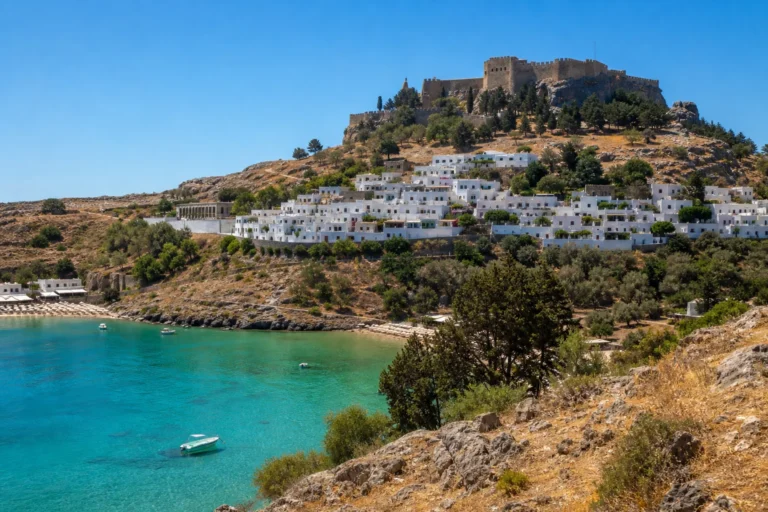
Perched about 116 metres above the sea, the Acropolis of Lindos crowns a whitewashed village and frames sweeping views of Lindos Bay and St Paul’s Bay. The stepped approach passes layered remains—Hellenistic stoa, Crusader fortifications and the sanctuary of Athena Lindia—culminating at Doric temple ruins and a scenic summit precinct.
Lindos village is integral to the visit: narrow, cobbled alleys wind between cubic houses, chapels and tavernas. The climb is steep and exposed on uneven stone, so bring sturdy shoes, a hat and water.
Conservation work and seasonal access arrangements may change; check official heritage information for current logistics.
Ancient Kamiros archaeological site
Ancient Kamiros, on Rhodes’ northwest coast, preserves a clear example of Hellenistic urban planning with a street grid, house foundations, workshops and public spaces visible in situ. Visitors can read room plans, pebble mosaics and agora-like areas that illustrate domestic, commercial and ritual life in a Mediterranean polis.
Notable features include rock‑cut cisterns and hydraulic installations that demonstrate local water management in a dry island climate, plus nearby temple foundations and altars. Signage and services can be modest—comfortable shoes, sun protection and an official site leaflet or guidebook will help interpret the visible urban fabric.
Valley of the Butterflies (Petaloudes)
The Valley of the Butterflies (Petaloudes) is a shaded riparian gorge notable for dense plane trees and seasonal congregations of lepidoptera, including Jersey tiger moths. A mostly accessible loop trail follows the stream, crossing wooden bridges and passing observation clearings that reveal the valley’s cool microclimate and understory of mosses and ferns.
The spectacle is strongest in warm, humid months when insects cluster on trunks; quiet observation helps preserve their resting behaviour. Paths can be soft or muddy after rain and the site emphasises conservation over commercialisation, so check local authorities for access arrangements, guided programmes or temporary restrictions.
Kallithea Springs (Kallithea Thermal Springs)
Kallithea Springs is an Italian‑era seaside spa complex where rotundas, colonnades and terraces step down to a sheltered bay. Dating from the late 1920s, the complex features pebble mosaics, tiled portals and composed arches that reflect early twentieth‑century spa urbanism integrated with the rocky shoreline.
Today restored domes and rotundas host exhibitions and events while promenades and shaded planting make the site pleasant for strolls. Onsite services are limited and occasional closures occur for conservation or events; consult official visitor information for accessibility and programming.
Filerimos Hill and Monastery (Acropolis of Ialysos)
Filerimos occupies the low, forested acropolis of ancient Ialysos and combines archaeological remains with a functioning monastery set among pine and cypress. Paths reveal Hellenistic foundations, Roman masonry and medieval interventions, while the monastery compound contains a Gothic church, a small underground Byzantine chapel and calm terraces.
The site offers broad views toward the western coast and a contemplative atmosphere; on‑site pathways include paved cross paths and viewpoints leading to scattered ruins. Surfaces are uneven and signage concise—bring sturdy shoes, sun protection and check for seasonal access or liturgical closures.
Prasonisi (southern cape, watersports and nature)
Prasonisi is the sandy spit at Rhodes’ southern tip where a shifting sandbar links the island to a low peninsula and creates two distinct shorelines: a sheltered lagoon good for beginners and an exposed, wave‑prone side prized by experienced wind‑ and kitesurfers.
Seasonal winds and tidal change shape a dynamic coastal landscape of dunes, intertidal pools and vegetated flats.
Wind schools and equipment rentals concentrate near the beach, but facilities are seasonal and basic. Access requires a short drive and walking across sand and pebble; consult local sport centres or official tourism sources for equipment hire, lessons and any protected‑area notices.
Best Time to Visit Rhodes
Late spring through early autumn (May–September) is the most rewarding time to visit. May–June brings warm weather, blooming landscapes and lighter crowds for archaeology, hiking and drives.
July–August is peak season for beaches and watersports but hotter and busier; book early. September combines warm sea temperatures with milder days and fewer visitors—ideal for swimming and wind sports at Prasonisi.
Winters are mild and green but many tourist services operate on reduced schedules.
Getting Around Rhodes
Rhodes’ transport mix is compact and island-focused: public buses link the city with Lindos, Petaloudes and many beaches; regional ferries and private boats serve coastal trips; taxis and rental cars or scooters give flexible access to rural sites like Kamiros and Prasonisi.
Much of Rhodes Old Town is pedestrianised and best explored on foot; bicycle hire and small-group tours are common for dispersed attractions. Summer traffic and limited parking near major sites make early departures or shuttle options practical.

Location
Map of Rhodes, Greece
The interactive map loads only when you choose to view it.
Plan Your Visit to Rhodes
Diagoras International Airport (near Paradisi) and several ferry routes serve Rhodes City; arrange transfers and bookings in advance during high season. The Medieval City and major archaeological parks are protected sites—follow posted paths, respect restricted areas and check for temporary closures.
Tourist offices in Rhodes City provide maps, timetables and vehicle-permit rules for protected zones. Allow extra time for walking, sun exposure and photography at popular sites and expect uphill climbs or steps with limited shade at some locations.
Local Tips for Rhodes
Base yourself in Rhodes City (Old Town or nearby Elli/Kamari) for immediate access to the Medieval City, Grand Master’s Palace and ferry services. Use Lindos or settlements on the western or southern coast as staging points for the Acropolis of Lindos and Prasonisi.
Public buses reach most major towns and beaches but run less frequently to remote sites—many visitors rent a car or scooter for flexibility. Carry sun protection and refillable water on summer walks, and wear sturdy shoes for uneven cobbles and uphill sites.
Live conditions
Current Weather

Updated 2026-09-21 19:00
- Feels like
- 23°C / 74°F
- Today’s high / low
- 26°C / 79°F · 25°C / 77°F
- Humidity
- 70%
- Wind
- ← 27 km/h
- Precipitation
- 0 mm
- Chance of rain
- 7%
- Local time
- 2026-09-21 19:11
Safety
Rhodes is generally low-risk for violent crime; use normal urban precautions such as watching belongings in busy markets, the Old Town and on buses, and use hotel safes for passports and valuables.
Coastal and wind‑sport areas (Prasonisi and exposed beaches) can have strong winds and currents—observe local flags, hire certified instructors for kitesurfing/windsurfing, and heed lifeguards. At archaeological and cliff-side sites stay on marked trails and behind barriers to avoid falls and protect fragile ruins.
Register with your consulate if your country recommends it and note local emergency numbers.