
Travel Guide
Find top sights, local places, maps, weather, and simple trip tips for Hanoi, Vietnam.
Looking for Things to Do in Hanoi, Vietnam? Use this guide to compare top sights, local tips, maps, weather, and nearby places.
If you’re searching for things to do in Hanoi, start where the city’s layered history and street life converge: Hoan Kiem Lake, the Old Quarter, and a string of temples, museums, and performance venues within easy walking distance.
Hanoi’s compact core preserves guild streets, colonial boulevards, pagodas, and World Heritage sites that together tell Vietnam’s cultural and political story. This guide highlights key attractions, practical travel tips, and when to visit so you can plan efficient walking circuits and cultural stops.
Why Visit Hanoi
Visit Hanoi to experience a concentrated mix of Vietnamese history, culinary culture, and living traditions. The Old Quarter’s guild-street layout and street-food corridors give a direct sense of everyday commerce, while Hoan Kiem Lake and Ngoc Son Temple provide a civic and photographic focal point.
Major heritage sites. The Temple of Literature and the UNESCO-listed Imperial Citadel of Thăng Long.
Offer archaeological and educational depth, and museums and performances like Hoa Lo Prison Relic, the Vietnam Museum of Ethnology, and Thang Long Water Puppet Theatre round out context on national history and folk arts.
Top Things to Do in Hanoi, Vietnam
Below are core attractions and experiences clustered around Hanoi’s historic center. Each entry summarizes what to expect and why it matters, so you can combine nearby sites into efficient walking circuits.
Hoan Kiem Lake and Ngoc Son Temple
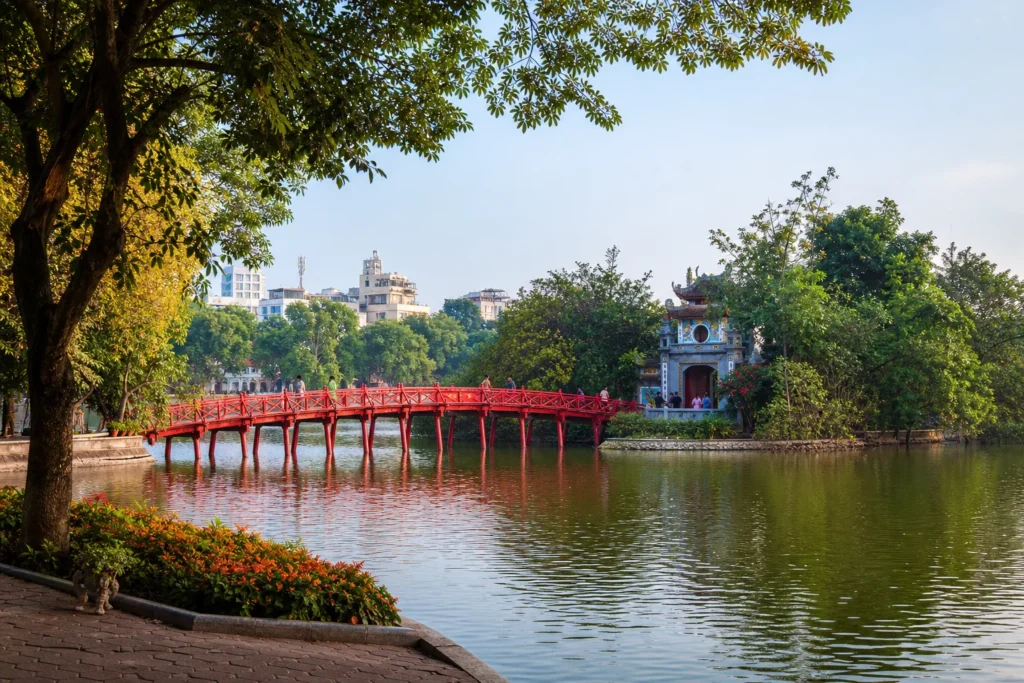
Hoan Kiem Lake occupies a small emerald basin in central Hanoi and is long regarded as the city’s symbolic heart.
Visitors cross the red Huc Bridge to reach Ngoc Son Temple on its tiny island; the temple blends Confucian, Taoist, and Vietnamese folk elements and preserves steles, altars, and memorial inscriptions that explain its local meaning.
The site is inseparable from the Le Loi legend—the magical sword returned to a turtle god—which shapes monuments such as Turtle Tower and public rituals around the water. Inside Ngoc Son, compact halls and carved plaques reward quiet observation and reading the temple’s steles helps explain why the spot became a civic shrine.
Hanoi Old Quarter
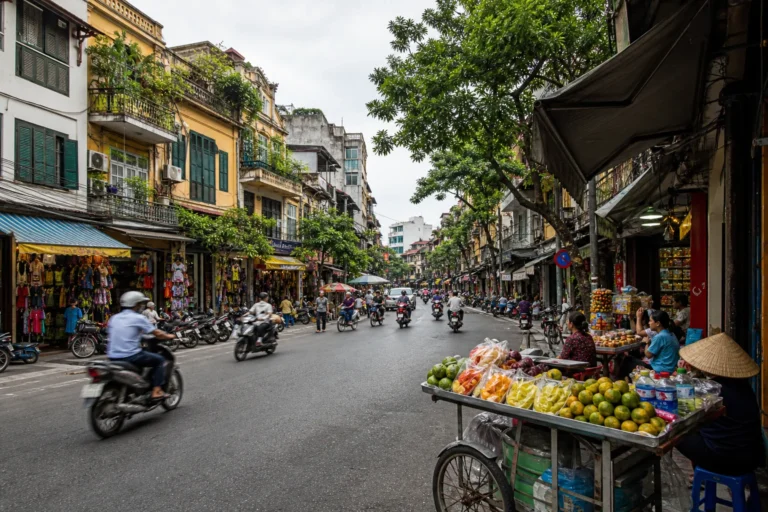
Hanoi’s Old Quarter is an urban district formed by centuries of commerce and craft, commonly described as the ‘36 streets’ area where each narrow lane historically hosted a particular trade. The quarter’s characteristic tube houses, narrow facades, and layered architecture mix traditional wooden shophouses with French-era masonry and cathedral landmarks.
Exploration on foot reveals Buddhist shrines, colonial facades, family-run museums, markets, and working craft workshops. The public life—food stalls, markets, and small cafés—matters as much as the built fabric; move slowly to observe ornamental details and daily trade rhythms, and expect varied crowds in the narrow streets.
Temple of Literature (Van Mieu – Quoc Tu Giam)
The Temple of Literature began as an eleventh-century Confucian shrine and later hosted Quốc Tử Giám, Vietnam’s first national academy established in 1076. Visitors pass through successive courtyards arranged on a central axis—from approach gates to intimate ritual spaces—where gates, planted courtyards, ponds, and low halls create a measured architectural rhythm.
The Khue Van Pavilion is the site’s visual emblem, and the engraved stone stelae on sculpted turtle bases record the names of successful imperial-exam scholars. The complex anchors Vietnam’s Confucian educational tradition and offers calm gardened courtyards suited to quiet observation rather than hurried photography.
Official Temple of Literature (Van Mieu – Quoc Tu Giam) website →
Imperial Citadel of Thang Long
The Imperial Citadel of Thăng Long preserves Hanoi’s central political core across many centuries, with visible elements mainly from the Lý and Trần dynasties and archaeological layers reaching into earlier fortified settlements.
Visitors approach through the Doàn Môn gate and a broad axis that once led to the Kính Thiên palace; surviving foundations and carved steps hint at the vanished royal hall.
Interpreted panels and a small on-site museum explain how timber buildings once occupied raised platforms. The complex also includes later features such as the Hanoi Flag Tower and a twentieth-century wartime bunker, so reading both surface monuments and exposed archaeological trenches helps convey the site’s long continuity.
Ho Chi Minh Mausoleum
The Ho Chi Minh Mausoleum dominates Ba Dinh Square with a stern, monumental presence and a formal parade-ground approach. The mausoleum contains the preserved remains of Hồ Chí Minh and functions as a central place of national memory, set alongside contextual sites like the Ho Chi Minh Museum and the stilt house where he lived.
Visits are regulated and solemn: expect security screening, a single-file walk past the chamber, and strict rules such as no photography inside and modest dress. Allow time to move between the mausoleum and nearby exhibits and check official sources for possible closures around national ceremonies or maintenance.
Tran Quoc Pagoda (West Lake)
Tran Quoc Pagoda sits on a small islet at West Lake and offers a quiet lakeside sanctuary with shaded garden paths, low worship halls, and a compact vertical tower that marks the skyline. Scholars date the foundation back many centuries, and the site’s long history explains much of its cultural significance.
The pagoda’s fabric preserves carved stelae, devotional statuary, and ritual furnishings alongside living features such as mature trees and a bodhi sapling planted as a diplomatic gift. The grounds suit slow, reflective walks; visitors should respect active devotional practices and give space to those praying.
Hoa Lo Prison Relic (Hoa Lo Prison Museum)
Hoa Lo Prison Relic, built by the French in 1896 as the Maison Centrale, sits on a compact block close to the Old Quarter. The outer masonry, watchtowers, and confined courtyards create a contrast with the surrounding urban fabric.
Inside, preserved cells, corridors, and original masonry form the backbone of the museum visit.
Exhibition panels, photographs, personal objects, and dioramas document overlapping histories of confinement under colonial rule and later wartime narratives. The museum emphasizes individual stories and material traces; allow time for quiet reading of labels and check the official site for current exhibitions or special displays.
Official Hoa Lo Prison Relic (Hoa Lo Prison Museum) website →
Vietnam Museum of Ethnology
The Vietnam Museum of Ethnology, on Nguyễn Văn Huyên Road in Cầu Giấy District, is the country’s principal public institution for documenting the 54 officially recognised ethnic groups. The main building’s form evokes a Đông Sơn bronze drum and signals the museum’s aim to connect material form with cultural meaning.
Visits mix indoor galleries—costumes, ritual objects, and interpretive labels—with a substantial outdoor compound of full-scale traditional houses and architectural reconstructions. The outdoor displays let visitors walk through living spaces and verandas; plan a half-day to combine indoor and outdoor exhibits and check the museum’s announcements for demonstrations or guided tours.
Thang Long Water Puppet Theatre
Thang Long Water Puppet Theatre stages Vietnam’s water-puppet tradition beside Hoan Kiem Lake from a purpose-built house with a shallow water stage behind a bamboo-screened façade. Puppeteers work waist-deep behind the screen using long bamboo poles and submerged rods, while a live folk orchestra and singers provide musical and narrative cues.
The repertoire mixes village scenes, rice-field labor, animal characters, and national legends such as the Le Loi turtle story. The performances are largely visual and thus accessible to international audiences; check the theatre’s official schedule and ticketing information before you go.
Best Time to Visit Hanoi
The most agreeable months are autumn (September. November) and spring (March.
April), when temperatures are moderate, humidity is lower, and rainfall is less frequent. Ideal for walking the Old Quarter and outdoor sites.
Winters are cool, gray, and occasionally misty; summers (June–August) are hot, humid, and bring heavy monsoon rain.
For festival pageantry, align visits with major Vietnamese holidays or Lunar New Year, but expect larger crowds and advance booking needs.
Getting Around Hanoi
Hanoi’s center is compact and most core attractions are walkable from Hoan Kiem Lake or the Old Quarter. Short trips within central districts are convenient by motorcycle taxi, bicycle taxi, rideshare apps, or metered taxi—use app pricing or confirm fares in advance.
The city has expanded bus routes and a growing urban rail network for longer hops. Pedestrian caution is advised: traffic is mixed and crossings can be unpredictable, so allow extra time and use major roads or lakeside promenades for safer walking.
Location
Map of Hanoi, Vietnam
The interactive map loads only when you choose to view it.
Plan Your Visit to Hanoi
Plan walking loops between Hoan Kiem Lake, the Old Quarter, and nearby monuments to make the most of the city’s compact core. Public buses and taxis serve longer transfers; confirm meters or fares before boarding.
The local currency is the dong (VND); ATMs are widespread but carry small notes for markets and temples. Bring a lightweight rain layer during monsoon months and group nearby heritage sites into single-day circuits to reduce transit time and keep mornings free for outdoor visits.
Local Tips for Hanoi
Dress and behave respectfully at religious and state sites. Remove hats and speak quietly at the Temple of Literature, Tran Quoc Pagoda, and the Ho Chi Minh Mausoleum.
Visit Hoan Kiem Lake early for a quieter experience, and try reputable stalls in the Old Quarter for street food while watching hygiene and peak crowds.
Carry a photocopy of your passport for some ticketing, wear comfortable shoes for uneven sidewalks, and keep small change for vendors.
Live conditions
Current Weather

Updated 2026-08-26 18:15
- Feels like
- 31°C / 87°F
- Today’s high / low
- 29°C / 85°F · 26°C / 79°F
- Humidity
- 89%
- Wind
- ↖ 8 km/h
- Precipitation
- 0 mm
- Chance of rain
- 90%
- Local time
- 2026-08-26 18:26
Places to Visit Near Hanoi
A dramatic UNESCO-listed seascape of limestone karsts and islands rising from emerald waters. Visitors take boat cruises or short island-hop trips to see caves, floating fishing villages and scenic viewpoints, making it a classic full- or half-day coastal escape from Hanoi.
A riverine karst landscape often called ‘land‑based Ha Long Bay’ where small boats thread through caves and rice paddies and visitors can explore the ancient capital relics and hilltop viewpoints for cinematic countryside scenery.
A sprawling Buddhist pilgrimage complex set among limestone peaks and forested valleys. The typical visit combines a peaceful boat ride through river channels with climbs or cable-car rides to cliffside pagodas and grotto shrines.
A centuries‑old craft village on the Red River where artisans still shape and glaze ceramics. Visitors come for hands-on pottery workshops, studios and markets selling traditional Vietnamese tableware and souvenirs.
Safety
Hanoi is generally safe for visitors but watch for common urban issues: pickpocketing and bag snatching in crowded markets and on busy streets—use a crossbody bag kept in front. Traffic is dense and motorbike flows can be unpredictable; cross streets slowly and follow local crossing rhythms.
Use licensed taxis or reputable ride apps to avoid fare disputes and keep valuables out of sight. At heritage sites, follow posted rules and official guidance for closures or restricted areas.